What Are the Best Hurricane Garage Doors?

Hurricanes do not test a garage door gently. Wind pressure can push against broad panels, while flying debris may strike the door or its tracks. A failure can expose a home’s interior to dangerous pressure changes. Choosing hurricane garage doors is more than a style decision.

The best option depends on your home, local wind exposure, and applicable building requirements. Look for doors tested and labeled for the relevant design pressure, then verify that the rating suits your opening. Strong panels matter, but so do reinforced tracks, sturdy attachment points, and compatible hardware. A door is only as dependable as its installation. Ask a qualified installer to assess the opening, framing, and fasteners, rather than relying on a product label alone.

Details matter. Insulation, windows, seals, and appearance can affect comfort and daily use, but they should not distract from verified impact and wind performance. Not every door fits. Some models need specific bracing or reinforcement, and older garages may require structural work. There is no single best model for every house. Even a highly rated door can disappoint if it is poorly maintained or installed incorrectly. This guide compares key features, ratings, materials, costs, and upkeep to help you ask better questions before choosing. One honest caveat: product claims vary, so confirm documentation with the manufacturer and local building professionals.
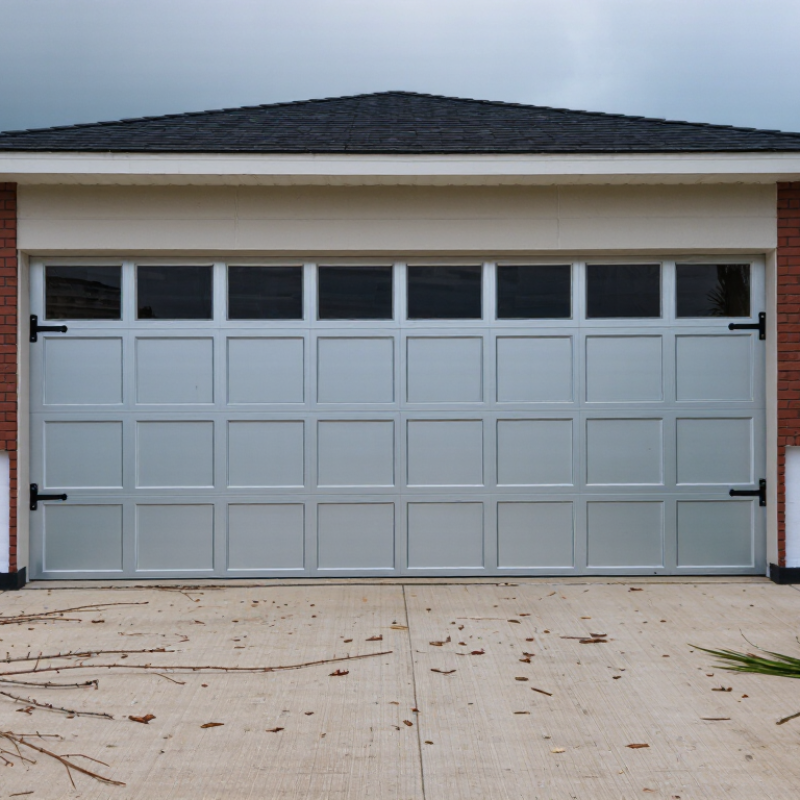
What Are the Best Hurricane Garage Doors?

What Makes a Garage Door Hurricane-Resistant?

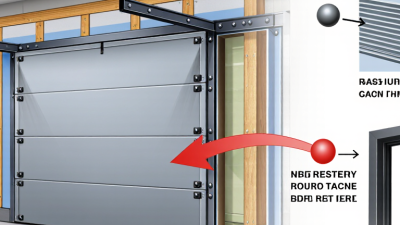
A hurricane-resistant garage door is a tested assembly, not simply a thick panel. Its panels, vertical tracks, rollers, hinges, locks, and wall anchors must work together under pressure. FEMA’s Wind Retrofit Guide for Residential Buildings (FEMA P-804) identifies garage doors as vulnerable openings: failure can let wind enter and increase pressure inside the home. Details matter. A strong-looking door can still pull away if its tracks or anchors are poorly secured.

Look for a documented design-pressure rating suited to the home’s location, building height, and wind exposure. These conditions affect the force on the door, so a rating from another house may not apply. In Florida, applicable product testing can include TAS 201 impact testing and TAS 203 cyclic-pressure testing. The impact test uses a 9-pound 2-by-4 traveling at 50 feet per second. That is a demanding hit. The door must also withstand repeated pressure changes, not just one strike.

Ask for the test documentation and confirm that the approved installation matches the tested configuration, including track reinforcement and anchor spacing. FEMA P-804 emphasizes strengthening the opening as part of the home’s wind-resistance strategy. Impact protection alone does not guarantee the whole garage is secure. It is easy to overlook the connection between the door tracks and the surrounding frame, yet that connection carries the load. For a specific property, a qualified local professional can check the required pressure rating and installation details.

How Wind Ratings and Building Codes Apply to Garage Doors

A hurricane-rated garage door is not selected by wind speed alone. Local building officials use the adopted code, site exposure, building height, and opening size to determine required design pressure. That pressure rating, usually shown in pounds per square foot, describes the force the door assembly must resist. Check the door, tracks, hinges, and fasteners as one system; a strong panel can still fail if its attachment is weak. Wind-pressure resistance and impact resistance are separate requirements. In areas with wind-borne debris rules, a door may also need tested impact protection or an approved protective covering.

The details matter. A door sized for one opening may not carry the same rating when widened, and a replacement can trigger current code requirements. NOAA’s 2019 Tropical Cyclone Report states that Hurricane Michael made landfall with estimated sustained winds of 160 mph. FEMA’s post-storm assessments describe how breached garage doors can expose a building to damaging internal pressure. Ask the local building department for the site-specific design pressure and debris-protection rules, then verify the product approval and installation instructions. Keep the paperwork. A rating label helps, but it does not prove that the installed door matches the approved configuration. That distinction is easy to miss.

What Are the Best Hurricane Garage Doors? How Wind Ratings and Building Codes Apply to Garage Doors
Decision factor What to look for Why it matters Practical selection check
Wind-pressure rating Documented positive and negative design-pressure capacities, commonly expressed in pounds per square foot (psf). Wind pushes on a door from outside and can also create suction. The required pressures depend on the building, door size, location, exposure, and the locally adopted code. Use the project-specific pressure requirements supplied by the building official or a qualified design professional. Do not select a door from a wind-speed label alone.
Impact resistance When required, a tested and approved door assembly that resists windborne-debris impact as well as the applicable pressure loads. A pressure-rated door is not automatically impact-rated. Impact requirements apply in designated areas and can depend on local code provisions and whether the building has other approved opening protection. Confirm that the approval covers the complete door assembly and the required impact category—not just the panels or a separate window.
Code and location Compliance with the building code and amendments adopted by the authority having jurisdiction (AHJ). Requirements differ by state, county, city, site conditions, and code edition. Coastal location alone does not establish one universal rating. Ask the local building department which code edition, wind-design criteria, impact rules, and product-approval documents apply to the address.
Product documentation A current evaluation report, product approval, or other documentation accepted by the AHJ, including installation limits. Approvals specify conditions such as maximum door dimensions, track and fastener details, allowable pressures, and permitted installation configurations. Match the approval to the exact door size, construction, hardware, and installation. Keep the approval and permit records with the home documents.
Tracks, anchors, and framing Reinforced tracks and connections installed with the specified fasteners into adequate structural framing. A strong door can still fail if its tracks, anchors, or supporting frame do not transfer wind loads into the building structure. Have the installer follow the approved drawings and instructions. Check that the existing jambs and framing are suitable for the specified connections.
Door size and configuration An approval that explicitly covers the actual opening dimensions and door configuration. Wider or taller doors and different panel, track, or glazing configurations may have different allowable pressures or may fall outside an approval. Provide the measured opening and proposed configuration before ordering; do not assume a rating transfers to a larger or modified door.
Glazing and other openings Any garage-door glazing, windows, and adjacent openings meet the applicable opening-protection requirements. Impact protection may apply to glazed components as well as the main door. Requirements for one opening do not necessarily protect another. Check the entire garage façade and the code-required protection method for each opening.
Bracing and retrofit options A retrofit system only when its engineering, approvals, and installation instructions apply to the existing door and building. Generic braces or added hardware do not automatically make an existing door code-compliant or impact-rated. Before retrofitting, obtain written confirmation from the manufacturer, a qualified professional, or the AHJ that the proposed system is acceptable for the specific door.
Installation and inspection Installation by a qualified professional, with permits and inspections where required. Performance depends on correct assembly and attachment; deviations from approved details can invalidate the intended rating. Verify permit requirements, inspection sign-off, and that the installed door matches the approved product documents.
Best overall choice A door whose documented pressure capacity meets the project-specific requirement, whose impact protection meets local rules, and whose approval covers the actual installation. There is no single “best” rating for every home. The appropriate door is the one that meets the site’s code requirements as a complete, properly installed assembly. Compare approvals and installation details—not just marketing terms such as “hurricane,” “reinforced,” or a stated wind speed.
Useful references Florida Building Commission: Florida Building Code and product approval information
International Code Council: International Building Code information
American Society of Civil Engineers: ASCE 7 wind-load standard information
Important note Code requirements and accepted approvals can change and vary by jurisdiction. Confirm the current requirements with the local building department or a qualified design professional before purchasing or installing a garage door.

Which Materials and Designs Offer the Strongest Protection?

A hurricane garage door is only as strong as its weakest connection. The panel, tracks, rollers, hinges, and wall anchors must work as one system. Reinforced steel doors often offer a strong balance of stiffness and durability. Aluminum resists corrosion, but thin panels may flex unless they have substantial bracing. Wood looks substantial. It also needs careful sealing and maintenance in wet, salty air. No material wins by itself.

For debris exposure, look for impact-rated construction or a tested system that protects any glazing. Small windows can become weak points; laminated impact-resistant glass and secure framing help contain broken pieces. A door without windows may reduce vulnerabilities, but its edges and bottom seal still matter. Check for a wind-pressure rating suited to your home’s location, rather than relying on a “hurricane” label. Ratings and requirements vary with exposure and building design.

Useful design features include reinforced stiles, heavy-duty tracks, and securely anchored brackets. These help resist bowing and pullout. The opener is not a structural brace. During inspection, look for loose fasteners, rust near the bottom edge, bent tracks, and daylight under the seal. Ask a qualified installer to verify the complete assembly and installation details. Even a rated door can fail if its anchors attach to weak framing. That part is easy to overlook. Ratings aren’t guarantees.

What Features Matter When Choosing a Hurricane Garage Door?

What Are the Best Hurricane Garage Doors?
What Features Matter When Choosing a Hurricane Garage Door?

A hurricane-rated garage door should match your home’s required wind pressure, not just carry a “wind-resistant” label. NOAA’s 2024 Atlantic Hurricane Season Summary counted 18 named storms, including 11 hurricanes and five major hurricanes. FEMA’s Coastal Construction Manual explains why openings need protection: wind entering through a failed door can increase pressure inside a building. Ask for documented design-pressure ratings for your opening size and local wind exposure.

Look for tested impact protection where wind-borne debris is a risk. ASTM E1886 and E1996 describe testing for impact resistance and cyclic pressure. Check the whole assembly, too: reinforced tracks, sturdy brackets, hinges, rollers, and fasteners must attach securely to sound framing. A strong door with weak connections may still fail. Small details matter. I’d also verify that the installer follows the product’s tested installation instructions; this is an easy step to overlook.

Tips: Ask to see the test documentation and pressure rating before buying. Confirm the rating covers your specific door dimensions. Have a qualified installer inspect the jambs and framing, then check that the door closes evenly and locks firmly. No door is invincible, and site conditions can change what rating is appropriate.

How Proper Installation and Maintenance Protect Performance

A hurricane-rated garage door depends on more than a heavy panel. Proper installation keeps its parts working together when strong winds push against the opening. An experienced installer checks that the door, tracks, brackets, and fasteners match the required rating. Anchors must attach to sound structural framing, not just trim or thin sheathing. A door can look sturdy and still be poorly anchored. That detail is easy to miss. Local building requirements and the door’s installation instructions help determine the right components and methods.

Maintenance helps preserve that performance over time. Before storm season, inspect rollers, hinges, track connections, and visible fasteners for looseness, wear, or corrosion. Check the bottom seal for cracks and gaps; small openings can let wind-driven rain inside. Small gaps matter. Listen for scraping or uneven movement, and ask a qualified technician to investigate. A door that feels unusually heavy or sits crooked may need professional attention. Don’t adjust high-tension springs yourself; they can cause serious injury. After a storm, look for bent tracks, damaged panels, and shifted hardware before operating the door. Not every problem is obvious, so routine checks are useful, even when the door seems fine.