
- High-Performance Doors
-
- Applications
-
-
-
- Clean Room
Stainless steel or composite materials help maintain clean rooms.
-
-
- Coolers
Quick opening speeds & tight seals for temperature control.
-
-
- Parking
Improve security & traffic flow and enhance architectural style.
-
-
- Hurricane Zone
Withstand winds up to 175 mph and comply with the Florida Building Code.
-
-
-
-
- USDA / FDA / cGMP
Increase productivity & address stringent USDA, FDA & cGMP requirements.
-
-
- Freezers
High-speed & perimeter seals minimize the air exchange between areas.
-
-
- Security
High speed & durability ensure secure access.
-
-
- Ventilation
Perforated or screen door panels allow improved air circulation.
-
-
-
-
- Fire Station Emergency Response
When time is of the essence, high speed and reliability are crucial.
-
-
- Warehousing
Fast cycle times and secure seals keep environments separated.
-
-
- Loading Dock
Rugged design & secure seal for oversized openings.
-
-
- Large Openings
Break-away functionality with rugged design seals oversized openings.
-
-
-
-
- Heavy Equipment
Withstands challenges of heavy equipment and fleet truck/car wash environments.
-
-
- Self-Storage
Fast opening speeds and reliable, durable construction keep facilities secure and protected.
-
-
- Industries
-
-
-
- Automotive Dealerships
Reduce energy costs, increase productivity and comfort and enhance customer perception.
-
-
- Cold Storage & Processing
Increase productivity and operational efficiency while reducing energy and maintenance costs.
-
-
- Parking
We offer solutions for Apartment / Condo & Loft, Standalone Parking Facilities and Office Buildings
-
-
-
-
- Food & Beverage
Doors specifically engineered for USDA/FDA and cGMP environments, and assured compliance for uncompromising performance.
-
-
- Mfg/Dist/Warehousing
A complete product line allows facilities to increase efficiency and safety and reduce maintenance and energy costs.
-
-
- Government
Ensure effective security and environmental controls are maintained for critical government operations.
-
-
-
-
- Transit
Keep operations running smoothly and efficient while reducing energy and maintenance costs.
-
-
- Pharma, Nutraceutical & Biotech
Doors that offer quick, secure access, environmental control and reliability for life science facilities.
-
-
- Support Resources
- Parts
- Contact Us
- Blog/News
- Why Rytec
- Sales Rep Locator
- Careers
- Dealers
- Architectural Resources


























How to Choose China Best Hurricane Garage Doors?
Choosing China’s Best Hurricane Garage Doors: An Expert Introduction
Choosing hurricane garage doors from China requires more than comparing prices, colors, and delivery times. A reliable decision begins with verified performance. The door should match your local wind zone, opening size, building design, and installation conditions. Ask for tested wind-load ratings, product drawings, material specifications, and quality-control records. Do not rely on attractive brochures alone.
Wind-engineering expert Dr. David O. Prevatt explains, “A garage door can become a major opening during extreme winds.” This warning deserves attention. A wide garage door may experience powerful pressure changes during a hurricane. Weak panels, poor tracks, or an incorrectly anchored frame can turn a small failure into serious building damage. Examine the reinforcement layout carefully. Check the rollers, hinges, brackets, seals, and locking system. Every component matters.
Experienced buyers should also inspect the manufacturer’s testing process. Request evidence from recognized laboratories and confirm whether the reported rating applies to the complete door assembly. Some suppliers present strong panel data but provide limited information about tracks or fasteners. That gap can be important. Installation quality matters just as much as manufacturing quality. Even a well-designed product may underperform when technicians skip anchors or use unsuitable hardware.
A lower quotation may look efficient. It may not be safer.
The best supplier should offer clear technical communication, traceable production, replacement parts, and practical after-sales support. Still, no product choice is perfect. Specifications can be misunderstood, and local exposure may exceed expectations. Therefore, this guide examines China’s hurricane garage doors through testing, materials, certification, installation, maintenance, and real-world risk.
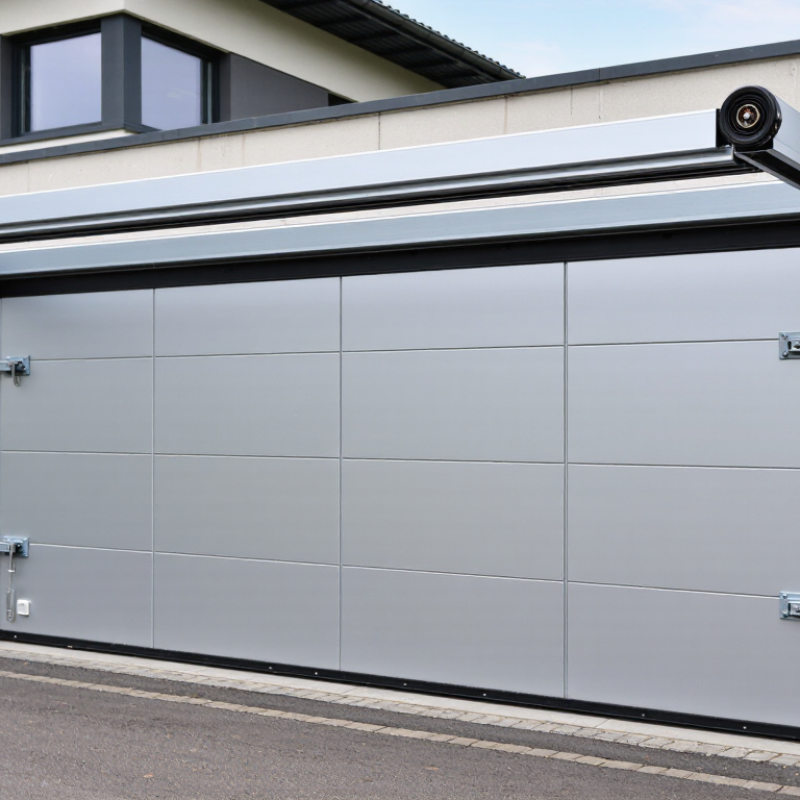
Table of Contents
[Hide]
Understanding Hurricane Garage Door Performance Requirements
How to Choose China Best Hurricane Garage Doors?
Understanding Hurricane Garage Door Performance Requirements
A hurricane garage door must resist wind pressure, flying debris, and repeated vibration. Start by checking its tested wind-load rating for your project location. The rating should match the garage opening size, building height, and exposure conditions. Ask for test reports, installation instructions, and certification documents. Marketing language alone is not enough.
Impact resistance matters. Look for reinforced panels, strong hinges, secure rollers, and heavy-duty tracks. The tracks must connect firmly to the wall structure, not only to thin trim. A reliable door also needs strong brackets and correctly spaced fasteners. I once saw a well-built door fail because the surrounding frame was weak. The door was not the only problem. Coastal air creates another challenge. Choose corrosion-resistant hardware and inspect seals regularly. Small gaps can become serious during storms.
Tips: Measure the opening carefully before comparing products. Ask a qualified local installer to verify the wall structure and anchoring points. Confirm whether the door has been tested for both wind pressure and impact resistance. Check the maintenance schedule, especially for rollers, springs, bolts, and seals. Keep the documents. They may reveal missing limits or installation conditions. Do not ignore professional advice, even when the door looks oversized and strong. A stronger design can still perform poorly when installed incorrectly.
| Performance Dimension | Recommended Requirement or Benchmark | What to Check | Relevant Standard or Verification | Selection Guidance |
|---|---|---|---|---|
| Design Wind Speed | Use the project-specific wind speed required by the local building code. Hurricane-prone coastal locations commonly require design wind speeds of approximately 120–180 mph, depending on location, risk category, exposure, and building height. | Confirm the applicable basic wind speed, wind exposure category, mean roof height, building importance, and geographic location. | Local building code and ASCE 7 wind-load provisions, where adopted. | Do not select a door from wind speed alone. The supplier should convert the required wind speed into a documented design pressure for the exact opening. |
| Design Pressure | The door assembly should have a positive and negative design-pressure rating expressed in psf or kPa. Typical residential and light-commercial requirements may range from approximately +/-40 to +/-100 psf, but the project calculation controls. | Check both inward pressure and suction pressure. Verify that the rating applies to the complete installed assembly, not only the door curtain or panel. | Stamped engineering calculations, tested product data, and applicable building-code design criteria. | Choose a rating equal to or greater than the calculated positive and negative pressures, including any required safety factors. |
| Wind-Load Testing | The complete door should be tested for structural resistance, deflection, permanent deformation, and operational performance under the specified wind loads. | Review test size, door configuration, reinforcement layout, pressure cycles, and pass/fail criteria. | ANSI/DASMA 102 or another code-accepted test and evaluation method applicable to sectional garage doors. | Test reports should identify the tested model, dimensions, hardware, reinforcement, tracks, fasteners, and installation conditions. |
| Impact Resistance | Where required by the local code, glazed sections and other vulnerable components should resist wind-borne debris impact or be protected by an approved impact-resistant system. | Check glazing, windows, vision panels, decorative inserts, ventilation components, and any removable accessories. | Applicable local requirements may reference ASTM E1886/E1996, TAS 201/202/203, or another approved impact standard. The exact requirement depends on the jurisdiction. | Confirm whether the door itself is impact-rated or whether a separate shutter or approved protective system is required. |
| Panel or Curtain Construction | Use corrosion-resistant, wind-rated panels or curtains with sufficient thickness, internal reinforcement, and secure interlocking joints. | Review panel thickness, end stiles, horizontal reinforcement, hinges, fastener spacing, and the connection between panels and hardware. | Manufacturer engineering documentation and tested assembly details. | A thicker panel alone does not prove hurricane performance. The complete load path must transfer wind forces into the building structure. |
| Track and Hardware Strength | Tracks, rollers, hinges, brackets, shafts, drums, and supporting hardware must be rated for the specified wind pressure and door size. | Check track gauge, roller stem length, bracket spacing, shaft capacity, bearing support, and resistance to track spreading or pull-out. | Product-specific structural calculations and wind-load test documentation. | High-wind door hardware is not interchangeable with standard residential hardware unless the complete assembly has been approved for that use. |
| Building Connection | Fasteners and anchors must connect the door system to structural framing capable of resisting the calculated loads. | Verify jamb material, header condition, fastener type, embedment, edge distance, spacing, and substrate capacity. | Approved installation drawings, engineering calculations, and local code requirements. | A highly rated door can fail if it is installed into weak or deteriorated framing. Require site-specific installation instructions. |
| Deflection and Operation | The door should remain within the allowable deflection and continue to open, close, and latch after the required pressure cycles. | Review panel deflection, track movement, roller retention, seal contact, and post-test operating force. | Applicable product test standard, engineering report, and manufacturer operating limits. | Ask for the maximum tested door width and height. Ratings can change when the opening size or panel configuration changes. |
| Locks and Wind Bracing | Use a tested locking system or wind-lock arrangement designed for the specified pressure. Manual and motor-operated doors must be secured against unintended movement. | Check lock engagement, number and location of locking points, automatic opener compatibility, and whether wind locks engage before exposure to wind. | Tested product documentation and installation instructions for the specific door system. | Never rely on an automatic opener alone as the primary hurricane restraint unless the system is specifically designed and approved for that function. |
| Water and Air Control | Use continuous perimeter seals and a properly detailed threshold to reduce wind-driven rain and air leakage. Water performance is separate from structural wind resistance. | Inspect bottom seal compression, side and top weather seals, threshold details, drainage, and transitions to adjacent walls. | Project specifications and applicable air or water penetration test methods, when required. | Confirm the water rating separately; a door with a high wind-pressure rating is not automatically watertight. |
| Corrosion Resistance | For coastal environments, use galvanized, stainless, aluminum, or suitably coated components selected for salt-laden air and high humidity. | Check coating system, fastener material, dissimilar-metal compatibility, drainage, and maintenance requirements. | Coating specifications, material certificates, and project corrosion requirements. | Salt exposure can weaken springs, cables, tracks, fasteners, and hinges. Request a coastal maintenance schedule. |
| Emergency Power and Manual Release | Motorized doors should include a safe manual-release method and, where required, emergency power or a documented emergency operating procedure. | Verify manual lifting force, release accessibility, battery backup requirements, and safe operation during power loss. | Local electrical and safety codes plus the opener manufacturer’s installation requirements. | Ensure the emergency release remains accessible without exposing occupants to uncontrolled door movement. |
| Size and Configuration | The wind rating must apply to the exact width, height, panel type, window layout, track arrangement, and mounting condition being purchased. | Compare the quotation, shop drawings, test specimen, and engineering report line by line. | Project-specific shop drawings and signed or sealed engineering documents where required. | Do not assume that a rating for a single-car door applies to a wider double-car door or a door with windows. |
| Documentation and Certification | Require traceable technical documents before purchase: test report, design-pressure schedule, installation drawings, maintenance instructions, and warranty terms. | Check document revision, tested configuration, rating limits, exclusions, approval scope, and installation qualifications. | Local authority approval process and recognized testing or evaluation documentation. | Prefer documentation that clearly states positive and negative pressures, maximum sizes, hardware requirements, and approved anchorage. |
| Maintenance and Inspection | Inspect springs, cables, rollers, hinges, tracks, locks, seals, fasteners, and corrosion at least annually, or more often in severe coastal exposure. | Look for frayed cables, loose fasteners, damaged seals, corrosion, abnormal noise, track movement, and unbalanced operation. | Manufacturer maintenance instructions and local safety requirements. | Schedule inspection before hurricane season and after any major storm, impact, or abnormal door operation. |
Important: The required wind pressure, impact protection, anchorage, and approval pathway vary by jurisdiction and project conditions. Final selection should be based on the local building code, site-specific engineering, and the tested configuration of the complete garage door assembly.
Related Posts
-
7 Best Hurricane Proof Garage Doors for 2026?
-
Top 10 Best Hurricane Garage Doors for Global Buyers
-
Top 10 Types of Hurricane Impact Garage Doors?
-
Top 10 Tips for Choosing a Hurricane Rated Garage Door for Your Home
-
2025 How to Protect Your Garage Door from Hurricane Damage Effectively
-

Top 10 Benefits of Hurricane Rated Garage Doors for Homeowners