Top 10 Roll Up Door Manufacturers for Global Buyers

A roll up door may look simple from the loading bay: steel slats, side guides, a motor, and a narrow strip of daylight beneath the curtain. Yet global buyers know that small details can shape years of daily use. The right manufacturer must match the opening, operating cycle, weather exposure, and local service needs. A low quotation alone tells little. Ask about curtain thickness, wind-load data, controls, spare parts, lead times, and installation support. Then verify the answers.

For transparency, this introduction uses a fictional composite specialist, Daniel Mercer; the following line is an editorial summary, not a sourced quotation: “A dependable roll up door starts with the opening, not the brochure.” It is a useful test. Does the supplier ask for site measurements? Can it explain how the door handles frequent cycles, dust, or coastal air? Details matter. This guide compares ten manufacturers for buyers seeking products across markets, while recognizing that availability and specifications can vary by region. The ranking should be treated as a starting point, not a substitute for technical review. Some product pages leave questions unanswered. That is worth noticing. Before choosing, request current documentation and confirm that the proposed door suits the actual building, duty cycle, and maintenance plan.

Top 10 Roll Up Door Manufacturers for Global Buyers

What Roll-Up Doors Are and Where They Are Used

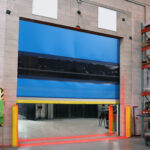
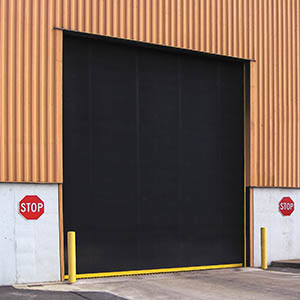
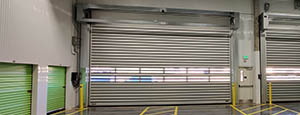
A roll-up door is a curtain of connected slats that travels vertically and coils above the opening. Unlike a sectional door, it does not need ceiling tracks extending deep into the building. That clearance matters. Operators commonly choose manual or motorized systems based on opening size, traffic, and operating frequency. Slat material, insulation, wind resistance, and safety controls also affect performance.

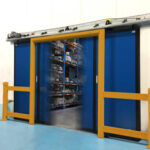
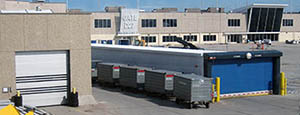
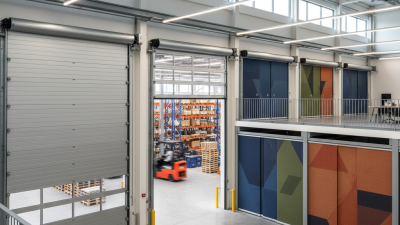
You will often find roll-up doors at warehouse loading bays, workshops, service areas, and parking facilities. A forklift may pass through a wide industrial opening, while a compact counter door can secure a small service window. Cold-storage sites may need insulated curtains and tight seals. Fire-rated openings require specifically tested assemblies; an ordinary rolling door is not a substitute. Not every opening needs one.

The market context is useful, but it needs careful reading. Grand View Research valued the global industrial doors market at about US$7.4 billion in 2022 and projected a 5.2% compound annual growth rate from 2023 to 2030. This category includes more than roll-up doors, so the figure is not a roll-up-door sales estimate. Still, it signals broad investment in industrial access systems. Buyers should match the door to real conditions: clear opening dimensions, daily cycles, nearby equipment, and exposure to dust or moisture. Measure twice. A fast door can still be the wrong door if its guides obstruct the work area.

How to Evaluate Roll-Up Door Manufacturers for Global Projects

Choosing a roll-up door manufacturer for a global project means checking evidence, not just price. Request documented wind-load, air-leakage, thermal-transmittance, and cycle-life results. Confirm the test methods suit the destination market. The UNEP/GlobalABC 2023 Global Status Report for Buildings and Construction reports that buildings accounted for 34% of global energy demand and 37% of energy- and process-related carbon emissions. Those figures are not door-specific, but they make insulation values and perimeter seals worth verifying. Ask for test reports, not unsupported catalog claims.

Check whether drawings, control systems, and safety features can be adapted to the site. A factory’s production capacity matters less if replacement slats or motors take months to arrive. Request spare-parts lead times, installation guidance, warranty terms, and a named service contact in the project region. Confirm product documentation aligns with applicable local standards; an ISO 9001 certificate alone does not prove a door meets performance requirements. A glossy catalog can still leave unanswered questions. Ask how the manufacturer handles corrosion near coastal sites and repeated operation in dusty warehouses. Compare bids using the same opening size, duty cycle, and accessories. One detail is easy to miss: a lower purchase price may shift costs to maintenance, downtime, or freight.

Top 10 Roll-Up Door Manufacturers and Their Market Strengths

The ten leading roll-up door manufacturers distinguish themselves through engineering depth, product range, and service coverage. Some specialize in high-cycle doors for busy distribution centers; others focus on insulated models for temperature-controlled facilities. Buyers should compare tested wind-load ratings, cycle-life data, sealing details, and spare-parts availability—not just opening speed. A door that looks robust may still need frequent maintenance.

Energy performance matters, too. The 2024 Global Status Report for Buildings and Construction, published by UNEP and the Global Alliance for Buildings and Construction, reports that buildings and construction used

32% of global energy in 2023 and produced 34% of energy-related carbon emissions.

That makes insulation and air leakage worth checking. Ask manufacturers for documented U-values and leakage test results. Then compare installation support and repair response times in the destination market. That trade-off is easy to miss.

A supplier with strong technical specifications but limited local service may be a poor fit. Rankings also shift by application, climate, and buyer priorities; no single manufacturer leads every category.

How Manufacturers Compare on Quality, Customization, and Service

For global buyers comparing the top 10 roll-up door manufacturers, quality is more than a thick curtain or sturdy-looking tracks. Ask for documented cycle, wind-load, and thermal-performance test results, then check that they match your opening size and site conditions. The 2023 Global Status Report for Buildings and Construction by UNEP says buildings used 34% of global energy in 2022. That makes insulation, perimeter seals, and closing speed worth comparing, especially for temperature-controlled spaces. Small details matter.

Tips: Request a sample specification, not just a brochure. Check curtain gauge, corrosion protection, safety-edge options, and replacement-part availability. Compare like with like; test methods and warranty exclusions can differ.

Customization and service often reveal more than sales claims. Ask whether the manufacturer can document clearances, motor compatibility, and control options before production. Confirm who handles installation guidance, commissioning, and urgent spare-parts requests across your region. A short response time sounds reassuring, but named service contacts and realistic lead times are stronger evidence. Some comparisons remain imperfect: local installation quality can affect performance, even with a well-tested door.

Top 10 Roll-Up Door Manufacturers: A Buyer Comparison Checklist

Use these evidence points to compare manufacturers on quality, customization, and service. The chart counts checklist items; it does not rate or rank any manufacturer.

How to use it: For each supplier, request documentation for quality (cycle rating, wind-load rating, corrosion protection, and safety compliance), customization (dimensions, materials or finishes, and controls or accessories), and service (warranty, spare-parts availability, and installation or after-sales support). Verify specifications against your project requirements.

How Global Buyers Can Verify Suppliers and Plan Procurement

For a global roll-up door purchase, verify the factory behind the quotation, not just its catalog. Request recent production photos, material specifications, dimensional tolerances, and test records for the exact door model. Check that certificates name the manufacturing site and product range. Ask for references from projects with similar opening sizes, wind exposure, and operating cycles. Small detail. Confirm who handles installation guidance, spare parts, and warranty claims across time zones. A polished sample may hide inconsistent batch quality, so request a pre-shipment inspection plan with measurable pass criteria.

Plan delivery as carefully as product selection. The World Bank’s 2023 Logistics Performance Index compares 139 economies across six areas, including customs efficiency and shipment timeliness. Use it as a route-risk reference, not a supplier scorecard. The OECD’s 2022 Trade Facilitation Indicators cover 163 economies and 11 policy areas; they can help buyers identify likely border-process delays. Build those risks into the schedule. Confirm packaging dimensions, loading method, shipping terms, document responsibilities, and destination handling before paying a deposit. Keep a buffer for port congestion and replacement components. One uncomfortable question remains: can the supplier prove its promised lead time with dated production and dispatch records? A missed date can be more costly than a modest price difference.

Top 10 Roll Up Door Manufacturers for Global Buyers - How Global Buyers Can Verify Suppliers and Plan Procurement

Use this 10-point checklist to assess potential suppliers and plan a roll-up door purchase. Requirements vary by door design, destination market, and project conditions; confirm applicable standards and specifications before ordering.

No. Evaluation area Evidence to request How to verify Procurement planning note
1 Company identity and facility Registered business details, factory address, product catalogue, and current facility photos or video. Check registration details against the relevant public business registry; arrange a live video call or independent factory audit. Confirm whether the quoted party is the manufacturer, a trading company, or both, and identify who is responsible for quality and after-sales support.
2 Product suitability Technical drawings and specifications covering opening size, curtain or panel material, guides, hood, operation, and intended duty. Compare the submitted specification with the project schedule and site conditions; request clarification for every deviation. Define dimensions, usage frequency, environment, insulation needs, and manual or powered operation before requesting a final quotation.
3 Applicable standards and compliance Declarations, test reports, and certificates relevant to the exact door model and destination market. Check issuing-body details, report scope, product identification, and validity directly with the issuer where possible. Confirm local requirements with the project professional or authority. Do not assume a certificate applies to every model or market; establish required documentation before production.
4 Performance and safety data Applicable test data for wind resistance, cycle performance, operation, and safety features, where required for the specified design. Match each report to the quoted configuration, dimensions, and test method; seek independent testing or engineering review for critical applications. Set project-specific acceptance criteria. Performance values can depend on size, installation, components, and test conditions.
5 Materials and component traceability Material grades or specifications, component list, and available batch or supplier records for key parts. Compare records with the approved bill of materials and purchase specification; inspect samples or incoming materials when appropriate. Specify acceptable substitutions and require written approval for changes to materials, motors, controls, or safety devices.
6 Quality control and inspection Inspection and test plan, production checkpoints, finished-product records, and any quality-management certificate claimed. Verify certificate scope and validity with its issuer; agree on inspection criteria and whether a third-party pre-shipment inspection is needed. Record tolerances, appearance criteria, functional tests, packaging checks, and approval responsibilities in the purchase contract.
7 Production capacity and lead time Written production schedule, current workload estimate, order milestones, and stated lead time. Ask for a project-specific schedule and confirm how design approval, material availability, inspection, and shipping affect the delivery date. Build in time for drawing approval, sample review, production, inspection, freight, customs clearance, and site readiness.
8 Packaging and international shipping Packing method, package dimensions and weight, shipping terms, and draft export-document list. Review packing details with the freight forwarder and confirm that shipping terms, insurance responsibilities, and named delivery points are unambiguous. Budget for freight, insurance, import duties, taxes, customs handling, unloading, and any required local transport.
9 Installation and after-sales support Installation instructions, wiring diagrams for powered doors, spare-parts list, warranty terms, and service contact process. Check that documentation matches the ordered configuration and confirm response channels, parts availability, and responsibilities in writing. Arrange qualified local installation where required and plan for commissioning, operator training, maintenance, and replacement parts.
10 Commercial terms and contract controls Itemized quotation, payment milestones, delivery terms, warranty exclusions, change-control process, and remedies for nonconformity or delay. Compare quotations on the same technical basis; verify beneficiary and bank details independently before transferring funds. Tie payments to defined milestones and approved documents; state governing specifications, inspection rights, delivery dates, and dispute procedures.