China Top 10 Bifold Manufacturers for Global Buyers

China’s bifold manufacturers are gaining attention as global buyers seek wider openings, slimmer frames, and competitive production costs. Grand View Research places the global doors market on a steady growth path, supported by residential renovation and commercial construction. Its market analysis also highlights energy efficiency, material innovation, and customization as major purchasing factors. These trends directly influence modern bifolds.

Bifold doors look simple. They are not. A 6-meter opening may depend on precise hinges, smooth rollers, reinforced panels, and accurate installation. Small alignment errors can create dragging, air leakage, or difficult operation. Building-science educator Steve Easley offers a useful principle: “A building is a system, not a collection of parts.” That principle matters when evaluating Chinese suppliers, because frame design alone cannot prove long-term performance.

This guide introduces China’s top 10 bifold manufacturers for global buyers. The selection considers export experience, factory capability, product range, thermal performance, hardware quality, testing documentation, and after-sales support. Reports from Mordor Intelligence also identify customization and energy-conscious design as important directions across the wider door industry. Buyers should therefore compare U-values, air and water resistance, wind-load testing, finish durability, and opening-cycle performance.

No ranking is perfect. A strong brochure cannot replace factory verification. One weak roller may affect an entire installation. Buyers should request samples, technical drawings, certification records, and project references before placing large orders. Lead times, packaging methods, replacement hardware, and installation guidance deserve equal attention. The best supplier is not always the cheapest. It is the one that delivers reliable bifolds under real site conditions.
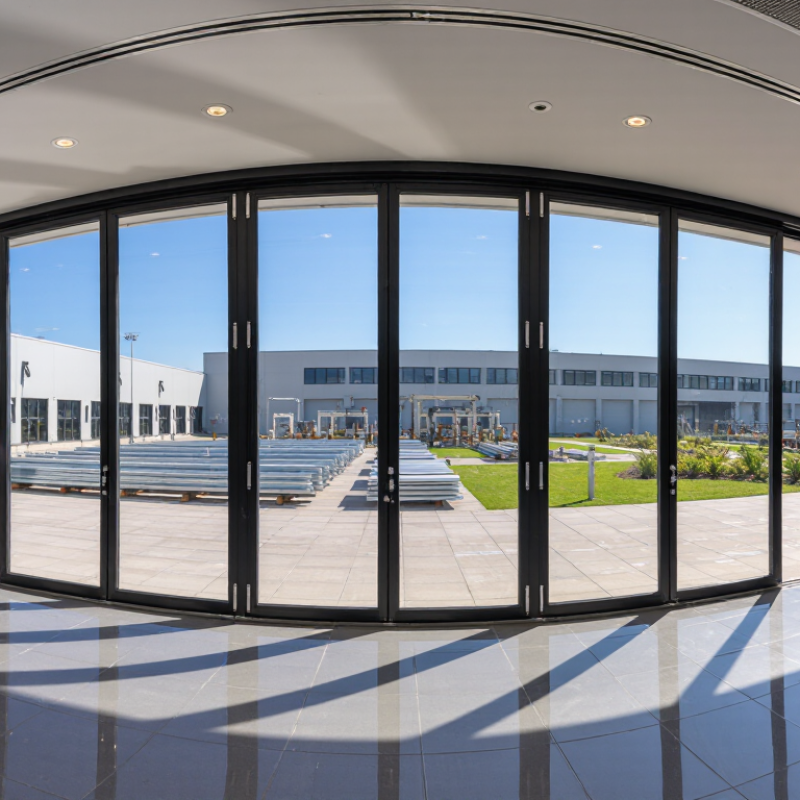
China Top 10 Bifold Manufacturers for Global Buyers

What Defines a Leading Chinese Bifold Manufacturer for Global Buyers

A leading Chinese bifold manufacturer for global buyers must offer more than attractive factory pricing. It should demonstrate controlled engineering, stable materials, and repeatable production. The International Energy Agency reports that buildings consume about 30% of global final energy. Therefore, frame alignment, weather seals, glass performance, and thermal breaks deserve serious attention. A door that looks precise in a showroom may fail after repeated exposure to rain, heat, and coastal air.

Experience appears in small details. Strong manufacturers provide tested drawings, hardware schedules, installation tolerances, and replacement-part plans. They should explain U-values, air leakage, water penetration, and wind-load results in practical language. The U.S. Department of Energy notes that windows can contribute significantly to household heating and cooling losses, sometimes reaching 30%. Poorly specified bifold systems can increase that problem. Not every supplier measures the same way. Buyers should request reports from accredited laboratories, not only factory brochures.

Quality management also needs evidence. The ISO Survey 2023 recorded more than 1.2 million ISO 9001 certificates worldwide, but certification alone cannot prove product performance. A dependable manufacturer welcomes third-party inspections, batch sampling, and production audits. It should trace aluminum profiles, glass, seals, and hardware to specific orders. Ask for five-year field records. Ask about failures.

The best partner is transparent about limitations. Lead times may shift during peak seasons. Custom finishes can create color variation. Honest warnings are more valuable than perfect promises. Consistent communication, export packaging, clear warranty terms, and installation guidance separate a capable manufacturer from a low-cost workshop.

How the Top 10 Bifold Manufacturers Were Selected and Compared

Selecting the top ten bifold manufacturers requires more than comparing catalog photos. We reviewed production experience, material options, engineering capacity, and export readiness. Factory records, sample quality, and documented quality procedures carried greater weight than marketing language.

Performance was compared through measurable details. These included frame strength, glass specifications, thermal insulation, air tightness, water resistance, and hardware durability. We also examined opening cycles under repeated-use testing. Small details mattered: drainage design, gasket compression, corner alignment, and roller movement. Lead times, minimum order quantities, packaging protection, and replacement-part support were assessed for international projects. Technical drawings and installation guidance also influenced the comparison.

Evidence was not always complete. Some suppliers shared test reports but limited independent verification. Others offered strong samples, yet their delivery history needed closer review. We therefore compared factory audits, customer references, inspection records, and pre-shipment controls where available. Pricing was considered, but it was never treated as the main measure of value. A lower quote may hide thinner profiles, weaker fittings, or higher installation costs. This method is practical, though not perfect. Product performance can change between batches, climates, and installation teams. Buyers should request current samples, written specifications, and project-specific testing before making a final decision.

China Top 10 Bifold Manufacturers for Global Buyers - How the Top 10 Bifold Manufacturers Were Selected and Compared

No. Evaluation Dimension Weight What Was Compared Preferred Evidence Scoring Standard
1 Product Range 15% Availability of folding doors for residential, commercial, interior, exterior, balcony, and large-opening applications. Current product catalogue, technical drawings, configuration options, and application photographs. Higher scores for broader, clearly documented product coverage without relying only on standard-size products.
2 Customization Capability 12% Ability to customize dimensions, panel layouts, opening direction, hardware, glazing, finishes, screens, and threshold details. Approved drawings, sample configurations, engineering change records, and project references. Higher scores for documented engineering support and repeatable made-to-order production.
3 Material and Component Specifications 12% Clarity of aluminium, steel, timber, glass, seal, roller, hinge, lock, and finish specifications. Material certificates, component datasheets, coating information, glass specifications, and approved bills of materials. Higher scores for traceable materials and clearly defined component grades rather than unspecified “premium” claims.
4 Performance Testing 12% Evidence relating to air permeability, water tightness, wind resistance, operating force, durability, thermal performance, and acoustic performance where applicable. Independent laboratory reports, test methods, test dates, sample descriptions, and applicable market standards. Higher scores for recent, product-specific, third-party testing with clearly stated conditions and results.
5 Quality Management 10% Incoming inspection, in-process controls, final inspection, non-conformance handling, traceability, and corrective actions. Quality manuals, inspection checklists, production records, audit reports, and valid management-system certificates where applicable. Higher scores for documented and repeatable quality procedures supported by production records.
6 Manufacturing Capacity 10% Production equipment, workshop organization, ability to handle repeat orders, large openings, special profiles, and project quantities. Factory audit records, equipment lists, production-flow information, capacity statements, and verified project references. Higher scores for demonstrated capacity and reliable production planning, not simply stated annual output.
7 Lead-Time and Order Management 8% Quotation speed, drawing approval, sample production, manufacturing lead time, order tracking, and schedule communication. Written lead-time commitments, order schedules, sample records, and documented communication procedures. Higher scores for transparent schedules and consistent communication throughout the order cycle.
8 Export and Compliance Readiness 8% Experience with export packaging, commercial documents, country-specific requirements, installation instructions, and customs information. Packing lists, invoices, certificates of origin, installation manuals, compliance files, and destination-market documentation where applicable. Higher scores for complete, consistent documentation tailored to the buyer’s destination market.
9 Packaging and Logistics Protection 6% Protection of glass, panels, frames, hardware, and finished surfaces during handling and international transport. Packaging specifications, loading photographs, damage-control procedures, pallet details, and shipping feedback. Higher scores for packaging designed for long-distance transport and easy site identification.
10 Warranty and After-Sales Support 7% Warranty terms, spare-parts availability, installation assistance, troubleshooting, claims handling, and response time. Written warranty policy, spare-parts list, installation guides, service contacts, and documented claim procedures. Higher scores for clear coverage, accessible replacement parts, and defined after-sales responsibilities.
Total Comparison Weight 100% Each shortlisted manufacturer is compared using the same evidence-based criteria and weighted scoring method.

Note: Product claims, certifications, test results, production capacity, lead times, and warranty terms should be verified against current supplier documents before purchase. Requirements may vary by destination market and project type.

Profiles of China’s Top 10 Bifold Manufacturers and Their Specialties

China’s top bifold manufacturers serve different project needs, from compact homes to large commercial spaces. One specializes in thermally broken aluminum doors for cold climates. Another focuses on slim frames, maximizing daylight through wide openings. A third produces folding glass walls with reinforced tracks for frequent use. Its engineering team tests panel alignment under repeated movement. A fourth makes weather-resistant systems for coastal buildings. Salt air remains a serious challenge.

A fifth manufacturer develops timber-aluminum bifolds, combining interior warmth with exterior protection. A sixth supplies customized sizes for hotels, villas, and renovation projects. Its factory uses CNC cutting and checks corner joints manually. A seventh concentrates on acoustic folding doors for offices and meeting rooms. Measured performance matters more than attractive brochures. An eighth offers budget-conscious PVC systems for residential developments. However, lower cost may reduce finish options and hardware flexibility.

A ninth manufacturer builds oversized bifolds for retail entrances and hospitality spaces. It pays close attention to load-bearing hinges and floor drainage. The tenth specializes in export-ready hardware and private-label production. Its quality team records glass thickness, coating color, and packing conditions before shipment. Samples should be tested before full production. Factory audits, inspection reports, and clear warranty terms improve purchasing confidence. Still, no manufacturer is perfect. Buyers should question vague performance claims and review installation support carefully.

China’s Top 10 Bifold Manufacturers: Specialty Profile Overview

This profile-level comparison counts how many of the ten manufacturers are associated with each specialty. Categories are not mutually exclusive, so one manufacturer may contribute to several categories. Custom sizing, aluminum systems, and export-oriented production are the most frequently identified capabilities.

Product Quality, Customization, Certifications, and Production Capacity

China Top 10 Bifold Manufacturers for Global Buyers

Product quality should begin with measurable evidence, not polished showroom samples. The 2023 ISO Survey places China among the world’s largest holders of ISO 9001 certificates. However, certification alone cannot prove consistent bifold performance. Buyers should request batch inspection records, welding samples, coating thickness, and hardware cycle tests. Air, water, and wind-load results should follow standards such as EN 14351-1 or ASTM E283. Small details matter. Poor drainage can damage an excellent frame.

Customization separates capable manufacturers from simple traders. Leading factories can adjust panel widths, opening directions, thermal breaks, glass specifications, colors, and hardware positions. A serious supplier should provide CAD drawings, sample approval, and a documented change-control process. According to Grand View Research’s construction market analyses, energy efficiency remains a major demand driver worldwide. Therefore, buyers should compare U-values, glazing configurations, and weather seals instead of judging appearance alone. Some suppliers still describe “customization” too loosely.

Production capacity also needs physical verification. Ask for monthly output, extrusion sources, powder-coating capacity, glass-processing equipment, and current order loading. The UN Comtrade database shows China remains a major global exporter of manufactured building products, but export scale does not guarantee factory discipline. Request a realistic production schedule, not an optimistic promise. Pre-shipment inspection helps. Factory audits help more. Even then, mistakes happen, and buyers should keep contingency time for tooling changes, packaging damage, or incomplete documentation.

Pricing, Export Services, Lead Times, and Buyer Evaluation Factors

For global buyers, comparing China’s top 10 bifold manufacturers requires more than checking catalog prices. Factory quotations commonly vary with panel size, glass type, hardware grade, finish, and order volume. A useful benchmark separates the door price from packaging, inland transport, inspection, and ocean freight. Ask for a dated quotation. Prices can move with aluminum and exchange rates. Very low offers deserve questions. We have seen attractive samples hide thinner profiles or unclear accessory specifications.

Export service is equally practical. Experienced suppliers should provide shop drawings, English documentation, customs classification support, wooden-crate details, and loading photos. Confirm whether the quoted Incoterm matches your customs responsibility. A reliable export team answers within one business day and records revisions in writing. Small errors matter. A missing handle, incorrect opening direction, or weak moisture protection can delay installation and create claims. Independent pre-shipment inspection is worthwhile, especially for first orders.

Lead time should be measured from approved drawings, deposit receipt, and confirmed hardware, not from the first inquiry. Standard projects may take 20 to 35 days, while custom colors or unusual dimensions often need longer. Request a production schedule with milestone dates. Evaluate sample quality, testing records, warranty language, replacement-part access, and communication discipline. Visit a factory when possible, or use a qualified third-party audit. My own assessment would remain cautious: one successful shipment does not prove stable performance. Compare several completed projects and ask what went wrong, not only what went well.