
- High-Performance Doors
-
- Applications
-
-
-
- Clean Room
Stainless steel or composite materials help maintain clean rooms.
-
-
- Coolers
Quick opening speeds & tight seals for temperature control.
-
-
- Parking
Improve security & traffic flow and enhance architectural style.
-
-
- Hurricane Zone
Withstand winds up to 175 mph and comply with the Florida Building Code.
-
-
-
-
- USDA / FDA / cGMP
Increase productivity & address stringent USDA, FDA & cGMP requirements.
-
-
- Freezers
High-speed & perimeter seals minimize the air exchange between areas.
-
-
- Security
High speed & durability ensure secure access.
-
-
- Ventilation
Perforated or screen door panels allow improved air circulation.
-
-
-
-
- Fire Station Emergency Response
When time is of the essence, high speed and reliability are crucial.
-
-
- Warehousing
Fast cycle times and secure seals keep environments separated.
-
-
- Loading Dock
Rugged design & secure seal for oversized openings.
-
-
- Large Openings
Break-away functionality with rugged design seals oversized openings.
-
-
-
-
- Heavy Equipment
Withstands challenges of heavy equipment and fleet truck/car wash environments.
-
-
- Self-Storage
Fast opening speeds and reliable, durable construction keep facilities secure and protected.
-
-
- Industries
-
-
-
- Automotive Dealerships
Reduce energy costs, increase productivity and comfort and enhance customer perception.
-
-
- Cold Storage & Processing
Increase productivity and operational efficiency while reducing energy and maintenance costs.
-
-
- Parking
We offer solutions for Apartment / Condo & Loft, Standalone Parking Facilities and Office Buildings
-
-
-
-
- Food & Beverage
Doors specifically engineered for USDA/FDA and cGMP environments, and assured compliance for uncompromising performance.
-
-
- Mfg/Dist/Warehousing
A complete product line allows facilities to increase efficiency and safety and reduce maintenance and energy costs.
-
-
- Government
Ensure effective security and environmental controls are maintained for critical government operations.
-
-
-
-
- Transit
Keep operations running smoothly and efficient while reducing energy and maintenance costs.
-
-
- Pharma, Nutraceutical & Biotech
Doors that offer quick, secure access, environmental control and reliability for life science facilities.
-
-
- Support Resources
- Parts
- Contact Us
- Blog/News
- Why Rytec
- Sales Rep Locator
- Careers
- Dealers
- Architectural Resources


























Why Choose a Portable Car Jump Starter for Global Buyers?
For global drivers, a dead battery rarely arrives at a convenient moment. It may happen outside a hotel, beside a rural highway, or during a freezing morning commute. The ADAC Pannenstatistik 2024 recorded approximately 3.39 million roadside breakdowns in Germany during 2023. Starter-battery problems caused 43.2% of them. AAA’s roadside assistance reporting also places battery failure among its most frequent service needs. These figures reveal a practical problem, not merely a product trend.
A Portable Car Jump Starter offers independent emergency support when another vehicle is unavailable. Modern lithium models can fit inside a glove compartment while delivering enough starting power for many passenger vehicles. Battery expert Isidor Buchmann wrote, “A battery is like a living organism; it ages even when not in use.” His observation matters globally because heat, cold, storage time, and poor maintenance affect battery performance differently. A buyer in Canada may prioritize cold-cranking capability. A driver in Southeast Asia may value heat resistance and shelf stability.
Still, this solution is not foolproof. A neglected unit can be as useless as a dead car battery. Buyers should check peak current, operating temperature, cable quality, reverse-polarity protection, recharge options, and verified safety certifications. Vehicle compatibility also requires careful attention. Some diesel engines and larger SUVs need stronger output. A compact device may look impressive, yet fail under real load. That uncomfortable detail deserves attention. For international buyers, the best Portable Car Jump Starter is not simply the smallest or cheapest model. It is the one supported by credible testing, clear specifications, dependable instructions, and realistic field experience.
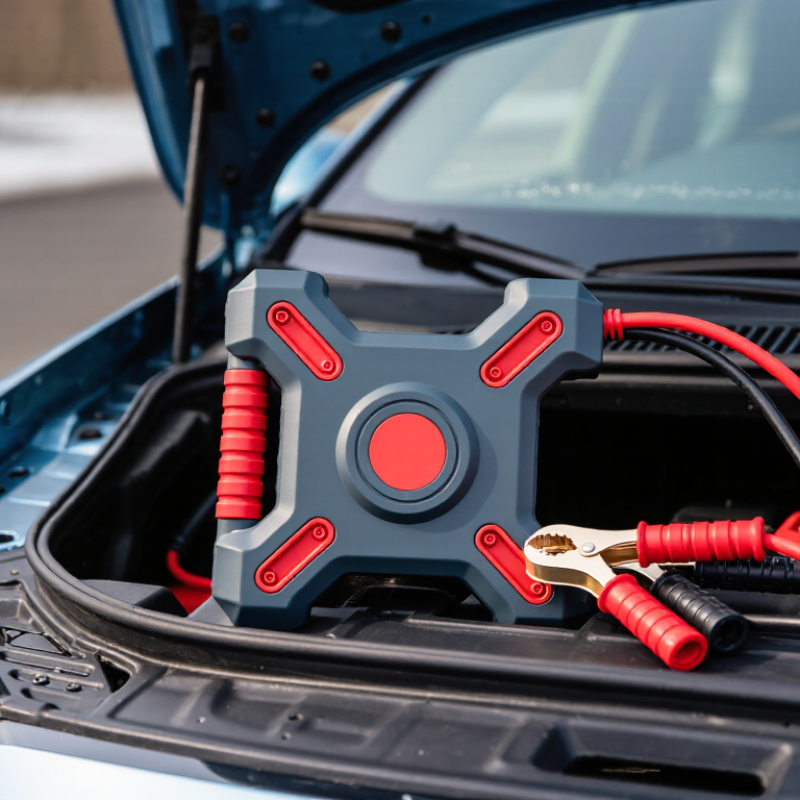
Table of Contents [Hide]
AAA Roadside Data: Battery Failures Make Portable Backup Power Essential
Why Choose a Portable Car Jump Starter for Global Buyers?
A dead battery is not a rare roadside inconvenience. AAA roadside-service data reports more than seven million battery-related calls annually in the United States. Its guidance also places battery trouble among the leading reasons drivers request assistance. In Germany, the ADAC Pannenstatistik 2024 recorded starter-battery failures in 44.1% of vehicle breakdowns during 2023. The figures are difficult to ignore.
Cold mornings, overheated engine bays, and vehicles parked for weeks can weaken starting power. A portable jump starter keeps emergency energy inside the glove compartment. It can help a driver restart a car without waiting beside a dark road. The best units include reverse-polarity protection, short-circuit control, clear status lights, and cables long enough for awkward battery positions. Those details matter more than impressive peak-current claims.
I once assumed a larger battery always meant better reliability. That was too simple. Storage temperature, charging habits, cable quality, and vehicle size also affect performance. Global buyers should check local vehicle specifications and the device’s safety certifications. A compact model may suit a small petrol car, but a larger diesel engine can demand more starting capacity. Keep it charged. Test it before winter, not during the breakdown.