What Is a Rolling Door and How Does It Work?

A rolling door is a practical barrier that moves vertically instead of swinging outward. Its curtain travels along side guides and gathers around a barrel above the opening. This design saves valuable floor space. You may see rolling doors in warehouses, garages, retail stores, loading areas, and service buildings. They often use steel, aluminum, or insulated panels, depending on security, climate, and daily traffic needs.

The operating principle is straightforward, but the details matter. A motor, spring system, or manual chain turns the barrel. As it rotates, the curtain rises or lowers through the guides. Bottom bars, locks, sensors, and safety brakes help control movement. In a busy warehouse, a door may open dozens of times daily, while a home garage door usually faces a different workload. Correct sizing is essential. A door that is too heavy can strain its motor and shorten its service life. Small alignment problems can also create scraping sounds, uneven movement, or sudden stoppage.

This guide explains what rolling doors are, how their main components work, and where different designs fit best. It also considers maintenance, insulation, security, and operating safety. Real-world installation experience shows that simple mechanisms still need careful inspection. Not every rolling door suits every building. That point is easy to overlook. Measurements, wind exposure, clearance, and usage frequency should influence the final choice. Manufacturer instructions remain important, because designs and safety features vary. Some assumptions may need reconsideration as technology changes, especially with smart controls and improved materials. Understanding the mechanism helps property owners ask better questions and avoid expensive, preventable mistakes.

What Is a Rolling Door and How Does It Work?

What Is a Rolling Door?

What Is a Rolling Door and How Does It Work?

What Is a Rolling Door?

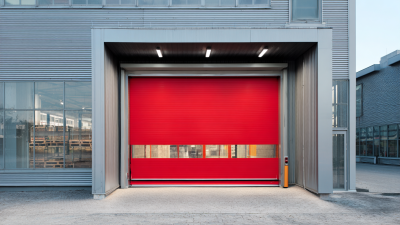
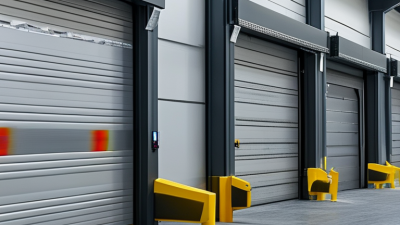
A rolling door is a movable barrier made from connected slats, curtains, or panels. It opens vertically, then coils around a barrel above the doorway. This design saves valuable wall and floor space. It is common in warehouses, workshops, garages, retail units, and service openings.

The operating principle is straightforward. Guides hold the curtain on both sides. A spring, chain hoist, or motor turns the barrel. As the barrel rotates, the curtain rises or lowers along the guides. Bottom bars, locking systems, and safety edges help control movement. Some industrial models also include sensors that stop the door when an obstruction appears.

A 2024 market analysis by Grand View Research estimated the global rolling doors market at several billion U.S. dollars, with continued growth expected through the decade. That trend reflects demand for compact access systems and stronger facility protection. Still, market growth does not guarantee a suitable installation. Door width, opening frequency, wind exposure, insulation needs, and maintenance access must be evaluated carefully.

Small details matter.

For example, a dusty guide can increase friction and produce uneven movement. A weakly supported barrel may cause vibration, noise, or premature wear. The Door and Access Systems Manufacturers Association emphasizes correct sizing, installation, and regular inspection in its technical guidance. In practice, a rolling door may function every day yet remain poorly adjusted. That is where many specifications need honest reconsideration.

What Are the Main Parts of a Rolling Door?

A rolling door works through a coordinated set of mechanical parts. The curtain, made from connected steel or aluminum slats, forms the moving barrier. These slats bend around a barrel above the doorway. When the door rises, the curtain rolls into a compact coil. When it lowers, the slats travel down both guide rails.

The guide rails keep the curtain aligned and reduce side movement. Small debris inside a rail can cause scraping or uneven travel. The barrel supports the rolled curtain. Inside it, torsion springs may balance the door’s weight. Some systems use a tubular motor instead. The motor transfers force through a drive assembly, while a protective hood covers the upper mechanism. At the bottom, the bottom bar adds weight and helps the curtain close evenly. It may also contain a rubber seal that limits drafts and light.

Controls can include a wall switch, remote control, manual chain, or emergency release. Safety sensors can stop or reverse movement when they detect an obstruction. These parts need correct adjustment, not just power. I have seen doors operate smoothly while hiding worn springs or loose fasteners. That can be easy to miss. A practical inspection checks unusual noise, rail alignment, curtain damage, and stopping performance. I cannot judge every internal fault without opening the housing, so qualified service remains important when symptoms persist.

How Does a Rolling Door Operate Step by Step?

What Is a Rolling Door and How Does It Work?

How Does a Rolling Door Operate Step by Step?

A rolling door uses connected slats that move vertically and collect around a barrel above the opening. The curtain sits inside two side guides, which keep its movement controlled. Depending on the design, a tubular motor, chain system, or manual spring mechanism provides the lifting force. It sounds simple. However, accurate installation matters greatly.

When the operator receives an opening signal, the motor turns the barrel. The barrel pulls the slats upward, and each section follows the guides. As the curtain rises, it wraps into a compact roll above the doorway. A limit setting stops the motor at the correct height. This prevents unnecessary strain on the curtain, guides, and drive system.

To close, the motor reverses direction. The slats unwind gradually and travel downward through the side channels. A bottom edge meets the floor or threshold, while a lock or holding system helps keep the door secure. Many modern systems include safety edges, photo sensors, or emergency release controls. These features can stop movement when an object interrupts the path.

Keep the area clear.

In practical use, unusual noise often signals friction, loose hardware, or poor alignment. A door may still operate while damage develops quietly. Cleaning the guides and checking fasteners can help, but electrical adjustments require qualified service. My experience is that small maintenance delays become expensive repairs, especially in busy commercial openings.

What Is a Rolling Door and How Does It Work? - How Does a Rolling Door Operate Step by Step?

The dimensions and operating details below are typical design references. Actual performance depends on the door size, curtain material, installation conditions, and control system.
Stage / Dimension What Happens Main Components Involved Typical Data or Operating Detail Purpose / Result
1. Closed Position The curtain covers the opening and rests near the floor or sill. The bottom bar remains aligned with the side guides. Door curtain, bottom bar, side guides, guide stops, locking or control system The curtain is supported laterally by the guides; the opening is normally fully sealed only when suitable seals are installed. Provides separation, security, weather resistance, light control, or fire compartmentation where the door is specifically rated for that purpose.
2. Open Command A user activates a wall switch, remote control, access-control device, pull switch, or automatic sensor. Control station, receiver, sensor, controller, and electrical supply Powered doors require an appropriate electrical supply and protective isolation. Manual doors use a handle, chain, crank, or direct lifting force instead. Sends an opening request to the operating mechanism.
3. Safety Check The control system checks whether a safety edge, photoelectric sensor, emergency stop, or interlock is preventing movement. Photoelectric sensors, safety edge, limit controls, emergency stop, interlocks Sensor arrangements vary by design. A blocked or failed safety device can inhibit movement or cause the door to stop or reverse. Reduces the risk of impact, crushing, trapping, or operation into an obstruction.
4. Motor Activation The controller energizes the motor. The motor produces rotary torque and transfers it to the drive shaft or barrel. Electric motor, gearbox, brake, controller, drive shaft or barrel Many powered rolling doors use a geared motor because the curtain requires controlled torque rather than high rotational speed. Starts controlled rotation of the rolling assembly.
5. Curtain Lifting The bottom bar rises, pulling the interconnected slats or flexible curtain upward. Curtain slats or fabric, bottom bar, suspension links, drive barrel Rigid slats articulate at their joints and follow the curved path into the headbox or overhead coil area. Converts rotary motion into vertical movement across the doorway.
6. Guiding and Coiling The side guides keep the curtain edges aligned while the curtain wraps around the barrel or folds into the header space. Side guides, guide rails, barrel, hood or headbox, curtain links The required headroom depends on the curtain height, slat profile, barrel diameter, hood design, and available clearance. Maintains stable travel and stores the curtain above the opening.
7. Fully Open Position The curtain reaches its programmed upper limit, leaving the passage clear. Limit switches or encoder, motor brake, barrel, controller The upper stopping point should be set so that the bottom bar does not collide with the hood, barrel, or structural components. Stops the door consistently and prevents unnecessary mechanical travel.
8. Close Command A closing command is issued manually, automatically, or through an access-control sequence. Control station, timer, motion detector, access-control system, controller Automatic closing is commonly used where traffic flow, security, temperature control, or compartmentation is important. Initiates the return cycle after the opening has been used.
9. Curtain Unrolling The motor reverses the barrel rotation. The curtain unrolls and the bottom bar travels downward through the side guides. Motor, gearbox, barrel, curtain, side guides, bottom bar The controller regulates direction and stopping points; some systems also use adjustable speed or soft-start and soft-stop functions. Returns the curtain to the closed position in a controlled manner.
10. Obstruction Response If the closing curtain detects an obstruction, the control system may stop, reverse, or require a reset, depending on the equipment design. Safety edge, photoelectric sensor, current monitoring, controller Safety features must be correctly positioned, tested, and maintained; they do not eliminate the need for a clear operating area. Limits the consequences of contact with people, vehicles, equipment, or stored materials.
11. Closed Limit Reached The bottom bar reaches the programmed lower limit and the motor stops. Lower limit switch or encoder, motor brake, bottom bar, guide stops The lower limit should allow the curtain to meet the sill or floor correctly without excessive pressure or slack. Creates a repeatable closed position and protects the drive components from over-travel.
12. Manual Operation When no motor is fitted or power is unavailable, the curtain is moved using a spring-balanced mechanism, chain, crank, or manual lift system. Counterbalance spring, chain hoist, crank handle, manual lock, curtain A counterbalance reduces the effort needed to move the curtain but does not make an improperly maintained or damaged door safe to operate. Provides operation without powered drive equipment or during an emergency release procedure.
Key Construction Data A rolling door is assembled from a flexible or articulated curtain that moves vertically and is stored above the opening. Curtain, barrel, guides, bottom bar, hood, drive, controls, safety devices Curtains may use steel, aluminum, or other engineered materials. Slat thickness, insulation, wind resistance, opening size, and fire rating vary by application. Allows the same basic operating principle to serve commercial, industrial, residential, security, and specialty applications.
Maintenance Checkpoints The door is inspected for smooth travel, unusual noise, damaged slats, worn guides, loose fasteners, sensor faults, and incorrect limits. Guides, curtain joints, barrel, motor, brake, safety devices, controls Inspection frequency should follow the manufacturer’s instructions, local regulations, usage level, and the consequences of failure. Maintains reliable operation and helps identify hazards before they become failures.

What Types of Rolling Doors Are Available?

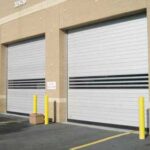
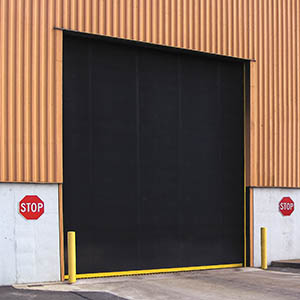
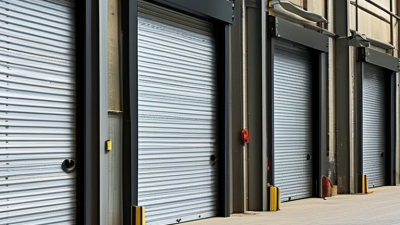
Rolling doors come in several forms, and each suits a different operating environment. Rolling steel doors are common in warehouses, workshops, and loading areas. Their interlocking slats provide strength against impacts, dust, and daily handling. Heavy-duty models usually need more space above the opening.

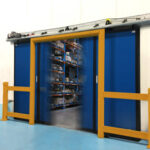
Insulated rolling doors use foam-filled slats to reduce heat transfer and outside noise. They can help maintain steadier indoor temperatures in garages or storage buildings. Non-insulated steel doors are lighter and often cost less, but they offer limited thermal protection. Aluminum rolling doors resist corrosion and operate with less weight. They work well in retail openings, parking areas, and humid locations.

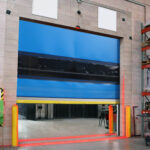
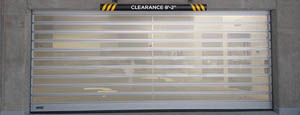
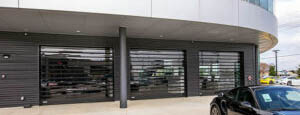
Perforated rolling grilles allow visibility and airflow while securing a passage. Stores often use them after closing, especially when customers can still see displays. Counter rolling shutters protect smaller openings, such as service counters and reception windows. Fire-rated rolling doors are designed for specific fire-control applications and require qualified installation and inspection.

In my experience, choosing a door by price alone creates problems later. A light door may struggle under frequent use. A strong door may be unnecessary for a quiet interior opening. Wind exposure, opening size, cycle frequency, and maintenance access deserve careful attention. Even the best door can perform poorly when guides, springs, or sensors are fitted incorrectly. Measure twice. Plan for repairs.

Where Are Rolling Doors Commonly Used?

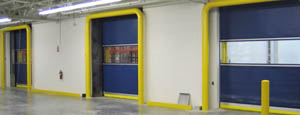
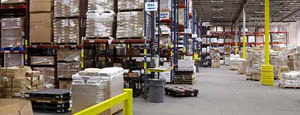
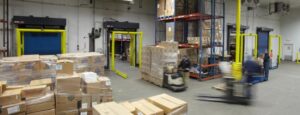
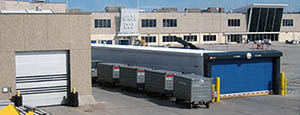
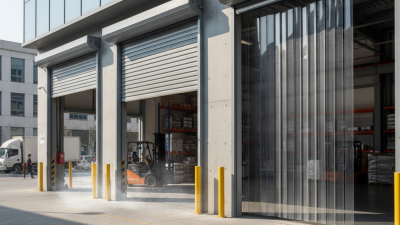
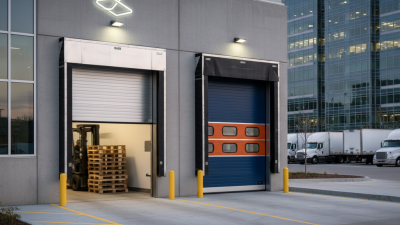
Rolling doors are common where openings must stay wide, secure, and usable many times each day. Their steel or aluminum slats travel through side guides and coil around a barrel above the opening. A motor, spring, or manual chain controls the movement. Warehouses use them between loading bays, production zones, and storage rooms because the curtain needs little overhead clearance.

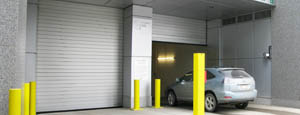
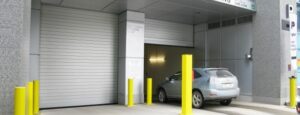
Self-storage facilities depend on rolling doors for repeated customer access and compact unit layouts. Parking garages use them at vehicle entrances, where dust, weather, and limited ceiling space create practical challenges. Retail back rooms, agricultural buildings, service workshops, and public utility facilities also use them.

The U.S. Department of Energy’s 2018 Commercial Buildings Energy Consumption Survey reported that space heating represented about 32% of commercial building energy use. This makes insulated rolling doors valuable in conditioned warehouses, although poor installation can weaken their benefit. The International Energy Agency’s 2024 Global Status Report states that buildings consume roughly 30% of global final energy. Door selection deserves more attention than it often receives.

Tips: Match the door to traffic frequency, opening size, wind exposure, and temperature control needs. Ask for tested air-leakage and cycle-life data, not vague durability claims. Check guides and bottom seals regularly; small gaps become noticeable during cold mornings. A mistake I often see is choosing the lowest initial price. It may create higher repair and energy costs later.