
- High-Performance Doors
-
- Applications
-
-
-
- Clean Room
Stainless steel or composite materials help maintain clean rooms.
-
-
- Coolers
Quick opening speeds & tight seals for temperature control.
-
-
- Parking
Improve security & traffic flow and enhance architectural style.
-
-
- Hurricane Zone
Withstand winds up to 175 mph and comply with the Florida Building Code.
-
-
-
-
- USDA / FDA / cGMP
Increase productivity & address stringent USDA, FDA & cGMP requirements.
-
-
- Freezers
High-speed & perimeter seals minimize the air exchange between areas.
-
-
- Security
High speed & durability ensure secure access.
-
-
- Ventilation
Perforated or screen door panels allow improved air circulation.
-
-
-
-
- Fire Station Emergency Response
When time is of the essence, high speed and reliability are crucial.
-
-
- Warehousing
Fast cycle times and secure seals keep environments separated.
-
-
- Loading Dock
Rugged design & secure seal for oversized openings.
-
-
- Large Openings
Break-away functionality with rugged design seals oversized openings.
-
-
-
-
- Heavy Equipment
Withstands challenges of heavy equipment and fleet truck/car wash environments.
-
-
- Self-Storage
Fast opening speeds and reliable, durable construction keep facilities secure and protected.
-
-
- Industries
-
-
-
- Automotive Dealerships
Reduce energy costs, increase productivity and comfort and enhance customer perception.
-
-
- Cold Storage & Processing
Increase productivity and operational efficiency while reducing energy and maintenance costs.
-
-
- Parking
We offer solutions for Apartment / Condo & Loft, Standalone Parking Facilities and Office Buildings
-
-
-
-
- Food & Beverage
Doors specifically engineered for USDA/FDA and cGMP environments, and assured compliance for uncompromising performance.
-
-
- Mfg/Dist/Warehousing
A complete product line allows facilities to increase efficiency and safety and reduce maintenance and energy costs.
-
-
- Government
Ensure effective security and environmental controls are maintained for critical government operations.
-
-
-
-
- Transit
Keep operations running smoothly and efficient while reducing energy and maintenance costs.
-
-
- Pharma, Nutraceutical & Biotech
Doors that offer quick, secure access, environmental control and reliability for life science facilities.
-
-
- Support Resources
- Parts
- Contact Us
- Blog/News
- Why Rytec
- Sales Rep Locator
- Careers
- Dealers
- Architectural Resources


























Top 10 CNC Machining Trainer Types for Global Buyers
Choosing the right CNC Machining Trainer is a practical investment for factories, technical schools, and distributors serving global markets. Buyers must examine more than price. Training depth, machine compatibility, software support, safety features, and language access can directly affect learning results. A compact desktop trainer may suit beginners. A full industrial simulator may better prepare advanced operators for production environments.
Mike Lynch, founder of CNC Concepts and a recognized CNC training specialist, has stated, “Good CNC training connects programming decisions with what happens at the machine.” That connection matters. Learners should see how tool paths influence cutting quality, cycle time, material waste, and machine wear. Trainers with realistic controls, programmable axes, workholding examples, and fault simulations provide stronger practical value. Remote-access features can also support international teams, although internet dependence may create weaknesses.
This guide reviews the Top 10 CNC Machining Trainer Types for Global Buyers. It considers entry-level units, multi-axis systems, virtual simulators, robotic cells, and customized training platforms. Each category has strengths and limitations. Some products appear advanced but offer shallow instruction. Others look simple yet teach essential habits effectively. That distinction deserves careful attention. Buyers should compare curriculum alignment, service response, replacement parts, documentation, and measurable assessment tools. Certification support may help, but it does not automatically prove operator competence. Real performance still requires supervised practice. A perfect trainer does not exist. The best choice depends on learner skill, production goals, budget, and local support.
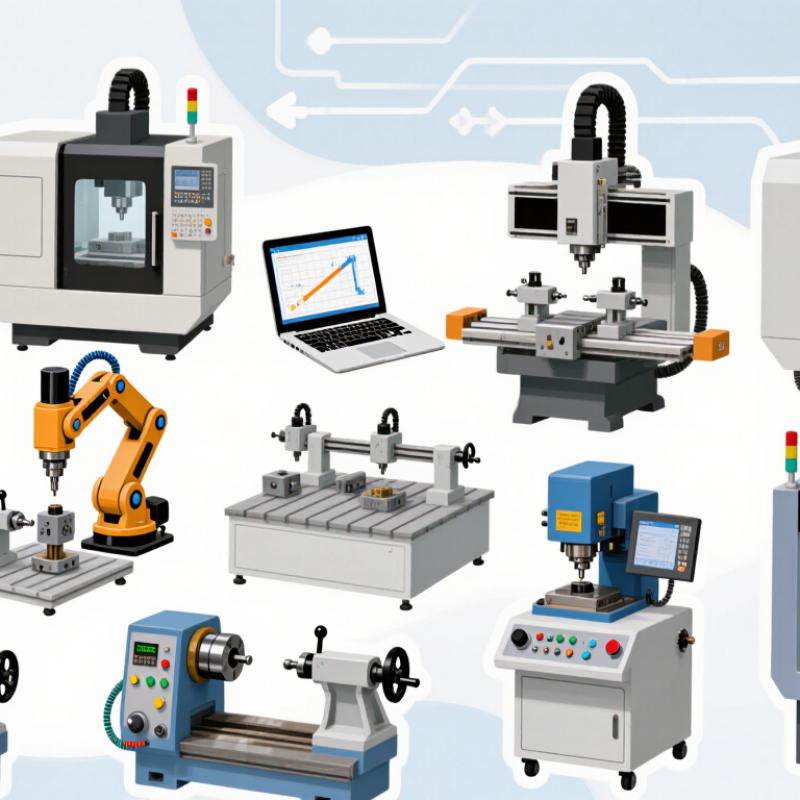
Table of Contents [Hide]
Define 10 CNC Trainer Types by ISO 23247 Digital-Twin Training Functions
Top 10 CNC Machining Trainer Types for Global Buyers
Define 10 CNC Trainer Types by ISO 23247 Digital-Twin Training Functions
ISO 23247 frames a manufacturing digital twin around entities, data, connectivity, and services. It does not certify a training course. Instead, buyers can classify trainers by their main digital-twin function: sensing, data mapping, geometric modeling, process visualization, simulation, diagnosis, prediction, optimization, collaboration, and performance assessment. Each type teaches a different shop-floor decision. A sensing trainer may display spindle load changes. A simulation trainer may show toolpath collisions before cutting begins.
This structure matters because skills are moving quickly. The World Economic Forum’s Future of Jobs Report 2023 states that 44% of workers’ core skills may change within five years. Deloitte’s 2024 smart manufacturing survey reports that 86% of manufacturers expect smart manufacturing to become a major competitiveness driver within three years. Buyers should therefore check whether a trainer connects real machine data, virtual models, and human decisions. A polished interface alone is not enough.
Tips: Request one measurable task for each type. Test a tool-wear warning, a cycle-time comparison, and a maintenance decision. Check data latency and model traceability. Do not assume perfect accuracy. Cutting fluid, fixture stiffness, and operator habits can still distort results. That gap is useful for reflection. A credible trainer should expose uncertainty, not hide it.