China Top Residential Roll Up Garage Door Suppliers?

Choosing a supplier for residential roll up garage doors takes more than comparing prices or browsing polished product photos. The door must fit the opening, operate smoothly, and withstand the conditions around the home. A coastal property may need stronger corrosion protection, while a frequently used garage benefits from durable springs and tested operating components. Small details matter. So does installation guidance.

China has many manufacturers and export suppliers, but no single company is automatically the best choice for every project. This guide looks at practical factors buyers can compare, including materials, customization options, production capacity, quality-control procedures, packaging, and after-sales support. It also highlights questions worth asking before requesting a quotation: What cycle testing is available? Which safety features are included? Can the supplier provide clear specifications and references for similar orders? Claims should be checked, not simply repeated.

A supplier’s catalogue can be useful, but it cannot show every production detail. Buyers may need to review samples, inspect test records, or arrange an independent factory assessment. These steps take time and may not remove every risk. That is worth acknowledging. Lead times, communication, and warranty terms can differ between orders, even with an experienced manufacturer. The following overview offers a grounded starting point for identifying potential Chinese suppliers and judging whether their products and service match your residential project.
China Top Residential Roll Up Garage Door Suppliers?

Residential Roll-Up Garage Doors in China: Types, Parts, and Operating Principles

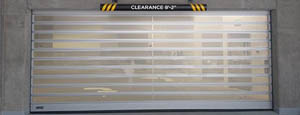
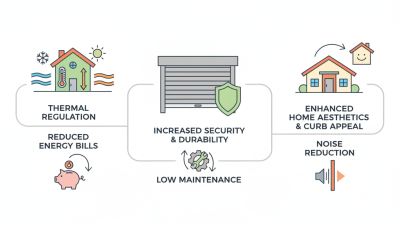
Residential roll-up garage doors use linked horizontal slats that rise along side tracks and wind around a shaft above the opening. In China, common residential options include single-layer steel curtains, insulated double-layer steel curtains, and lighter aluminum designs. Insulated slats can reduce heat transfer and street noise, but their performance depends on the core, seals, and installation. Small details matter.

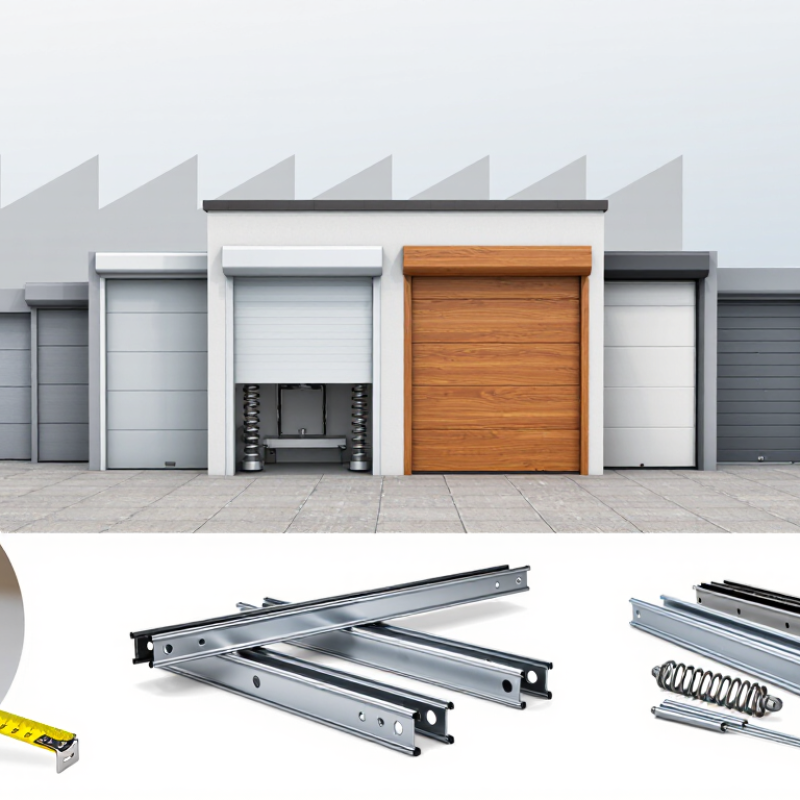
The main parts are the curtain, guide tracks, bottom rail, barrel, brackets, and counterbalance springs. Motorized versions add a drive unit, controls, and safety sensors; manual models may use a hand chain or lifting handle. Before installation, check that the opening is square and the tracks are firmly fixed. A slightly uneven opening can cause rubbing, noisy travel, or uneven wear.

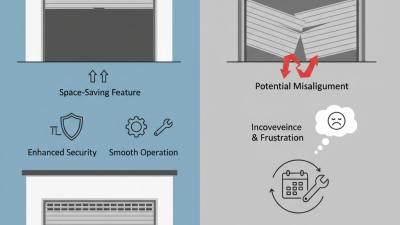
During operation, the motor or manual lift turns the shaft, winding the slats into a compact coil. Springs help balance the curtain, so it should move steadily rather than drop or strain. Keep the guides clear of grit, and inspect seals and fasteners periodically. These checks are easy to postpone. That is often when small faults become inconvenient. Exact parts and safety features vary by door design, so confirm compatibility before replacing components.

How to Assess Slat Materials, Door Dimensions, and Insulation Performance

When comparing China-based residential roll-up garage door suppliers, inspect the slat material, not just the finish. Galvanized steel is rigid and resists everyday impacts, while aluminum is lighter and may suit openings where lifting weight matters. Ask for the slat thickness, coating details, and a physical sample. Feel the edges. A sample helps.

Door dimensions should be based on the finished opening, including its width, height, headroom, and side clearance. Measure at several points; older garages are rarely perfectly square. Confirm how the supplier defines the required opening size and whether tracks, guides, and the roll-up barrel need extra space. Small errors matter. Request a dimensioned drawing before production, and check that it reflects the site measurements rather than an estimate.

Insulation claims need context. Foam-filled slats can reduce heat transfer, but the full door’s performance also depends on joints, guides, and perimeter seals. Ask for test data for the assembled door, including the stated conditions and measurement method. Compare like with like; a slat-only figure may not describe the installed system. I would be cautious about choosing by a single advertised number. Drafts at the bottom seal can undo some of the benefit, and that detail is easy to overlook.

China Top Residential Roll Up Garage Door Suppliers? - How to Assess Slat Materials, Door Dimensions, and Insulation Performance
Assessment Area Specification or Reference What to Check with a Supplier Practical Assessment
Slat material Galvanized steel slats Ask for the steel grade, base-metal thickness, coating type, and corrosion-protection details. Confirm whether the stated thickness includes the coating. Steel is generally a sturdy choice. Coating quality and protection at cut edges matter, especially in damp or coastal environments.
Slat material Aluminum slats Request the alloy and temper, slat thickness, finish, and any test information for dent or wind resistance. Aluminum is lightweight and naturally corrosion-resistant, but performance depends on the profile and material specification.
Slat construction Single-wall or uninsulated curtain Check the slat profile, curtain weight, side guides, bottom bar, and weather-seal options. Often a simpler, lighter construction; do not assume it provides meaningful thermal insulation.
Slat construction Insulated, foam-filled slats Ask what the core is, how it is retained, and whether the manufacturer can provide a tested whole-door thermal rating and test method. Insulation may improve thermal performance, but the result depends on the slat design, joints, guides, and perimeter seals.
Typical opening reference Single-car garage: approximately 8 ft × 7 ft or 9 ft × 7 ft (about 2.44 × 2.13 m or 2.74 × 2.13 m) Measure the finished opening width and height, headroom, side room, and the space needed for the roll and guides. These are common planning references, not guaranteed standard sizes. Confirm the opening and installation requirements for the selected door.
Typical opening reference Double-car garage: approximately 16 ft × 7 ft (about 4.88 × 2.13 m) Confirm whether the door is designed for the full opening width and whether the proposed guides, barrel, and supports suit the site. Actual residential openings vary. A site measurement should determine the order dimensions.
Order dimensions Opening width and height, plus mounting and clearance dimensions Ask the supplier to state clearly whether quoted dimensions refer to the opening, curtain, or overall door assembly. Ambiguous measurement conventions can lead to an incorrectly sized door or insufficient installation clearance.
Insulation performance Whole-door U-factor or R-value, with the test method identified Request a test report for the complete door assembly, not only a value for the foam or slat material. Compare ratings only when the test basis is comparable. Thermal ratings are not directly comparable when different methods or components are used. Seals and installation also affect heat loss and air leakage.
Weather sealing Bottom seal, side-guide seals, and head or lintel seal where applicable Check the seal material, replaceability, and suitability for the site’s weather and floor conditions. Good seals can reduce drafts and water or debris entry; they do not substitute for a verified insulation rating.
Wind and structural performance Design pressure or wind-load documentation for the specified door size Request documentation for the actual configuration and confirm that guides, brackets, and supports are included in the rating. Do not infer wind resistance from slat material or thickness alone. Local building requirements and exposure conditions matter.
Supplier documentation Drawings, material specifications, installation instructions, warranty, and applicable test reports Verify that documents identify the product configuration, dimensions, ratings, and exclusions relevant to the quotation. A complete, configuration-specific document set makes supplier quotations easier to compare and verify.

Note: Dimension examples are common planning references only. Confirm final measurements, thermal ratings, wind-load requirements, and applicable local codes with the supplier and installer.

Supplier Standards: EN 13241 Product Requirements and ISO 9001 Quality Systems

For buyers comparing Chinese residential roll-up garage door suppliers, EN 13241 is a practical starting point. It defines performance characteristics for garage doors, including wind-load resistance, water tightness, air permeability, and thermal transmittance where applicable. Ask for test reports that match the actual door design, dimensions, guides, and operating system. A report for a different configuration may offer little assurance.

ISO 9001 addresses how a supplier manages quality; it does not certify a particular door’s performance. The ISO Survey 2022 reported more than 1.2 million ISO 9001 certificates across 189 economies, showing how widely the system is used. That scale makes verification important. Check the certificate’s scope, issuing body, validity, and production site. Then review inspection records for curtain alignment, slat damage, winding balance, and final safety checks.

Small details matter.

A supplier may present polished documents while overlooking inconsistent checks between production batches. Request recent batch records and ask how nonconforming doors are corrected. These steps make standards useful on the factory floor, not merely in a sales file.

Wind-Load Ratings: EN 12424 Classes 1–5, from 300 Pa to over 1,000 Pa

For buyers comparing residential roll-up garage door suppliers in China, wind-load class deserves close attention. Under EN 12424, Class 1 corresponds to 300 Pa, Class 2 to 450 Pa, Class 3 to 700 Pa, and Class 4 to 1,000 Pa. Class 5 exceeds 1,000 Pa. These figures describe resistance to wind pressure, not a guarantee that every door of the same model performs identically. Wind matters.

Ask for a test report that matches the proposed door’s size and configuration. Slat profile, guide rails, brackets, and wall fixings all affect how pressure moves through the assembly. A rating tested on a narrow sample may not represent a wider opening. That detail is easy to miss. Confirm whether the stated class applies to the full supplied system, and ask which test standard and pressure direction were used. Local exposure also matters: a sheltered courtyard and an exposed coastal façade face different conditions. Higher class numbers can help, but the right specification depends on the building and installation. Paper ratings are useful. The fixing details deserve equal scrutiny.

Wind-Load Ratings for Residential Roll-Up Garage Doors

EN 12424 wind-load classes are defined by pressure thresholds. The chart shows the threshold in pascals (Pa) for each class.

Note: Class 5 means a rating above 1,000 Pa; its bar ends at 1,000 Pa to mark the threshold, not a maximum. A door’s achieved rating depends on the tested door system and installation.

Comparing Suppliers by Factory Testing, Customization, Warranty, and Export Support

When comparing China-based residential roll-up garage door suppliers, look beyond polished product photos. Ask how each factory tests door balance, repeated opening cycles, motor operation, and safety reversal. Request dated test records or a live demonstration when possible. A sample door that runs smoothly once is useful, but it cannot show long-term consistency. That distinction is easy to overlook.

Tips: Share your opening width, headroom, daily use, and preferred finish. Confirm which dimensions can be customized, and ask whether changes affect lead time or replacement-part availability. Small details matter.

Compare written warranty terms carefully. Check coverage periods for panels, motors, and controls, plus any exclusions for installation or wear. Export support also deserves a close look: confirm packaging methods, spare-part lists, operating manuals, and response times for technical questions. Clear answers help prevent avoidable delays at delivery and installation. Still, supplier replies can sound more certain than the production process really is. Ask for evidence, keep specifications in writing, and compare the same questions across suppliers. A modest gap in price may reflect different testing, service, or packaging—not simply better value.