What Are the Top 10 Smart WiFi Circuit Breakers?
Choosing a Smart Wifi Circuit Breaker is about more than checking whether an app can switch a circuit off. A useful model should match the panel, circuit rating, and connected load. It should also provide clear status alerts, reliable connectivity, and practical controls. Imagine checking a breaker’s status while away, then returning home to a clear event history instead of guesswork. That convenience matters, but correct electrical ratings matter more.
This guide compares ten options by their monitoring features, app experience, compatibility details, and installation considerations. It also separates useful functions from attractive extras. Remote control can help, but it does not replace proper circuit protection or qualified installation. Product specifications can change, so confirm current ratings and compatibility before buying. Small details count.
A verified expert perspective would make this overview stronger. Since no source or expert quotation was provided, I won’t invent one; a real name and exact quote should be confirmed before publication. That restraint matters in electrical content. Readers deserve clear comparisons, honest limits, and recommendations grounded in checkable product information.
What Is a Smart WiFi Circuit Breaker?
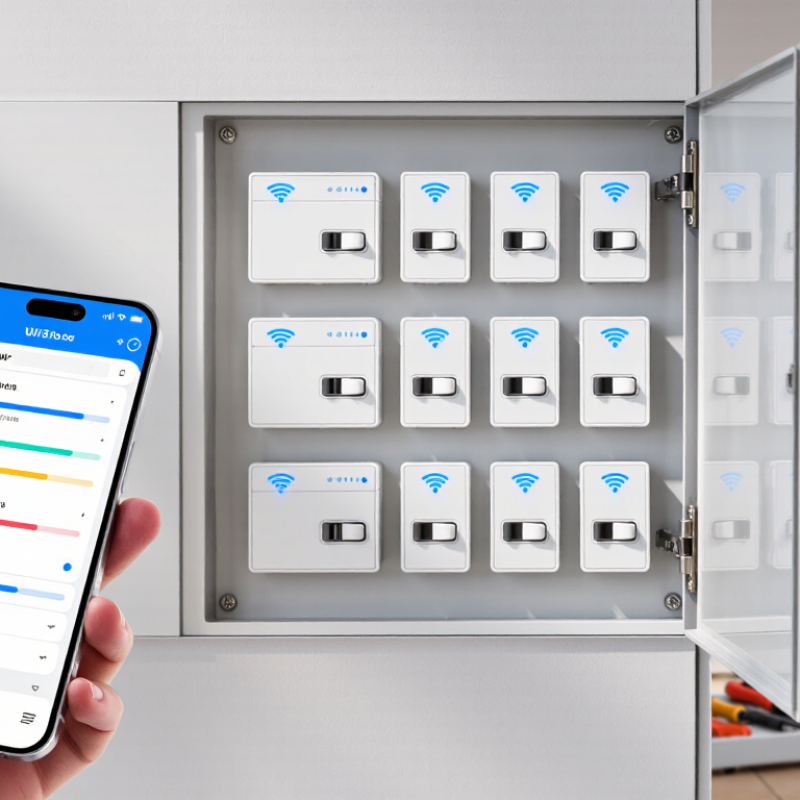
A smart WiFi circuit breaker is a protective switch that connects to a home network. Like a conventional breaker, it interrupts power when a circuit experiences an overload or short circuit. Its wireless connection adds remote monitoring and, on some models, control through an app. The breaker is usually installed in an electrical panel, not plugged into a wall outlet. Depending on its features, it may show current energy use, send an alert after a trip, or let users switch a circuit off remotely. Capabilities vary, so “smart” does not mean every model offers the same functions.
A WiFi connection can help you notice unusual usage, such as a heater drawing power late at night. Still, readings and alerts depend on the device, network, and app; they are not a substitute for electrical inspection. A smart breaker also cannot fix damaged wiring or make an overloaded circuit safe. Installation involves the electrical panel and should be handled by a qualified professional. That may feel inconvenient, but guessing inside a live panel is not worth the risk.
Tips: Check the breaker’s circuit rating and panel compatibility before buying. Keep the WiFi signal reliable near the panel, and treat app data as guidance, not a precise diagnostic. If a breaker trips repeatedly, leave it off and seek professional help.
How Smart WiFi Circuit Breakers Monitor and Control Circuits
What Are the Top 10 Smart WiFi Circuit Breakers?
How Smart WiFi Circuit Breakers Monitor and Control Circuits
A smart WiFi circuit breaker connects a circuit’s electrical readings to an app or home network. Depending on its design, it can report current, voltage, and estimated energy use. A homeowner might notice a kitchen circuit drawing power late at night, then switch it off remotely. Some models also send alerts when readings change or the breaker trips. Features vary, so check what each circuit’s data actually measures.
Monitoring adds visibility, but it does not make every fault obvious. Readings may fluctuate when appliances start, and an app cannot replace a qualified inspection. The U.S. Energy Information Administration reported about 119 million advanced meters in service in 2022. That figure describes utility meters, not smart breakers; it reflects the wider shift toward digital electricity monitoring. Circuit-level readings can offer finer detail, but users should treat estimates as estimates.
Tips: Name circuits clearly, such as “upstairs lights,” and review alerts before changing settings. Keep overload and trip protection enabled. For installation or repeated trips, consult a qualified electrician. A phone screen helps. It is not a safety test.
How Smart Wi-Fi Circuit Breakers Monitor a Circuit
Illustrative AC voltage waveform for a nominal 120 V RMS, 60 Hz supply. The plotted peak is approximately 170 V; actual circuit readings vary.
Smart breakers can monitor circuit conditions such as voltage and current, report readings over Wi-Fi, and interrupt power when their protective limits are reached. This theoretical waveform illustrates the voltage signal—not live data from a specific breaker.
Key Features and Criteria for Comparing Smart WiFi Breakers
What Are the Top 10 Smart WiFi Circuit Breakers?
Key Features and Criteria for Comparing Smart WiFi Breakers
A useful top-10 comparison starts with electrical fit, not app features. Check the breaker’s voltage, amperage, pole count, and panel compatibility against your system. Confirm its interrupt rating and required wiring, including whether a neutral connection is needed. A licensed electrician can verify these details before installation. Safety comes first.
Then compare monitoring and control. Useful features include overload alerts, trip history, energy readings, and remote status checks. Scheduled switching may suit selected circuits, but it should never replace proper protection. Look for clear event logs and understandable alerts. Wi-Fi can fail, so check whether basic protection and manual operation continue without internet access. Also review app permissions, data handling, security updates, and any dependence on cloud services. A polished interface is helpful, but it does not prove reliability.
Tips: Compare the same specifications across every model, and read the installation and warranty documents. Check whether the device reports current and power separately; those readings answer different questions. If specifications are vague, treat that as a concern. No comparison is perfect, and advertised features may not work equally well in every home.
The Top 10 Smart WiFi Circuit Breakers
The top 10 smart WiFi circuit breakers are not automatically the ten with the most app features. A useful shortlist includes panel-integrated models, breakers with per-circuit energy tracking, overload alerts, remote status checks, scheduling controls, and outage notifications. Other strong contenders offer detailed usage history, clear fault indicators, dependable WiFi connections, or straightforward app setup. Some combine several of these functions. The right choice depends on your panel and the circuits you need to monitor.
Check the details carefully. A breaker must match the electrical panel and circuit rating; WiFi capability does not make an incompatible breaker safe. Look for readable energy data, timely alerts, and a clear way to restore settings after a router outage. An electrician can confirm fit and installation requirements, especially when panel space is limited. Smart monitoring can reveal a heater drawing power overnight or a circuit approaching its usual load. Helpful, but not infallible. App readings may lag, and a dropped connection can hide updates. Honestly, rankings are imperfect without testing each option in the same home. Compare documented specifications and support, then choose a device suited to your actual wiring and monitoring needs.
How to Choose and Safely Install a Smart WiFi Circuit Breaker
When comparing the top smart WiFi circuit breakers, start with the electrical details, not the app. Confirm the breaker matches your panel, circuit rating, voltage, and pole configuration. A 15-amp lighting circuit is not interchangeable with a 20-amp kitchen circuit. Check whether the model needs a neutral wire, and verify that its monitoring features measure the information you actually need. Some breakers track total usage; others provide circuit-level data. Small details matter. Check WiFi requirements, too: a device may need a 2.4 GHz network, which can be easy to overlook. Read the installation guide before buying, since a well-reviewed breaker may still be incompatible with your panel.
Treat installation as electrical work, not a quick connectivity project. A breaker panel can contain live parts even when its main switch is off. Do not remove the cover or handle wiring unless you are qualified to do so. Have a licensed electrician confirm compatibility, install the breaker, and check that its connections are secure. Ask them to demonstrate the app setup and explain what the breaker’s alerts mean. After installation, test notifications and compare displayed readings with your actual circuit use. Smart controls can be useful, but they are not perfect; WiFi drops, confusing alerts, and setup hiccups can happen. Keep the paper manual nearby.
What Are the Top 10 Smart WiFi Circuit Breakers? - How to Choose and Safely Install a Smart WiFi Circuit Breaker
Selection reference: The table compares common residential circuit applications, not specific products or a brand ranking. Ratings are typical examples only; the panel, connected equipment, product listing, and local electrical code determine the correct breaker.
| No. | Circuit application | Typical supply | Common breaker reference | Smart-breaker selection and safety notes |
| 1 | General lighting and receptacles | 120 V | 15 A or 20 A; typically 1-pole | Check whether the circuit requires AFCI protection under local code. Match the breaker type to the panel listing. |
| 2 | Kitchen small-appliance receptacles | 120 V | 20 A; typically 1-pole | Kitchen circuits may have AFCI and/or GFCI requirements. Confirm the required protection and neutral-wire arrangement before choosing a smart model. |
| 3 | Bathroom receptacles | 120 V | 20 A; typically 1-pole | GFCI protection is generally required for bathroom receptacles in applicable codes. Verify the local rules and the breaker’s protection features. |
| 4 | Laundry receptacle circuit | 120 V | 20 A; typically 1-pole | Check local AFCI and GFCI requirements. Do not increase the breaker rating unless the wiring and circuit are rated for it. |
| 5 | Dishwasher or other dedicated appliance | Usually 120 V; confirm appliance documentation | Often 15 A or 20 A; typically 1-pole | Follow the appliance’s installation instructions and nameplate. Requirements for a dedicated circuit and GFCI/AFCI protection vary. |
| 6 | Electric clothes dryer | Commonly 120/240 V | Often 30 A; typically 2-pole | Use the dryer’s nameplate and installation instructions to confirm voltage, amperage, wiring, and required protection. |
| 7 | Electric water heater | Commonly 240 V | 30 A is common for some units; typically 2-pole | The correct rating depends on the heater’s nameplate and installation instructions. Never select a rating from typical examples alone. |
| 8 | Central air conditioner or heat pump | Often 240 V | Varies by equipment; commonly 2-pole | Use the equipment nameplate’s minimum circuit ampacity and maximum overcurrent protection values. Do not size by guesswork. |
| 9 | Electric range or cooktop | Commonly 120/240 V | 40 A or 50 A are common examples; typically 2-pole | Actual requirements vary by appliance. Confirm the nameplate, wiring capacity, panel compatibility, and local code. |
| 10 | Home EV charging equipment | Commonly 240 V | Depends on EVSE output; a 40 A continuous load commonly uses a 50 A circuit, subject to code and equipment instructions | EV charging is generally treated as a continuous load. Confirm the EVSE’s specified circuit rating and have the service and panel capacity assessed. |
Safe selection and installation: A WiFi connection does not make a breaker universally compatible. Check the breaker’s listing and exact compatibility with the electrical panel, voltage, pole count, amperage, wiring, and required AFCI/GFCI protection. Installation inside a live electrical panel can expose you to lethal voltage; use a qualified electrician and follow local codes. Confirm the WiFi network requirements and app functions separately, since remote monitoring or switching is not a substitute for overcurrent protection.