China Top 10 Roll Up Garage Door Manufacturers?

China’s roll up garage doors industry has become an important sourcing base for residential, commercial, and industrial projects. Chinese manufacturers now offer insulated steel curtains, high-cycle springs, wind-rated assemblies, and smart-control options. However, a factory list should not rely on catalog images alone. Door thickness, cycle testing, safety edges, motor quality, and after-sales support reveal much more.

Market data supports this interest. Fortune Business Insights valued the global garage door market at approximately USD 3.63 billion in 2024. It projects growth to about USD 5.26 billion by 2032. Grand View Research also identifies automation, energy efficiency, and renovation demand as major market drivers. These figures cover garage doors broadly, not only roll up garage doors. That distinction matters. Some reports combine sectional, rolling, and side-hinged systems, which can make comparisons imperfect.

Tom Wadsworth, a veteran door-industry trainer associated with DASMA, has stated, “A garage door is the largest moving object in the home.” His observation explains why purchasing decisions require more than price comparisons. A reliable Chinese supplier should provide test records, installation drawings, material specifications, and clear warranty terms. It should also explain how its doors perform under repeated opening, humidity, dust, and strong wind.

This “China Top 10 Roll Up Garage Door Manufacturers?” guide evaluates manufacturers through product range, production capability, certifications, customization, export experience, and service responsiveness. Rankings are not absolute. A factory suitable for a warehouse may not suit a residential garage. That limitation deserves attention. After all, the cheapest door can become the most expensive choice when springs fail, insulation disappoints, or replacement parts disappear.

China Top 10 Roll Up Garage Door Manufacturers?

What Are Roll-Up Garage Doors and How Are They Used?

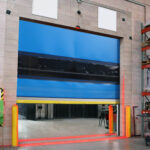
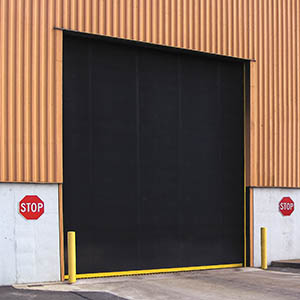
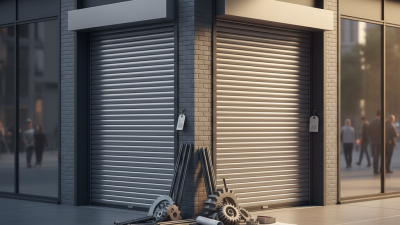
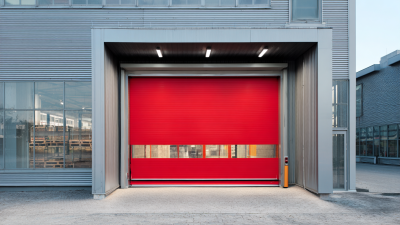
Roll-up garage doors consist of connected slats that travel vertically and coil above the opening.

Unlike swing doors, they need little clearance outside the garage. This makes them useful for compact driveways, workshops, warehouses, and underground parking areas. When opened, the curtain rests inside a hood or behind a protective cover.

Their construction usually includes galvanized steel, aluminum, or insulated panels.

Steel offers strong impact resistance, while aluminum reduces weight and corrosion risk. Insulated slats can help control indoor temperature and reduce street noise.

However, insulation does not make a garage completely quiet or energy independent. That assumption is not always right.

In daily use, a roll-up door should move smoothly without scraping, shaking, or sudden stops.

Photoelectric sensors, emergency release systems, and automatic reversing features improve operational safety.

Professional installers should check the opening size, headroom, side clearance, spring balance, and electrical supply before fitting the door. A small measurement error can cause costly delays.

Maintenance is practical but often neglected.

Inspect the curtain, guides, fasteners, and seals several times each year. Remove dust from the tracks and ask a qualified technician to adjust springs or motors.

Do not force a jammed door. Manual operation may seem simple, but excessive resistance can signal a hidden mechanical problem.

In wet or coastal areas, corrosion protection deserves extra attention.

How to Evaluate Chinese Roll-Up Garage Door Manufacturers

Evaluating Chinese roll-up garage door manufacturers requires more than comparing catalog prices. I look for production experience, engineering capability, and consistent quality records. A reliable manufacturer should explain its door curtain, tracks, springs, motor system, and control options clearly. Vague answers are warning signs. Ask for factory photographs, production videos, and recent project references. These details reveal whether the company manufactures components or only resells them.

Material quality matters in daily operation. Request the steel grade, coating method, panel thickness, and corrosion testing records. For insulated doors, check the core material and measured thermal performance. Ask how each door is tested before shipment. Useful checks include opening cycles, emergency release, balance, noise, and safety reversal. A sample door should operate smoothly, without scraping or sudden movement. Small defects matter.

Documentation also shows professional discipline. Review drawings, installation instructions, spare-parts lists, inspection reports, and packaging standards. Confirm whether the manufacturer can provide replacement parts several years later. Communication during sampling is equally important. Do engineers answer technical questions, or only discuss discounts? My own first mistake was trusting polished photos too quickly. Photos cannot show poor alignment or weak after-sales support. A better evaluation includes a video call from the factory, a paid sample, and clear acceptance criteria. Even then, some uncertainty remains. Allow room for verification.

How to Evaluate Chinese Roll-Up Garage Door Manufacturers

Procurement evaluation priorities based on common commercial and industrial buying criteria

Compliance, durability, and safety should receive the highest weighting when comparing roll-up garage door suppliers. Price is important, but reliable materials, tested safety systems, customization capability, delivery performance, and after-sales support are usually stronger indicators of long-term value.

China’s Top 10 Roll-Up Garage Door Manufacturers

China’s top 10 roll-up garage door manufacturers are attracting attention as construction, logistics, and residential renovation expand. Grand View Research estimates that the global garage door market reached about USD 3.06 billion in 2023. It also projects a compound annual growth rate of roughly 5.4% from 2024 to 2030. These figures show steady demand, but market size alone does not prove manufacturing quality.

A reliable Chinese supplier should provide more than attractive catalog images. Buyers should examine steel thickness, curtain profile design, motor duty cycles, sealing performance, and wind-load testing. Factory audits can reveal practical details, including welding consistency, powder-coating coverage, and spare-parts storage. The strongest candidates among China’s top 10 manufacturers usually maintain documented quality systems, export experience, and clear installation instructions. ISO 9001 certification helps, but it is not a substitute for product testing.

Intertek and TÜV-style testing evidence can support claims about safety, insulation, and durability. Request sample doors, test reports, packaging photos, and recent project references. Ask how many opening cycles the spring and motor assembly can withstand. Small details matter. A poorly aligned guide rail may create noise within months. The American Society of Door Professionals also emphasizes professional installation and regular maintenance for safe operation. Still, supplier rankings remain imperfect because factory data is not always independently verified. That limitation deserves attention.

Key Products, Technologies, and Market Strengths

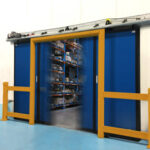
China’s top ten roll-up garage door manufacturers generally compete through product range, engineering control, and export reliability. Their portfolios often include insulated steel doors, aluminum doors, fire-rated models, high-speed industrial doors, and compact residential systems. Standard colors are common, but custom finishes are increasingly requested for villas, warehouses, and retail buildings.

Key technologies include torsion-spring balancing, tubular motors, wireless control, obstacle detection, and weather-resistant sealing. Better factories test repeated opening cycles, wind resistance, insulation performance, and emergency release systems. Some production lines use laser cutting and automated welding, which improves panel alignment and reduces surface defects. However, digital controls do not automatically create a better door. Mechanical safety still matters.

Market strength comes from flexible customization, competitive pricing, and established container-loading experience. Many manufacturers can adjust curtain thickness, guide rail size, motor power, and control voltage for different projects. Experienced purchasers should inspect steel thickness, coating adhesion, spare-part availability, and installation instructions. Factory audits can reveal more than attractive catalogs. Ask for recent test records. One weakness remains: quality may vary between export orders and small custom batches. Clear specifications, sample approval, and third-party inspection help reduce that risk. A reliable supplier should explain limitations plainly, not promise perfection.

China Top 10 Roll Up Garage Door Manufacturers? - Key Products, Technologies, and Market Strengths

Rank Manufacturer Profile Core Product Categories Typical Door Construction Key Technologies Typical Size Capability Performance Features Certification Focus Primary Market Strengths Common Export Regions
1 Manufacturer Profile A Residential roll-up doors Commercial shutters Double-wall galvanized steel slats with optional polyurethane insulation Tube motors, remote controls, safety photocells, manual override systems Up to approximately 6.0 m wide and 4.5 m high for standard applications Wind-resistant guides, thermal insulation options, corrosion-resistant finishes CE-oriented electrical documentation; ISO 9001-style quality systems commonly available High-volume OEM production, customization, and competitive export pricing North America, Southeast Asia, the Middle East
2 Manufacturer Profile B Insulated garage doors Industrial rolling doors Foam-filled steel curtain with reinforced end locks and side guides Remote-controlled tubular motors, limit-switch control, obstruction protection Up to approximately 8.0 m wide for selected industrial configurations Improved air tightness, noise reduction, moderate wind-load resistance CE and RoHS-related component compliance depending on configuration Strong product range for residential and light-commercial projects Europe, Australia, Africa, Latin America
3 Manufacturer Profile C Fire-rated rolling shutters Security shutters Galvanized or stainless-steel curtains with fire-resistant guides and bottom bars Automatic closing systems, smoke or heat release interfaces, emergency controls Project-specific sizes; commonly engineered for openings up to 10 m wide Enhanced fire separation, forced-entry resistance, emergency operation Fire-test documentation and project-specific certification are typically required Specialized commercial, industrial, and building-safety applications Middle East, Southeast Asia, Africa, domestic construction projects
4 Manufacturer Profile D Aluminum roll-up doors Shopfront shutters Extruded aluminum or perforated aluminum slats with compact hoods Compact tubular motors, transparent or perforated curtain options, smart controls Typically up to approximately 5.0 m wide and 4.0 m high Low operating noise, lightweight construction, visibility and ventilation options CE-oriented motor and control documentation; finish testing varies by supplier Retail frontage, compact installations, and architectural applications Europe, North America, the Middle East
5 Manufacturer Profile E High-speed doors Logistics rolling doors PVC curtain, aluminum bottom rail, or insulated rapid-door panel system Variable-frequency drives, photoelectric sensors, radar activation, PLC controls Commonly available up to approximately 6.0 m wide and 6.0 m high Fast opening cycles, reduced air exchange, automatic reset and safety monitoring CE-related machinery and electrical compliance is commonly requested Warehouses, factories, cold-chain facilities, and distribution centers Europe, Southeast Asia, Australia, the Middle East
6 Manufacturer Profile F Commercial rolling doors Parking garage shutters Single-wall or double-wall steel slats with galvanized structural components Chain-drive operators, control panels, loop detectors, access-control integration Up to approximately 7.0 m wide for selected commercial systems Frequent-cycle operation, security locking, emergency chain operation Project approvals usually depend on local building and electrical codes Parking facilities, storefronts, workshops, and service centers North America, Latin America, Africa, Southeast Asia
7 Manufacturer Profile G Residential garage doors Smart motor systems Insulated steel panels or compact roll-up curtains with weather seals Wi-Fi or radio remote control, smartphone gateway compatibility, battery backup options Typically up to approximately 5.5 m wide for residential installations Anti-crush protection, quiet operation, rolling-code transmitters, sealing profiles Electrical safety and radio-equipment compliance depends on destination market Smart-home integration, private housing, and renovation projects Europe, North America, Australia, East Asia
8 Manufacturer Profile H Heavy-duty industrial shutters Large-opening systems Heavy-gauge galvanized steel or stainless-steel curtain with reinforced tracks Industrial gear motors, three-phase controls, soft-start and soft-stop operation Project-engineered openings commonly exceeding 8.0 m in width High cycle capacity, reinforced wind resistance, serviceable modular components Load calculations, structural documentation, and site-specific testing are common Factories, hangars, warehouses, and large commercial facilities Middle East, Africa, Southeast Asia, domestic industrial projects
9 Manufacturer Profile I Stainless-steel shutters Hygienic-area doors 304-grade stainless steel or coated steel curtain with sealed guides Wash-down-compatible motors, sealed control boxes, sensor-based operation Typically up to approximately 5.0 m wide for hygienic environments Moisture resistance, easy cleaning, reduced dirt accumulation, corrosion resistance Food, pharmaceutical, and clean-area requirements are usually project-specific Food processing, commercial kitchens, laboratories, and coastal facilities Europe, Australia, Southeast Asia, the Middle East
10 Manufacturer Profile J Custom OEM doors Replacement shutter components Configurable aluminum, galvanized-steel, or insulated curtain assemblies Custom control logic, non-standard dimensions, private-label packaging, component matching Size and load capacity are determined by curtain weight, shaft design, and installation conditions Flexible specifications, replacement-part availability, application-based engineering Documentation and testing are normally prepared according to customer requirements Small-batch projects, distributor programs, replacement markets, and OEM orders Latin America, Africa, Southeast Asia, the Middle East
Note: Size ranges, performance characteristics, and certification requirements are typical industry specifications for comparable Chinese roll-up garage door production lines. Final values depend on the selected curtain material, motor, opening dimensions, wind-load calculation, installation conditions, and destination-market regulations.

How to Choose the Right Chinese Manufacturer for Your Project

Choosing a Chinese roll-up garage door manufacturer requires more than comparing factory photos.

A top-10 list can narrow the field, but your project needs a measurable selection process.

Request drawings, steel specifications, curtain thickness, motor torque, wind-load ratings, and tested opening cycles.

Ask for a production sample before placing a large order. Small details matter, such as loose guide rails, uneven paint, or a control box that feels poorly sealed.

Energy performance deserves attention. The International Energy Agency’s Buildings report states that buildings consume about 30% of global final energy.

For heated garages, compare the door’s U-value, sealing design, and air-leakage test results. Do not accept “insulated” as sufficient evidence.

Require test reports from recognized laboratories, plus documentation for electrical safety and applicable regional standards. A factory may provide impressive certificates, yet its quality system can still vary between production batches.

Visit the facility remotely or in person.

Review incoming-material inspection, welding points, powder-coating thickness, final testing, and traceability records.

The World Bank’s 2023 Logistics Performance Index gave China a 3.7 score, but logistics performance does not prove manufacturing quality.

Confirm packaging, spare-parts availability, replacement timelines, and who handles installation questions.

I would also compare three quotations using identical specifications. The cheapest offer often excludes testing, stronger springs, or export-grade packaging.

That mistake is easy to make. No checklist is perfect. Recheck the details.