
- High-Performance Doors
-
- Applications
-
-
-
- Clean Room
Stainless steel or composite materials help maintain clean rooms.
-
-
- Coolers
Quick opening speeds & tight seals for temperature control.
-
-
- Parking
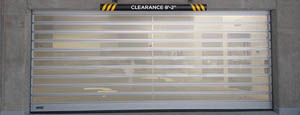
Improve security & traffic flow and enhance architectural style.
-
-
- Hurricane Zone
Withstand winds up to 175 mph and comply with the Florida Building Code.
-
-
-
-
- USDA / FDA / cGMP
Increase productivity & address stringent USDA, FDA & cGMP requirements.
-
-
- Freezers
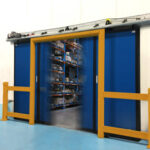
High-speed & perimeter seals minimize the air exchange between areas.
-
-
- Security
High speed & durability ensure secure access.
-
-
- Ventilation
Perforated or screen door panels allow improved air circulation.
-
-
-
-
- Fire Station Emergency Response
When time is of the essence, high speed and reliability are crucial.
-
-
- Warehousing
Fast cycle times and secure seals keep environments separated.
-
-
- Loading Dock
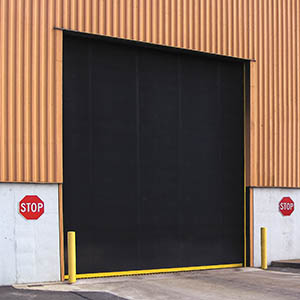
Rugged design & secure seal for oversized openings.
-
-
- Large Openings
Break-away functionality with rugged design seals oversized openings.
-
-
-
-
- Heavy Equipment
Withstands challenges of heavy equipment and fleet truck/car wash environments.
-
-
- Self-Storage
Fast opening speeds and reliable, durable construction keep facilities secure and protected.
-
-
- Industries
-
-
-
- Automotive Dealerships
Reduce energy costs, increase productivity and comfort and enhance customer perception.
-
-
- Cold Storage & Processing
Increase productivity and operational efficiency while reducing energy and maintenance costs.
-
-
- Parking
We offer solutions for Apartment / Condo & Loft, Standalone Parking Facilities and Office Buildings
-
-
-
-
- Food & Beverage
Doors specifically engineered for USDA/FDA and cGMP environments, and assured compliance for uncompromising performance.
-
-
- Mfg/Dist/Warehousing
A complete product line allows facilities to increase efficiency and safety and reduce maintenance and energy costs.
-
-
- Government
Ensure effective security and environmental controls are maintained for critical government operations.
-
-
-
-
- Transit
Keep operations running smoothly and efficient while reducing energy and maintenance costs.
-
-
- Pharma, Nutraceutical & Biotech
Doors that offer quick, secure access, environmental control and reliability for life science facilities.
-
-
- Support Resources
- Parts
- Contact Us
- Blog/News
- Why Rytec
- Sales Rep Locator
- Careers
- Dealers
- Architectural Resources























10 Tips for Choosing Aluminum for Machining?
Choosing Aluminum For Machining looks simple until chips weld to the cutter, edges blur, or a finished part misses its tolerance. The alloy, temper, tool geometry, coolant, and cutting speed must work together. A machinist may select 6061-T6 for availability, then discover that a thin wall distorts during clamping. That small mistake can consume an entire afternoon.
Dr. J. Gilbert Kaufman, a recognized aluminum metallurgy author, wrote, “Machinability is not a single material property; it depends on the entire machining system.” This principle guides the ten tips in this article. Each tip connects material behavior with practical workshop decisions. We will examine alloy selection, temper, chip control, surface finish, tool materials, feed rates, heat management, and dimensional stability. The discussion reflects common CNC experience, not just catalog data.
There is no perfect aluminum choice. Sometimes the strongest alloy creates the worst finish. Sometimes a softer grade machines beautifully but fails under load. That tension deserves honest attention. Test cuts, measured results, and supplier documentation remain more reliable than assumptions. A bright surface can still hide internal stress. A fast cycle can still produce an expensive reject.
This guide helps engineers, machinists, and buyers ask better questions before production begins. It also encourages a useful pause: is the selected alloy truly optimized for the part, or merely familiar? Small choices matter. A sharp polished flute, controlled clamping force, and suitable coolant may decide whether Aluminum For Machining becomes efficient production or repeated rework.

Table of Contents [Hide]
Classify Aluminum by Density: 2.70 g/cm³ and Alloy Composition
When choosing aluminum for machining, start with a useful reference point: commercially pure aluminum has a density near 2.70 g/cm³. This number helps estimate part weight, stock usage, and shipping loads. It does not identify the alloy by itself. Small density changes can overlap across different compositions. Density alone can mislead.
Aluminum is better classified through composition and temper. The 1xxx family contains at least 99% aluminum and machines softly, often producing long, sticky chips. Silicon-rich casting alloys may cut differently and resist wear better. Copper-bearing 2xxx alloys usually offer higher strength, but their corrosion behavior requires attention. Magnesium and silicon in 6xxx alloys support balanced strength, weldability, and everyday machining. Zinc-rich 7xxx alloys can deliver high strength, yet tool load and chip control deserve closer monitoring. Check the material certificate, not only the label.
At the machine, compare density with hardness, temper, and actual cutting behavior. A lightweight 2.70 g/cm³ billet may still vary in hardness after heat treatment. Record spindle load, burr formation, surface finish, and chip shape during a small trial cut. Sharp polished tools and stable workholding often reveal the alloy’s real response. I have seen a familiar grade behave poorly after a temper change. That result deserves investigation, not quick blame of the machine. Use current mill data and verify composition before approving production.