
- High-Performance Doors
-
- Applications
-
-
-
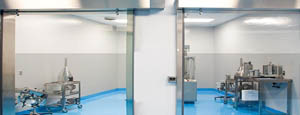
- Clean Room
Stainless steel or composite materials help maintain clean rooms.
-
-
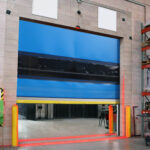
- Coolers
Quick opening speeds & tight seals for temperature control.
-
-
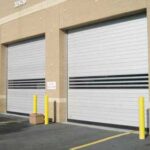
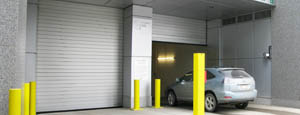
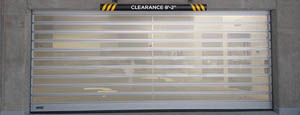
- Parking
Improve security & traffic flow and enhance architectural style.
-
-
- Hurricane Zone
Withstand winds up to 175 mph and comply with the Florida Building Code.
-
-
-
-
- USDA / FDA / cGMP
Increase productivity & address stringent USDA, FDA & cGMP requirements.
-
-
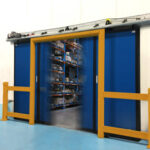
- Freezers
High-speed & perimeter seals minimize the air exchange between areas.
-
-
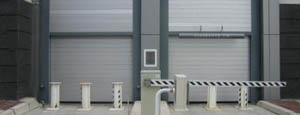
- Security
High speed & durability ensure secure access.
-
-
- Ventilation
Perforated or screen door panels allow improved air circulation.
-
-
-
-
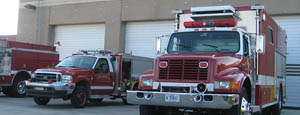
- Fire Station Emergency Response
When time is of the essence, high speed and reliability are crucial.
-
-
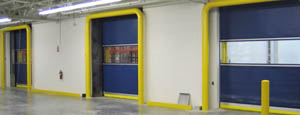
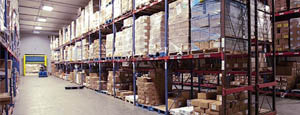
- Warehousing
Fast cycle times and secure seals keep environments separated.
-
-
- Loading Dock
Rugged design & secure seal for oversized openings.
-
-
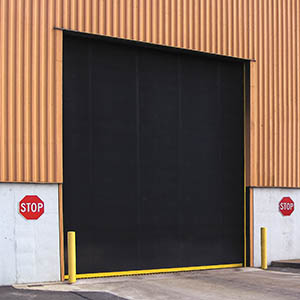
- Large Openings
Break-away functionality with rugged design seals oversized openings.
-
-
-
-
- Heavy Equipment
Withstands challenges of heavy equipment and fleet truck/car wash environments.
-
-
- Self-Storage
Fast opening speeds and reliable, durable construction keep facilities secure and protected.
-
-
- Industries
-
-
-
- Automotive Dealerships
Reduce energy costs, increase productivity and comfort and enhance customer perception.
-
-
- Cold Storage & Processing
Increase productivity and operational efficiency while reducing energy and maintenance costs.
-
-
- Parking
We offer solutions for Apartment / Condo & Loft, Standalone Parking Facilities and Office Buildings
-
-
-
-
- Food & Beverage
Doors specifically engineered for USDA/FDA and cGMP environments, and assured compliance for uncompromising performance.
-
-
- Mfg/Dist/Warehousing
A complete product line allows facilities to increase efficiency and safety and reduce maintenance and energy costs.
-
-
- Government
Ensure effective security and environmental controls are maintained for critical government operations.
-
-
-
-
- Transit
Keep operations running smoothly and efficient while reducing energy and maintenance costs.
-
-
- Pharma, Nutraceutical & Biotech
Doors that offer quick, secure access, environmental control and reliability for life science facilities.
-
-
- Support Resources
- Parts
- Contact Us
- Blog/News
- Why Rytec
- Sales Rep Locator
- Careers
- Dealers
- Architectural Resources









2026 How to Choose the Right Rack Accessories?
Choosing the right Rack Accessories can determine whether a storage system remains stable, accessible, and efficient over time. A shelf, divider, cable manager, or safety panel may look like a small addition. Yet each component affects load distribution, airflow, installation effort, and daily handling. The best choice begins with the rack’s dimensions, mounting pattern, material, and rated capacity.
Practical selection requires more than comparing prices. Check the manufacturer’s specifications, compatibility charts, and installation instructions before ordering. Measure the available depth with a steel ruler. Confirm that brackets align with the rack posts. Review the expected load, temperature, vibration, and access frequency. In equipment rooms, airflow panels and cable organizers can prevent blocked vents and tangled connections. In warehouses, support beams, mesh panels, and guards may improve visibility and reduce accidental contact.
There is no perfect checklist. Small errors happen. A cable tray may fit the width but interfere with a rear door. A shelf may support the stated weight only when the load is evenly distributed. That detail is easy to miss. Reliable decisions come from combining verified product data, field measurements, and advice from qualified suppliers or installers. This guide explains how to compare Rack Accessories with greater confidence, while recognizing that every rack has different demands. Good planning saves rework. Better planning leaves room for change.
Table of Contents [Hide]
Define Rack Types, Purposes, and Accessory Compatibility
Choosing rack accessories starts with identifying the rack, not browsing attractive add-ons. A server rack usually needs equipment rails, cable management, airflow control, and power distribution. An open-frame rack favors easy access and may need shelves or vertical cable guides. Wall-mounted cabinets suit compact network equipment, but their depth and weight capacity require careful checking. Storage racks have different priorities, including load support, beam spacing, and material handling.
Define the rack’s purpose before selecting accessories. A dense server enclosure needs front-to-back airflow and clear rear access. A network cabinet may need patch-panel brackets, brush panels, and organized cable paths. A small office rack might require a fixed shelf for unsupported equipment. Measure width, usable depth, mounting height, and total load. Record every measurement. Guessing creates expensive problems.
Compatibility depends on more than matching a rack’s advertised size. Check the mounting pattern, rail adjustment range, shelf dimensions, door clearance, and accessory load rating. Confirm whether cage nuts, screws, or tool-free clips are required. I once selected a shelf that fit the width but blocked rear cables. The installation looked neat. It was still wrong. A useful checklist should include airflow, grounding provisions, caster limits, and future expansion space. Leave room for hands, labels, and maintenance tools. Sometimes the best accessory is a simpler one. Recheck the layout after installation, because real cables rarely follow the drawing perfectly.