
- High-Performance Doors
-
- Applications
-
-
-
- Clean Room
Stainless steel or composite materials help maintain clean rooms.
-
-
- Coolers
Quick opening speeds & tight seals for temperature control.
-
-
- Parking
Improve security & traffic flow and enhance architectural style.
-
-
- Hurricane Zone
Withstand winds up to 175 mph and comply with the Florida Building Code.
-
-
-
-
- USDA / FDA / cGMP
Increase productivity & address stringent USDA, FDA & cGMP requirements.
-
-
- Freezers
High-speed & perimeter seals minimize the air exchange between areas.
-
-
- Security
High speed & durability ensure secure access.
-
-
- Ventilation
Perforated or screen door panels allow improved air circulation.
-
-
-
-
- Fire Station Emergency Response
When time is of the essence, high speed and reliability are crucial.
-
-
- Warehousing
Fast cycle times and secure seals keep environments separated.
-
-
- Loading Dock
Rugged design & secure seal for oversized openings.
-
-
- Large Openings
Break-away functionality with rugged design seals oversized openings.
-
-
-
-
- Heavy Equipment
Withstands challenges of heavy equipment and fleet truck/car wash environments.
-
-
- Self-Storage
Fast opening speeds and reliable, durable construction keep facilities secure and protected.
-
-
- Industries
-
-
-
- Automotive Dealerships
Reduce energy costs, increase productivity and comfort and enhance customer perception.
-
-
- Cold Storage & Processing
Increase productivity and operational efficiency while reducing energy and maintenance costs.
-
-
- Parking
We offer solutions for Apartment / Condo & Loft, Standalone Parking Facilities and Office Buildings
-
-
-
-
- Food & Beverage
Doors specifically engineered for USDA/FDA and cGMP environments, and assured compliance for uncompromising performance.
-
-
- Mfg/Dist/Warehousing
A complete product line allows facilities to increase efficiency and safety and reduce maintenance and energy costs.
-
-
- Government
Ensure effective security and environmental controls are maintained for critical government operations.
-
-
-
-
- Transit
Keep operations running smoothly and efficient while reducing energy and maintenance costs.
-
-
- Pharma, Nutraceutical & Biotech
Doors that offer quick, secure access, environmental control and reliability for life science facilities.
-
-
- Support Resources
- Parts
- Contact Us
- Blog/News
- Why Rytec
- Sales Rep Locator
- Careers
- Dealers
- Architectural Resources


























How to Choose Aluminum Profile for Pergola?
Choosing the right Aluminum Profile For Pergola affects strength, appearance, drainage, and long-term maintenance. A profile may look elegant in a showroom. It may still twist under wind, sag across a wide span, or collect water around its joints. The correct choice begins with the project’s climate, dimensions, roof type, and expected loads.
Aluminum extrusion consultant Michael Chen puts it clearly: “A pergola profile should carry the climate, the span, and the details—not merely the roof.” His advice reflects a practical reality. Profiles made from 6063 aluminum are common because they offer good corrosion resistance, clean surfaces, and reliable extrusion performance. T5 and T6 tempers can improve structural behavior, but temper alone does not guarantee safety. Wall thickness, cross-section shape, connection design, and support spacing matter just as much.
Look closely at the details. A hollow beam with internal ribs may resist bending better than a heavier-looking plain tube. Powder coating should suit strong sunlight, coastal air, and frequent rain. Drainage channels must guide water away from ceilings, walls, and electrical fittings. Thermal expansion also deserves attention, especially on long roof members. Small gaps can become visible problems later.
There is no universal “best” profile. That is easy to say, but easy to forget. A coastal pergola needs different protection from a dry inland structure. A narrow garden cover may need less material than a large freestanding roof. This guide explains how to compare profiles carefully, question supplier claims, and balance appearance with measurable performance. Local building requirements and professional load calculations should always confirm the final selection.
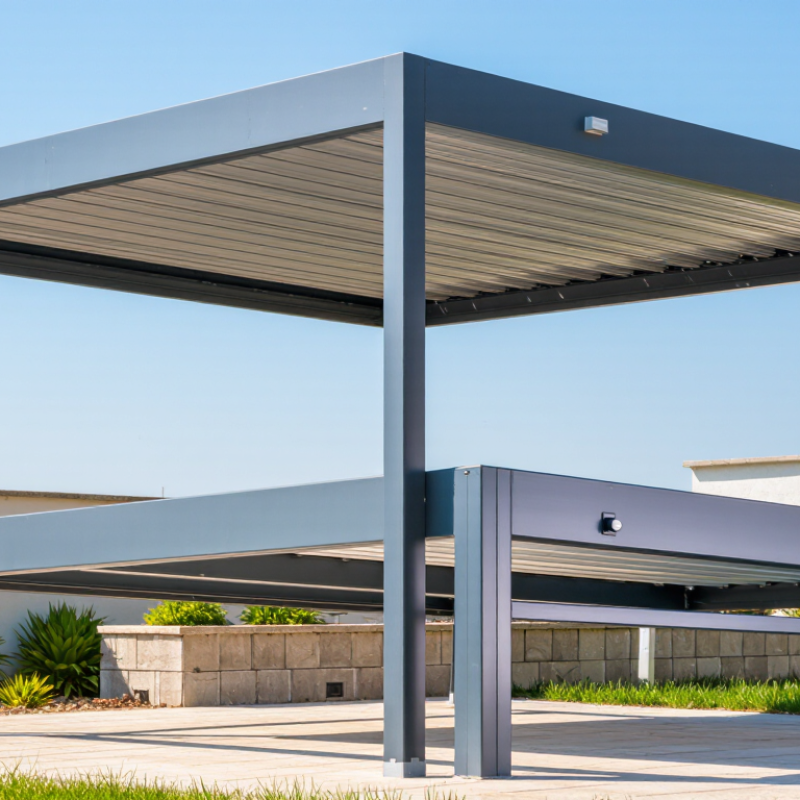
Table of Contents [Hide]
Understand the Structural Role of Aluminum Profiles in a Pergola
How to Choose Aluminum Profile for Pergola?
Understand the Structural Role of Aluminum Profiles in a Pergola
An aluminum profile is the pergola’s load-carrying skeleton. It supports the roof, transfers wind forces, and keeps the frame aligned. Choosing by appearance alone is a common mistake.
Start with the clear span, roof weight, and local wind or snow loads. Longer spans usually need deeper profiles or internal reinforcement. A slim beam may look elegant, but excessive deflection can cause water pooling, noisy movement, or damaged connections. Check both strength and stiffness.
Connections matter just as much. Bolts, brackets, and corner joints must match the profile thickness and expected loads. Poorly supported joints can fail before the main beam. Use profiles with adequate wall thickness, especially around fastener locations. Keep drainage paths open, because trapped water can accelerate corrosion near cut edges.
Thermal movement also deserves attention. Aluminum expands and contracts with temperature changes. Slotted holes or suitable movement details can reduce stress in larger structures. This detail is often overlooked.
A practical review should include the foundation, post spacing, beam orientation, and roof accessories. If the pergola carries screens, louvers, or lighting, include their weight early. I would not finalize a profile from a catalogue image. Have the design checked against local building requirements and project-specific loading conditions. Small errors become expensive later.