
- High-Performance Doors
-
- Applications
-
-
-
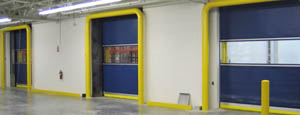
- Clean Room
Stainless steel or composite materials help maintain clean rooms.
-
-
- Coolers
Quick opening speeds & tight seals for temperature control.
-
-
- Parking
Improve security & traffic flow and enhance architectural style.
-
-
- Hurricane Zone
Withstand winds up to 175 mph and comply with the Florida Building Code.
-
-
-
-
- USDA / FDA / cGMP
Increase productivity & address stringent USDA, FDA & cGMP requirements.
-
-
- Freezers
High-speed & perimeter seals minimize the air exchange between areas.
-
-
- Security
High speed & durability ensure secure access.
-
-
- Ventilation
Perforated or screen door panels allow improved air circulation.
-
-
-
-
- Fire Station Emergency Response
When time is of the essence, high speed and reliability are crucial.
-
-
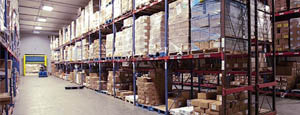
- Warehousing
Fast cycle times and secure seals keep environments separated.
-
-
- Loading Dock
Rugged design & secure seal for oversized openings.
-
-
- Large Openings
Break-away functionality with rugged design seals oversized openings.
-
-
-
-
- Heavy Equipment
Withstands challenges of heavy equipment and fleet truck/car wash environments.
-
-
- Self-Storage
Fast opening speeds and reliable, durable construction keep facilities secure and protected.
-
-
- Industries
-
-
-
- Automotive Dealerships
Reduce energy costs, increase productivity and comfort and enhance customer perception.
-
-
- Cold Storage & Processing
Increase productivity and operational efficiency while reducing energy and maintenance costs.
-
-
- Parking
We offer solutions for Apartment / Condo & Loft, Standalone Parking Facilities and Office Buildings
-
-
-
-
- Food & Beverage
Doors specifically engineered for USDA/FDA and cGMP environments, and assured compliance for uncompromising performance.
-
-
- Mfg/Dist/Warehousing
A complete product line allows facilities to increase efficiency and safety and reduce maintenance and energy costs.
-
-
- Government
Ensure effective security and environmental controls are maintained for critical government operations.
-
-
-
-
- Transit
Keep operations running smoothly and efficient while reducing energy and maintenance costs.
-
-
- Pharma, Nutraceutical & Biotech
Doors that offer quick, secure access, environmental control and reliability for life science facilities.
-
-
- Support Resources
- Parts
- Contact Us
- Blog/News
- Why Rytec
- Sales Rep Locator
- Careers
- Dealers
- Architectural Resources
















How to Choose Tungsten Carbide Ceramic for Global Sourcing
Choosing Tungsten Carbide Ceramic for global sourcing requires more than comparing price per kilogram. Buyers must examine hardness, fracture toughness, density, grain size, corrosion resistance, and dimensional stability. A small difference in cobalt content can change cutting performance, wear life, and failure behavior.
The U.S. Geological Survey’s Mineral Commodity Summaries 2025 reports approximately 81,000 metric tons of tungsten mine production worldwide in 2024. China remained the dominant producer, accounting for most global output. This concentration highlights a practical sourcing risk: material availability can shift with export controls, energy costs, transport delays, and regional demand. Reliable suppliers should provide traceable powder origins, controlled sintering records, inspection data, and consistent batch identification.
Standards matter.
ISO 3878 supports Vickers hardness testing for hardmetals, while ISO 4505 addresses metallographic examination of cemented carbides. These references help buyers compare technical claims across countries. However, standards cannot replace application testing. A seal ring, mining button, cutting insert, and wear liner require different performance priorities. In my experience, supplier samples often look impressive under laboratory conditions but perform differently after thermal cycling or impact loading. That gap deserves attention.
This guide explains how to evaluate Tungsten Carbide Ceramic through material specifications, supplier capability, quality documentation, logistics, and total operating cost. It also questions a common assumption: the lowest quotation is rarely the lowest-risk decision. A disciplined sourcing process should verify evidence, challenge vague claims, and leave room for technical review before approving a global supplier.
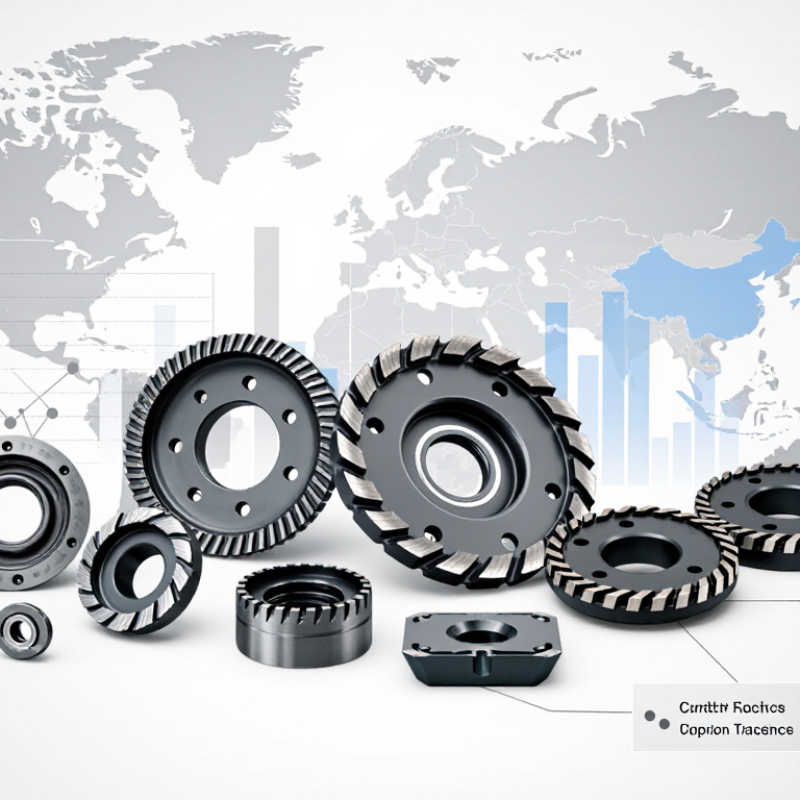
Table of Contents [Hide]
Define Tungsten Carbide Ceramic Types by WC Content and Binder Ratio
When sourcing tungsten carbide ceramic globally, define the grade before comparing quotations. WC content describes the hard phase. Binder ratio describes the metal phase holding it together. A grade with about 90% WC is not equivalent to one near 94%. The difference can change hardness, fracture resistance, density, and machining behavior. Small numbers matter here.
Higher WC content usually increases hardness and wear resistance. It can also reduce toughness when binder content falls too low. More cobalt or nickel binder often improves impact resistance and edge survival. However, excessive binder may reduce hardness and dimensional stability under load. Grain size must be recorded too. Fine grains can raise hardness, while coarse grains may tolerate shock better. This relationship is not perfectly linear. A simple percentage chart is not enough.
For a reliable comparison, request WC percentage, binder percentage, grain size, density, hardness scale, and transverse rupture strength. Ask whether values are measured on the finished part or a test coupon. Check certificates against an independent sample test when the application is costly. In one practical review, a buyer focused on WC content and missed a binder variation that affected edge chipping. That mistake was avoidable. Yet testing can still expose uncertainty. Pressing, sintering, grinding, and surface treatment may shift performance. Specify tolerances, inspection methods, and packing conditions before production. A small trial batch reveals more than a polished data sheet.