
- High-Performance Doors
-
- Applications
-
-
-
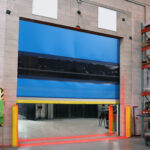
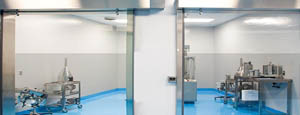
- Clean Room
Stainless steel or composite materials help maintain clean rooms.
-
-
- Coolers
Quick opening speeds & tight seals for temperature control.
-
-
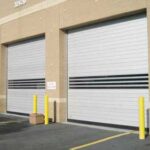
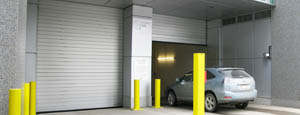
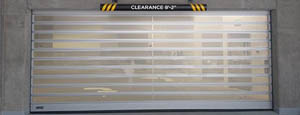
- Parking
Improve security & traffic flow and enhance architectural style.
-
-
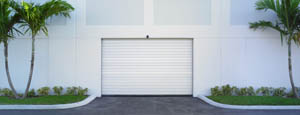
- Hurricane Zone
Withstand winds up to 175 mph and comply with the Florida Building Code.
-
-
-
-
- USDA / FDA / cGMP
Increase productivity & address stringent USDA, FDA & cGMP requirements.
-
-
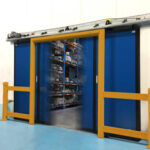
- Freezers
High-speed & perimeter seals minimize the air exchange between areas.
-
-
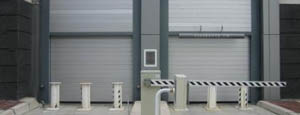
- Security
High speed & durability ensure secure access.
-
-
- Ventilation
Perforated or screen door panels allow improved air circulation.
-
-
-
-
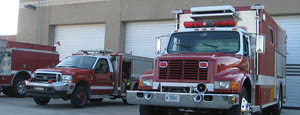
- Fire Station Emergency Response
When time is of the essence, high speed and reliability are crucial.
-
-
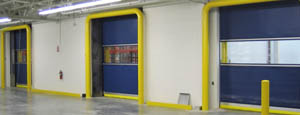
- Warehousing
Fast cycle times and secure seals keep environments separated.
-
-
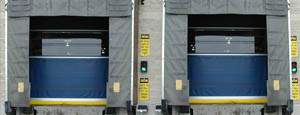
- Loading Dock
Rugged design & secure seal for oversized openings.
-
-
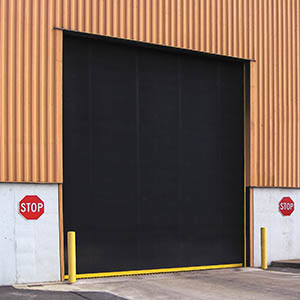
- Large Openings
Break-away functionality with rugged design seals oversized openings.
-
-
-
-
- Heavy Equipment
Withstands challenges of heavy equipment and fleet truck/car wash environments.
-
-
- Self-Storage
Fast opening speeds and reliable, durable construction keep facilities secure and protected.
-
-
- Industries
-
-
-
- Automotive Dealerships
Reduce energy costs, increase productivity and comfort and enhance customer perception.
-
-
- Cold Storage & Processing
Increase productivity and operational efficiency while reducing energy and maintenance costs.
-
-
- Parking
We offer solutions for Apartment / Condo & Loft, Standalone Parking Facilities and Office Buildings
-
-
-
-
- Food & Beverage
Doors specifically engineered for USDA/FDA and cGMP environments, and assured compliance for uncompromising performance.
-
-
- Mfg/Dist/Warehousing
A complete product line allows facilities to increase efficiency and safety and reduce maintenance and energy costs.
-
-
- Government
Ensure effective security and environmental controls are maintained for critical government operations.
-
-
-
-
- Transit
Keep operations running smoothly and efficient while reducing energy and maintenance costs.
-
-
- Pharma, Nutraceutical & Biotech
Doors that offer quick, secure access, environmental control and reliability for life science facilities.
-
-
- Support Resources
- Parts
- Contact Us
- Blog/News
- Why Rytec
- Sales Rep Locator
- Careers
- Dealers
- Architectural Resources








How to Choose the Best Golf Umbrellas for Wholesale?
Choosing the right golf umbrellas for wholesale requires more than comparing unit prices. Buyers must examine performance, appearance, packing efficiency, and customer expectations. A broad 62-inch canopy may protect two players, but it also increases carton size and shipping costs. That trade-off deserves attention.
Golf equipment consultant Ethan Caldwell says, “A wholesale umbrella succeeds when protection, durability, and presentation work together.” This principle guides a practical evaluation. Check the frame after repeated opening and closing. Inspect the ribs, shaft, runner, and handle closely. A fiberglass frame may resist wind better than a cheaper metal structure. However, materials alone do not guarantee quality. Poor joints can still cause early failure.
Wholesale buyers should request samples before confirming large quantities. Test them on a wet course, beside a golf cart, and inside standard storage spaces. Review canopy stitching, waterproof coating, automatic opening, and grip comfort. Branding also matters. A clean logo placed on a visible panel can improve recall without making the umbrella look crowded. Ask for accurate dimensions, product weight, carton measurements, minimum order quantities, and replacement policies.
Some buyers focus too heavily on color trends. That can be a mistake. Black, navy, and white often support wider retail use, while bright panels create stronger course visibility. Still, market preferences vary by region and customer group. There is no perfect model. The best choice balances dependable construction, attractive customization, manageable logistics, and realistic margins. A low unit price can still be expensive. Careful sampling may feel slower, but it often prevents disappointing wholesale orders.
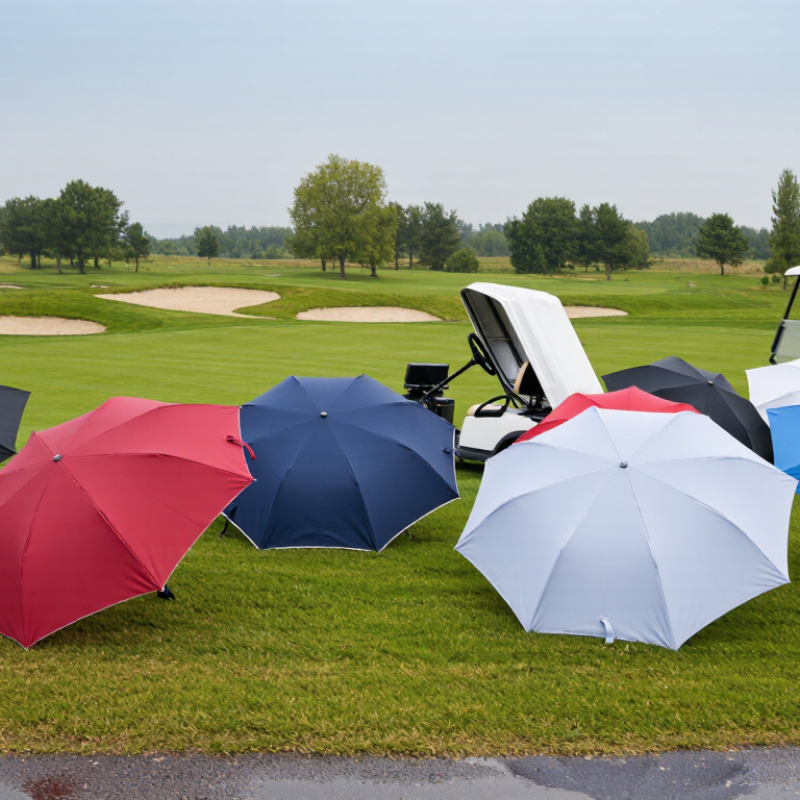
Table of Contents [Hide]
Define Wholesale Golf Umbrella Requirements and Buyer Preferences
How to Choose the Best Golf Umbrellas for Wholesale?
Wholesale golf umbrella selection should begin with clear buyer requirements, not attractive samples alone. Define the expected canopy size, opening method, shaft material, and wind resistance. A 62-inch canopy offers broad coverage but may feel heavy for younger golfers. A smaller model can be easier to carry. Ask where the umbrella will be used, too. Golf courses, outdoor events, and daily commuting create different demands.
Buyer preferences also depend on practical details. A comfortable rubberized handle helps during long rounds. Fiberglass ribs can improve flexibility in changeable weather. Vented canopies may reduce pressure during strong gusts. Confirm fabric density, stitching quality, color options, and printing space before placing a bulk order. Preferences vary. Some buyers value compact storage more than maximum coverage.
Tips: Request physical samples and test them outdoors. Check the handle after repeated opening and closing. Measure the packed length for shipping and storage. Compare samples under direct sunlight, because dark colors may fade or heat quickly. A common mistake is choosing the lowest unit price. Weak ribs, rough seams, or unreliable automatic mechanisms can create higher replacement costs. No specification is perfect. Reconsider the balance between durability, weight, appearance, and budget before confirming production.
How to Choose the Best Golf Umbrellas for Wholesale? - Define Wholesale Golf Umbrella Requirements and Buyer Preferences
| Product Requirement | Recommended Wholesale Specification | Common Buyer Preference | Why It Matters on the Golf Course | Suggested Quality Check | Typical Wholesale Planning Range |
|---|---|---|---|---|---|
| Canopy Diameter | 60–68 inches (152–173 cm) | 62–64 inches for a practical balance of coverage and portability | Provides coverage for one golfer, a golf bag, and selected equipment without becoming excessively difficult to carry. | Measure the open canopy from edge to edge and confirm the stated size is consistent across samples. | Best suited to standard retail and golf-event programs |
| Canopy Shape | Double-canopy or vented construction | Vented canopies for windy courses; single canopies for entry-level price points | Vents allow air to escape through the upper canopy and can reduce inversion pressure during gusts. | Open and close the vent repeatedly; inspect stitching and the overlap between canopy panels. | Double-canopy designs generally require a higher product budget |
| Canopy Fabric | 190T polyester or pongee polyester with water-repellent treatment | Quick-drying, colorfast fabric with a smooth surface for printing | Polyester is lightweight, dries relatively quickly, and is widely used for outdoor umbrellas. | Check fabric weight, coating uniformity, water beading, color consistency, and seam quality. | 190T polyester: economical; pongee: more premium hand feel |
| Frame Material | Fiberglass ribs with a steel or fiberglass shaft | Fiberglass components for flexibility and improved corrosion resistance | Flexible fiberglass ribs can help the umbrella recover from moderate wind stress and repeated use. | Flex the ribs carefully, inspect the joints, and confirm that no sharp edges or exposed fibers are present. | Fiberglass frames are usually priced above basic all-steel frames |
| Rib Count | 8 ribs for standard golf umbrellas; 10 ribs for enhanced stability | 8 ribs for mainstream wholesale orders; 10 ribs for premium programs | Additional ribs can improve canopy support, although frame quality and rib connection design remain critical. | Check rib symmetry, joint alignment, and canopy tension when the umbrella is fully open. | 8-rib models normally offer the best cost-to-performance balance |
| Wind Performance | Wind-vented structure with flexible ribs; avoid unsupported extreme wind claims | Reliable performance in ordinary course conditions rather than laboratory-only claims | Golf courses are exposed to changing weather, so structural recovery and safe handling are important. | Conduct controlled open-close and inversion-recovery tests; never use people as test weights. | Specify a tested performance level instead of using vague “stormproof” wording |
| Opening Mechanism | Automatic open or manual open with smooth runner movement | Automatic opening for convenience; manual opening for lower cost and simpler maintenance | Golfers may need to open an umbrella quickly while carrying clubs or walking between holes. | Perform at least 50 open-close cycles on samples and check for sticking, looseness, or spring failure. | Automatic mechanisms add component and assembly cost |
| Handle Design | Ergonomic rubberized, EVA, or molded plastic handle | Comfortable grip with a shape that can hang on a golf bag or push cart | A secure grip helps reduce hand fatigue and makes the umbrella easier to store during play. | Inspect grip texture, attachment strength, odor, surface finish, and compatibility with bag holders. | Basic molded handles are economical; contoured soft-touch handles are more premium |
| Closed Length and Weight | Closed length: approximately 38–42 inches; weight: approximately 1.3–2.0 lb | Lightweight construction without sacrificing frame strength | Lower weight improves portability, while excessive bulk can make storage in a golf bag inconvenient. | Measure packed length and net weight for every approved sample configuration. | Confirm shipping weight separately from product net weight |
| Water Repellency | Fast-draining surface with no visible leakage under routine rain exposure | Fabric that dries quickly and does not retain a strong chemical odor | Good water repellency reduces drying time and helps prevent mildew during storage. | Use a repeatable spray or water-pour test and inspect the inside surface after exposure. | Performance may decline after repeated use; define an acceptable test method |
| UV Protection | Optional UV-resistant coating or darker inner layer | Important for sunny-climate markets and golf-resort merchandise | The canopy can provide shade between shots and may help reduce fabric fading over time. | Request documented test results when making a specific UV protection claim. | Coated or double-layer designs generally increase material cost |
| Printing and Customization | Screen printing, heat transfer, digital printing, or sewn-in panels | Clear logo placement, accurate color matching, and durable print adhesion | Large canopies provide visible space for tournament graphics, club insignia, or event messaging. | Check print alignment, color consistency, wash or rub resistance, and artwork approval samples. | Artwork, color count, print position, and repeat quantity affect the final cost |
| Color Selection | Black, navy, white, gray, green, and custom solid colors | Dark colors for practical use; light or bright colors for visibility and event identity | Dark fabrics can hide dirt, while brighter colors may improve visibility in crowded outdoor areas. | Compare approved color standards under daylight and indoor lighting before bulk production. | Custom colors may require a minimum dye or production quantity |
| Accessories | Matching sleeve, shoulder strap, hang loop, and optional protective tip cover | Protective sleeve with a full-length zipper or wide opening for easy packing | Accessories support storage, transport, and retail presentation after the umbrella is dry. | Check accessory dimensions, stitching, zipper operation, and color matching with the umbrella. | Bundled accessories increase packing time and carton volume |
| Packaging | Individual sleeve plus export carton with moisture protection | Compact packaging that protects the ribs and canopy during shipment | Strong packaging reduces cosmetic damage, bent ribs, and compression marks in transit. | Perform carton drop, compression, and packing-density checks based on the shipping route. | Confirm carton quantity, dimensions, gross weight, and pallet requirements before ordering |
| Order Quantity Strategy | Start with a sample order or pilot quantity before a large production run | Lower initial exposure for new colors, prints, or seasonal programs | Umbrella demand can be seasonal and weather-sensitive, so inventory planning should match the sales channel. | Review sample approval, production lead time, defect tolerance, and replenishment capability. | MOQ varies by construction, color, printing method, and customization level |
| Quality Documentation | Material specification, inspection checklist, packaging details, and test records | Clear documentation that can be shared with purchasing and compliance teams | Written specifications reduce misunderstandings between the buyer, factory, inspector, and logistics provider. | Match the approved sample, purchase order, inspection report, and shipped goods. | Use measurable acceptance criteria rather than general terms such as “high quality” |
| Buyer Segment Fit | Choose specifications according to the sales channel | Retail: price and appearance; clubs: durability and customization; events: lead time and branding | Different buyers value different combinations of cost, performance, presentation, and delivery speed. | Score each sample against the target buyer’s priorities before final selection. | Build at least three tiers: basic, standard, and premium |
Note: The ranges above are practical purchasing benchmarks for wholesale planning. Final specifications, pricing, minimum order quantities, testing requirements, and delivery schedules should be confirmed with the selected supplier and adjusted for the target market.