
- High-Performance Doors
-
- Applications
-
-
-
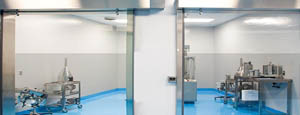
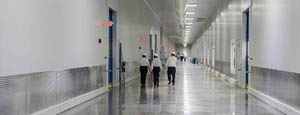
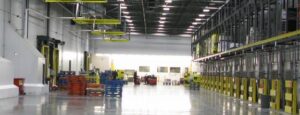
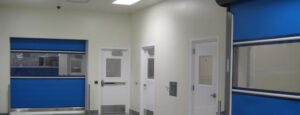
- Clean Room
Stainless steel or composite materials help maintain clean rooms.
-
-
- Coolers
Quick opening speeds & tight seals for temperature control.
-
-
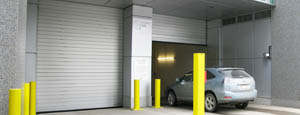
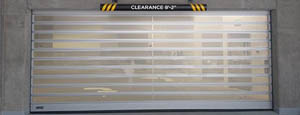
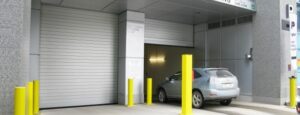
- Parking
Improve security & traffic flow and enhance architectural style.
-
-
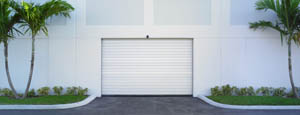
- Hurricane Zone
Withstand winds up to 175 mph and comply with the Florida Building Code.
-
-
-
-
- USDA / FDA / cGMP
Increase productivity & address stringent USDA, FDA & cGMP requirements.
-
-
- Freezers
High-speed & perimeter seals minimize the air exchange between areas.
-
-
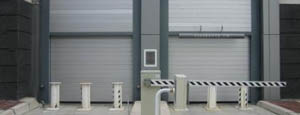
- Security
High speed & durability ensure secure access.
-
-
- Ventilation
Perforated or screen door panels allow improved air circulation.
-
-
-
-
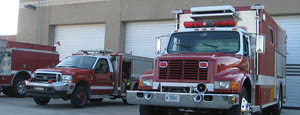
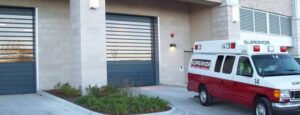
- Fire Station Emergency Response
When time is of the essence, high speed and reliability are crucial.
-
-
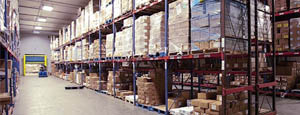
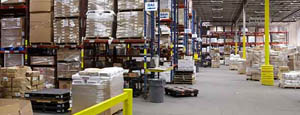
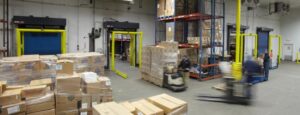
- Warehousing
Fast cycle times and secure seals keep environments separated.
-
-
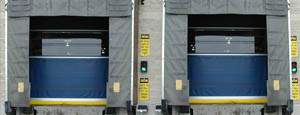
- Loading Dock
Rugged design & secure seal for oversized openings.
-
-
- Large Openings
Break-away functionality with rugged design seals oversized openings.
-
-
-
-
- Heavy Equipment
Withstands challenges of heavy equipment and fleet truck/car wash environments.
-
-
- Self-Storage
Fast opening speeds and reliable, durable construction keep facilities secure and protected.
-
-
- Industries
-
-
-
- Automotive Dealerships
Reduce energy costs, increase productivity and comfort and enhance customer perception.
-
-
- Cold Storage & Processing
Increase productivity and operational efficiency while reducing energy and maintenance costs.
-
-
- Parking
We offer solutions for Apartment / Condo & Loft, Standalone Parking Facilities and Office Buildings
-
-
-
-
- Food & Beverage
Doors specifically engineered for USDA/FDA and cGMP environments, and assured compliance for uncompromising performance.
-
-
- Mfg/Dist/Warehousing
A complete product line allows facilities to increase efficiency and safety and reduce maintenance and energy costs.
-
-
- Government
Ensure effective security and environmental controls are maintained for critical government operations.
-
-
-
-
- Transit
Keep operations running smoothly and efficient while reducing energy and maintenance costs.
-
-
- Pharma, Nutraceutical & Biotech
Doors that offer quick, secure access, environmental control and reliability for life science facilities.
-
-
- Support Resources
- Parts
- Contact Us
- Blog/News
- Why Rytec
- Sales Rep Locator
- Careers
- Dealers
- Architectural Resources
How to Choose Fens WPC for Global Projects?
Choosing Fens Wpc for global projects requires more than comparing colors, prices, and surface textures. The right decision begins with climate, installation conditions, and documented performance. A deck beside a humid coastline faces salt air, ultraviolet exposure, and repeated wet-dry cycles. A balcony in Northern Europe faces frost, snow, and seasonal movement. These details matter.
Materials engineer Dr. Elena Morris states, “A composite should be selected for its service environment, not its showroom appearance.” Her principle offers a practical starting point for evaluating Fens WPC across international markets. Buyers should examine the formulation, reinforcement content, moisture resistance, slip performance, fire classification, and expected maintenance requirements. Independent test reports are valuable. Supplier promises alone are not enough.
Global projects also require careful attention to dimensions, packaging, installation tolerances, and technical support. A board may perform well in one region but respond differently under stronger sunlight or wider temperature changes. That assumption can fail. Ask for regional references, batch consistency records, and clear warranty conditions. Confirm whether local installers understand spacing, ventilation, fasteners, and substructure requirements.
Sustainability deserves a closer look. Recycled content sounds positive, but its source and verification remain important. End-of-life options can be limited. This is often overlooked. A reliable Fens WPC specification balances appearance, durability, compliance, logistics, and lifecycle cost. No checklist is perfect. However, disciplined questions can prevent expensive replacements and protect the project’s long-term credibility.

Table of Contents [Hide]
Define Global Project Criteria: Wind Loads, Climate Zones, and Local Codes
Choosing Fens WPC for a global project starts with measurable site conditions, not appearance. Wind design must follow the project’s governing code. ASCE 7-22 uses three-second gust wind speeds and risk categories, while EN 1991-1-4 applies different exposure and terrain factors. A coastal tower, an open prairie, and a sheltered urban site cannot share one fence specification. Check panel width, post spacing, fixing strength, and foundation depth against the local wind calculation.
Climate exposure changes the material’s daily stress. The IPCC Sixth Assessment Report found global surface temperature reached about 1.1°C above 1850–1900 levels during 2011–2020. Heat cycles can increase movement in WPC profiles. Strong ultraviolet exposure may also affect color and surface performance. In humid or coastal zones, select stainless or suitably protected connectors, and verify drainage around every post. ISO 9223 corrosion categories can help classify atmospheric severity, but the site survey still matters. Small details decide long-term stability.
Local codes may control fire behavior, boundary height, accessibility, snow loads, or wind-borne debris. ASTM D7031 provides guidance for evaluating wood-plastic composite products, but it does not replace project-specific approval. Ask for tested expansion values, impact results, UV-aging data, and installation tolerances. Do not rely on a generic datasheet. It may be incomplete. My practical mistake has been treating climate zones as broad labels; microclimates can be harsher. Record the actual site elevation, nearby buildings, salt exposure, and maintenance access before final selection.
How to Choose Fens WPC for Global Projects? - Define Global Project Criteria: Wind Loads, Climate Zones, and Local Codes
| Project Criterion | Typical Global Condition | Indicative Screening Data | Relevant Code or Reference Framework | WPC Fence Selection Requirements | Design and Verification Actions |
|---|---|---|---|---|---|
| Coastal tropical cyclone region | Exposed coastal sites in cyclone or hurricane-prone areas with strong winds, wind-driven rain, salt spray, and possible airborne debris. | High wind exposure Preliminary screening wind speed: approximately 40–60 m/s. Final values depend on location, risk category, terrain, height, and code. | ASCE 7 in the United States; EN 1991-1-4 in Europe and many jurisdictions using Eurocodes; AS/NZS 1170.2 in Australia and New Zealand; locally adopted cyclone regulations. | Use tested boards and posts with low wind-deflection characteristics. Prefer mechanically fixed profiles, reinforced posts, reduced panel width, and corrosion-resistant fasteners. Avoid relying only on friction-fit connections. | Obtain the site-specific basic or ultimate wind speed from the local authority or structural engineer. Check post bending, footing overturning, connection pull-out, panel pressure, and impact resistance where required. |
| Temperate inland region | Seasonal temperature changes, moderate rainfall, occasional storms, and comparatively limited salt exposure. | Moderate wind exposure Preliminary screening wind speed: approximately 25–40 m/s, subject to local terrain and building importance. | National building regulations and the locally adopted wind-load standard, such as ASCE 7, EN 1991-1-4, NBCC, or equivalent national provisions. | Select profiles with dimensional stability across seasonal temperature changes. Allow for thermal movement and use UV-resistant outer layers where prolonged sunlight is expected. | Confirm design wind pressure rather than using a generic regional average. Provide expansion gaps according to the tested product system and installation temperature. |
| Cold continental or alpine region | Freeze-thaw cycles, snow accumulation, low temperatures, ice formation, and possible frost heave at foundations. | Cold climate Design temperature may fall below 0°C for extended periods. Snow and ice can add permanent or temporary loads to rails, posts, and gates. | Local structural and frost-protection requirements; EN 1991-1-3 for snow actions where Eurocodes apply; NBCC or equivalent national snow-load provisions. | Use WPC with verified low-temperature impact performance and controlled water absorption. Select galvanized or stainless fasteners compatible with freeze-thaw exposure. | Design foundations below the local frost depth where required. Check snow accumulation, ice expansion, post uplift, drainage, and the ability of gates and hardware to operate in freezing conditions. |
| Hot arid or semi-arid region | High solar radiation, large daily temperature swings, low humidity, dust, and occasional intense rainfall or flash flooding. | High UV exposure Day-to-night temperature differences can be substantial. Dark surfaces may reach significantly higher temperatures than surrounding air. | Local building and wind codes; project specifications for solar exposure, surface temperature, drainage, and material durability. | Select UV-stabilized WPC with documented color-retention performance. Use light or medium colors where surface-temperature reduction is important and provide adequate ventilation behind solid panels. | Allow for thermal expansion in boards and rails. Avoid sealing drainage paths. Review fastener movement, joint width, color variation, and cleaning requirements for dust accumulation. |
| Humid tropical or monsoon region | High humidity, heavy rainfall, rapid drying, mold-prone surroundings, intense sunlight, and possible seasonal flooding. | Moisture and UV exposure Annual rainfall may be high, with short-duration heavy storms and prolonged wetting of lower fence components. | Local wind, rainwater, drainage, and flood-zone provisions; ASCE 7, EN 1991-1-4, AS/NZS 1170.2, or equivalent locally adopted standards where applicable. | Use low-water-absorption WPC and corrosion-resistant fixings. Favor ventilated or slatted configurations where privacy requirements allow, reducing wind pressure and moisture retention. | Keep boards clear of standing water and soil. Provide drainage openings, raised bottom clearances, sealed or protected cut ends where specified, and foundations designed for saturated soil conditions. |
| Marine or salt-spray environment | Exposure to salt-laden air, sea spray, high humidity, sand, and frequent wind-driven moisture. | High corrosion risk Corrosion risk increases near shorelines, especially at exposed coastal locations and in sheltered areas where salt deposits remain damp. | Local building regulations plus project corrosion-protection specifications, material compatibility requirements, and structural wind-load standards. | Use stainless steel or appropriately protected fasteners, avoid incompatible metal pairings, and select WPC components with documented resistance to moisture and salt exposure. | Specify fastener grade and coating for the exposure category. Inspect cut edges, drainage points, metal brackets, and concealed connections during maintenance cycles. |
| Dense urban or built-up area | Buildings, walls, trees, and neighboring fences modify wind flow. Local turbulence may be higher around corners and rooflines. | Variable turbulence Wind exposure depends on upstream development, building height, corner effects, and the fence position relative to structures. | Local wind-load code provisions for terrain category, exposure category, topographic effects, and importance or risk class. | Use a fence layout that avoids unnecessary solid wind-catching surfaces. Consider spaced profiles, stronger corner posts, and reinforced gate frames at turbulent locations. | Identify open corridors, building corners, rooftop locations, and acceleration zones. Do not assume that surrounding buildings always reduce design wind pressure. |
| High-altitude or topographically exposed site | Ridges, escarpments, open plateaus, and elevated terrain can increase wind speed and turbulence compared with nearby lowland locations. | Topographic effect Wind amplification may apply at exposed ridges, hilltops, and abrupt terrain changes, depending on the governing code. | ASCE 7 topographic provisions, EN 1991-1-4 or the applicable national wind standard, together with local geotechnical requirements. | Use a structurally reinforced post-and-footing system, robust corner connections, and WPC profiles tested for the expected temperature and UV range. | Obtain a site-specific wind assessment where the project is near a ridge, slope, escarpment, or open plateau. Check foundation bearing, scour, frost, and overturning resistance. |
| Flood-prone or waterlogged ground | Periodic flooding, saturated soil, high groundwater, erosion, and debris impact may affect fence foundations and lower panels. | Foundation-critical Flood depth, flow velocity, buoyancy, scour potential, and debris impact must be assessed separately from ordinary wind loading. | Local floodplain, drainage, foundation, and environmental regulations; project-specific hydraulic and geotechnical requirements. | Use elevated or sacrificial lower details where appropriate. Avoid designs that trap debris or create excessive hydraulic resistance in high-flow zones. | Verify whether fencing is permitted in the flood zone. Design posts and footings for scour, uplift, lateral water force, debris impact, and soil degradation. |
| Local code and approval review | Every country or municipality may adopt different wind maps, safety factors, zoning rules, boundary-height limits, and permit procedures. | Mandatory verification Product selection cannot be finalized from climate classification alone. | The legally adopted local building code, planning regulations, boundary requirements, fire provisions, accessibility rules, and environmental restrictions take priority. | Select a complete tested system rather than evaluating boards in isolation. Require product data for span limits, fixing types, thermal movement, fire performance, UV durability, and installation tolerances. | Record project location, fence height, panel openness, post spacing, gate dimensions, terrain category, wind direction, importance level, soil condition, and approval authority before issuing the final design. |
Important design note: The wind-speed ranges and climate descriptions above are preliminary screening criteria only. Final WPC fence design must use the legally adopted local code, site-specific wind parameters, terrain and topographic factors, soil data, foundation calculations, product test evidence, and approval requirements.