
- High-Performance Doors
-
- Applications
-
-
-
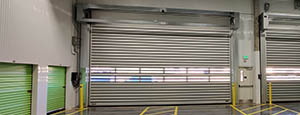
- Clean Room
Stainless steel or composite materials help maintain clean rooms.
-
-
- Coolers
Quick opening speeds & tight seals for temperature control.
-
-
- Parking
Improve security & traffic flow and enhance architectural style.
-
-
- Hurricane Zone
Withstand winds up to 175 mph and comply with the Florida Building Code.
-
-
-
-
- USDA / FDA / cGMP
Increase productivity & address stringent USDA, FDA & cGMP requirements.
-
-
- Freezers
High-speed & perimeter seals minimize the air exchange between areas.
-
-
- Security
High speed & durability ensure secure access.
-
-
- Ventilation
Perforated or screen door panels allow improved air circulation.
-
-
-
-
- Fire Station Emergency Response
When time is of the essence, high speed and reliability are crucial.
-
-
- Warehousing
Fast cycle times and secure seals keep environments separated.
-
-
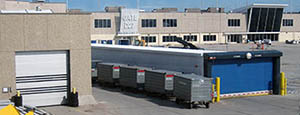
- Loading Dock
Rugged design & secure seal for oversized openings.
-
-
- Large Openings
Break-away functionality with rugged design seals oversized openings.
-
-
-
-
- Heavy Equipment
Withstands challenges of heavy equipment and fleet truck/car wash environments.
-
-
- Self-Storage
Fast opening speeds and reliable, durable construction keep facilities secure and protected.
-
-
- Industries
-
-
-
- Automotive Dealerships
Reduce energy costs, increase productivity and comfort and enhance customer perception.
-
-
- Cold Storage & Processing
Increase productivity and operational efficiency while reducing energy and maintenance costs.
-
-
- Parking
We offer solutions for Apartment / Condo & Loft, Standalone Parking Facilities and Office Buildings
-
-
-
-
- Food & Beverage
Doors specifically engineered for USDA/FDA and cGMP environments, and assured compliance for uncompromising performance.
-
-
- Mfg/Dist/Warehousing
A complete product line allows facilities to increase efficiency and safety and reduce maintenance and energy costs.
-
-
- Government
Ensure effective security and environmental controls are maintained for critical government operations.
-
-
-
-
- Transit
Keep operations running smoothly and efficient while reducing energy and maintenance costs.
-
-
- Pharma, Nutraceutical & Biotech
Doors that offer quick, secure access, environmental control and reliability for life science facilities.
-
-
- Support Resources
- Parts
- Contact Us
- Blog/News
- Why Rytec
- Sales Rep Locator
- Careers
- Dealers
- Architectural Resources
















How to Choose a Double Micro Switch for Global Sourcing?
Choosing the right Double Micro Switch for global sourcing requires more than comparing unit prices. The switch must match the equipment’s force, travel, current, voltage, and operating environment. A small mismatch can cause intermittent signals, contact welding, or premature failure. These problems often appear after installation, not during a quick sample check.
Experienced sourcing teams begin with a clear technical specification. Define the actuator type, terminal style, contact arrangement, switching speed, and expected service life. Confirm whether the product uses a double-circuit design or another configuration. Request datasheets, dimensional drawings, material details, and test reports from each supplier. Samples should be tested under realistic conditions, including vibration, dust, humidity, and repeated mechanical cycles.
Look beyond the catalogue.
Supplier evaluation also matters. Review manufacturing experience, quality controls, traceability, inspection records, and change-management procedures. Check relevant IEC requirements and verify whether additional regional certifications apply to the finished equipment. Independent laboratory testing can strengthen confidence, especially for safety-critical applications. Still, paperwork is not proof by itself. A factory audit may reveal inconsistent assembly, weak terminal crimping, or poorly controlled contact materials. No audit is perfect.
Cost remains important, but the cheapest Double Micro Switch may create higher replacement and warranty expenses. Compare total ownership costs, minimum order quantities, lead times, packaging, and production capacity. Keep approved samples and signed specifications as reference points. Global supply chains change quickly. A reliable sourcing decision combines verified evidence, practical testing, and a willingness to question assumptions.
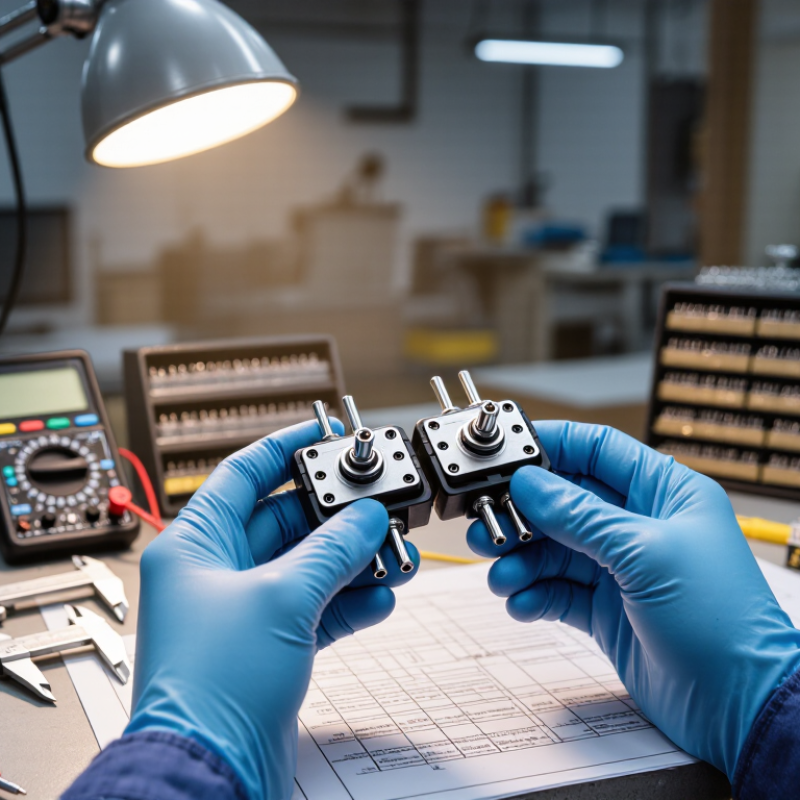
Table of Contents [Hide]
Understanding the Structure and Function of a Double Micro Switch
A double micro switch usually contains two switching circuits in one compact housing. Its structure includes an actuator, return spring, movable contact, fixed contacts, and terminal block. The actuator may be a pin, roller, or hinged lever. When pressed, it changes the contact path between common, normally open, and normally closed terminals. Some designs switch both circuits together. Others allow independent operation. Confirm the supplier’s definition before comparing quotations.
This mechanism supports position sensing in appliances, control panels, safety interlocks, and automated equipment. The contact gap is tiny, but timing matters. A slow actuator may create unstable switching. Electrical ratings also need careful checking. A higher current rating is not automatically better. According to Grand View Research, the global micro switch market was valued at about USD 1.1 billion in 2023, with projected growth near 5.3% annually through 2030. This growth reflects demand from industrial automation and transport equipment. For global sourcing, request endurance data, operating-force tolerance, contact resistance, and test conditions. Compliance with IEC 61058-1 or relevant regional standards improves supplier evaluation.
Tips: Ask for a cross-sectional drawing and a sample batch. Measure actuation travel with a force gauge. Check whether both circuits switch simultaneously. IP protection can weaken after repeated cable movement. That detail is easy to miss. Also, report figures vary by research method, so treat forecasts as guidance, not proof. A supplier’s real test records matter more than a polished catalogue.