
- High-Performance Doors
-
- Applications
-
-
-
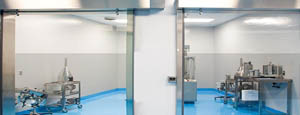
- Clean Room
Stainless steel or composite materials help maintain clean rooms.
-
-
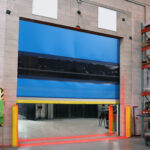
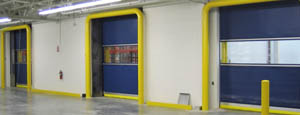
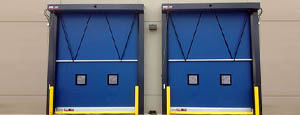
- Coolers
Quick opening speeds & tight seals for temperature control.
-
-
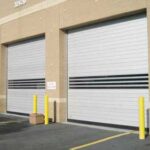
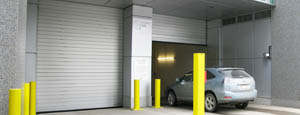
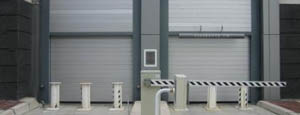
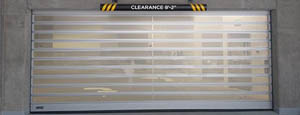
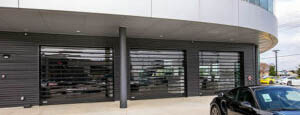
- Parking
Improve security & traffic flow and enhance architectural style.
-
-
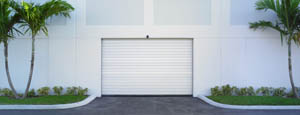
- Hurricane Zone
Withstand winds up to 175 mph and comply with the Florida Building Code.
-
-
-
-
- USDA / FDA / cGMP
Increase productivity & address stringent USDA, FDA & cGMP requirements.
-
-
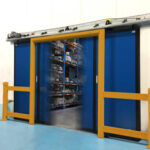
- Freezers
High-speed & perimeter seals minimize the air exchange between areas.
-
-
- Security
High speed & durability ensure secure access.
-
-
- Ventilation
Perforated or screen door panels allow improved air circulation.
-
-
-
-
- Fire Station Emergency Response
When time is of the essence, high speed and reliability are crucial.
-
-
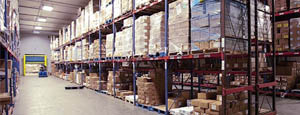
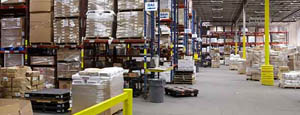
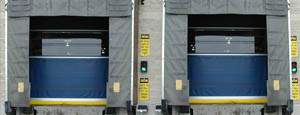
- Warehousing
Fast cycle times and secure seals keep environments separated.
-
-
- Loading Dock
Rugged design & secure seal for oversized openings.
-
-
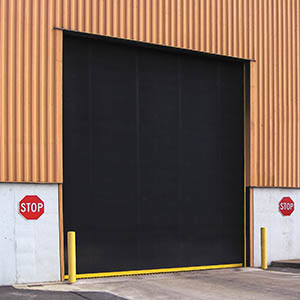
- Large Openings
Break-away functionality with rugged design seals oversized openings.
-
-
-
-
- Heavy Equipment
Withstands challenges of heavy equipment and fleet truck/car wash environments.
-
-
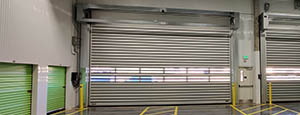
- Self-Storage
Fast opening speeds and reliable, durable construction keep facilities secure and protected.
-
-
- Industries
-
-
-
- Automotive Dealerships
Reduce energy costs, increase productivity and comfort and enhance customer perception.
-
-
- Cold Storage & Processing
Increase productivity and operational efficiency while reducing energy and maintenance costs.
-
-
- Parking
We offer solutions for Apartment / Condo & Loft, Standalone Parking Facilities and Office Buildings
-
-
-
-
- Food & Beverage
Doors specifically engineered for USDA/FDA and cGMP environments, and assured compliance for uncompromising performance.
-
-
- Mfg/Dist/Warehousing
A complete product line allows facilities to increase efficiency and safety and reduce maintenance and energy costs.
-
-
- Government
Ensure effective security and environmental controls are maintained for critical government operations.
-
-
-
-
- Transit
Keep operations running smoothly and efficient while reducing energy and maintenance costs.
-
-
- Pharma, Nutraceutical & Biotech
Doors that offer quick, secure access, environmental control and reliability for life science facilities.
-
-
- Support Resources
- Parts
- Contact Us
- Blog/News
- Why Rytec
- Sales Rep Locator
- Careers
- Dealers
- Architectural Resources








How to Choose a Green Machine Optical Sorter in 2026?
Choosing a Green Machine Optical Sorter in 2026 requires more than comparing belt speeds and camera counts. Waste volumes are rising, while material streams are becoming less predictable. UNEP and ISWA’s Global Waste Management Outlook 2024 estimates that 2.3 billion tonnes of municipal waste are generated annually. It projects annual generation could reach 3.8 billion tonnes by 2050. That pressure makes reliable separation a plant-level decision, not a showroom decision.
The European Environment Agency reported an EU municipal-waste recycling rate of roughly 48% in 2022. However, averages can hide wet packaging, black plastics, labels, film, and broken glass moving across one conveyor. This guide examines detection technology, ejection precision, throughput, recovery, purity, energy demand, and maintenance access. It also considers NIR, RGB, AI-assisted recognition, compressed-air quality, and real-time performance data. Smithers’ recycling-market analyses repeatedly identify feedstock quality and contamination control as major operational concerns. Practical evidence matters more than polished brochures.
A credible choice begins with representative samples, documented test conditions, and independently checked results. Ask suppliers for recovery and purity data by material, not one impressive headline number. Check service response times, spare-part availability, software updates, and operator training. Do not ignore the air compressor. It can quietly determine uptime. The difficult truth is that no sorter fixes poor input control or weak plant discipline. I may be overemphasizing technology; site layout and daily cleaning often matter just as much. This framework is not perfect. Use it to challenge claims, calculate lifecycle cost, and select equipment that performs beyond a demonstration day.
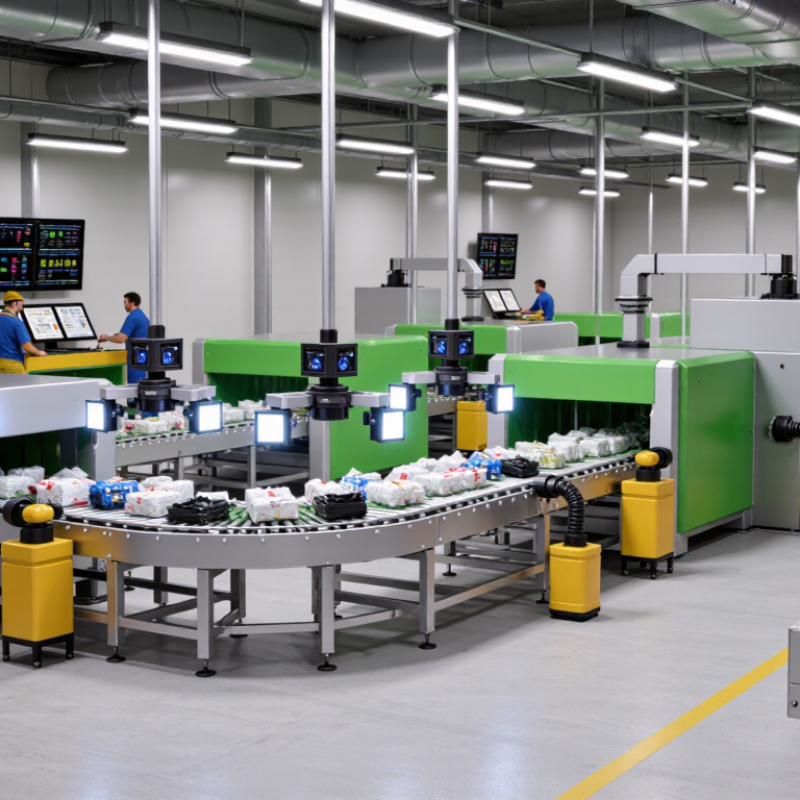
Table of Contents [Hide]
What Is a Green Machine Optical Sorter?
A green machine optical sorter is an automated recycling unit that identifies materials and separates them at high speed. It typically uses cameras, near-infrared sensors, and software to recognize color, shape, and polymer signatures. Controlled air jets then remove selected items from a moving conveyor. Upstream screens and magnets may support the process, but they do different jobs. “Green” usually describes lower waste, energy, or compressed-air use. It is not a formal technical certification.
The need is growing. UNEP’s Global Waste Management Outlook 2024 estimates that municipal solid waste will rise from 2.3 billion tonnes in 2023 to 3.8 billion tonnes by 2050. In the United States, the EPA reported 292.4 million tons of municipal waste in 2018, with 32.1% recycled or composted. These figures show why accurate sorting matters. Yet optical performance depends heavily on the feed. Wet films, black plastics, labels, and crushed containers can reduce recognition accuracy.
Choose the machine through measured trials, not attractive claims. Request results for recovery rate, purity, throughput, energy use, and compressed-air demand. Test your actual material mix. A clean laboratory sample may hide serious problems. Check sensor calibration, software updates, maintenance access, and operator training. The word green can mislead. No sorter removes contamination completely. A practical lesson is simple: record rejected materials by type, then question every unexplained loss.
How to Choose a Green Machine Optical Sorter in 2026? - What Is a Green Machine Optical Sorter?
| Selection Dimension | What It Means | Typical Data or Range | Recommended Selection Consideration |
|---|---|---|---|
| Primary Function | An optical sorter uses cameras, spectral sensors and controlled air jets to identify and separate materials on a conveyor. | Automatic identification and ejection of selected material fractions. | Define whether the target is recovery, contaminant removal, color separation or quality control. |
| Suitable Feed Materials | Common applications include mixed plastics, paper, cardboard, glass, municipal solid waste, construction residues and food-related products. | Material suitability depends on particle size, moisture, color, surface condition and layer thickness. | Request test results using the actual feedstock rather than relying only on laboratory samples. |
| Detection Technology | Different sensors detect visible color, near-infrared spectral signatures, shape, size and sometimes metal or foreign-object characteristics. | VIS: color and appearance; NIR: polymer and fiber identification; combined systems: broader classification. | Choose the sensor combination according to the materials that must be recognized and rejected. |
| Throughput | The quantity of material processed per hour under specified feed and purity conditions. | Often approximately 1–15 tonnes per hour, depending on material density, belt width, particle size and loading pattern. | Use the required peak hourly volume, not only the average daily volume, when sizing the machine. |
| Belt Width | The available sorting surface determines the material layer width and affects capacity. | Common industrial configurations are approximately 600–2,800 mm wide. | Match the belt width to the existing conveyor layout and required material presentation. |
| Particle Size | Objects should be separated and presented in a size range that the sensors and air-ejection system can reliably detect. | Many systems are configured for particles from roughly 10–300 mm, but the usable range is application-specific. | Install screening and size classification upstream when the feed contains excessive fines or oversized items. |
| Sorting Accuracy | Accuracy reflects how consistently the system identifies and ejects the target material under defined operating conditions. | Commercial results commonly vary from approximately 80% to above 95%, depending on feed quality and sorting objective. | Compare purity and recovery together; maximizing one may reduce the other. |
| Recovery Rate | The percentage of the valuable target material recovered in the desired output stream. | Usually reported as a percentage and measured using a defined test sample. | Set a minimum recovery target before selecting belt speed, air pressure and ejection settings. |
| Product Purity | The proportion of acceptable material in the sorted output stream. | A practical specification is often 90–99% purity, subject to input contamination and process design. | Use a second sorting stage when the required purity cannot be achieved in one pass. |
| Air-Jet System | Compressed-air valves eject selected objects from the conveyor into a separate chute. | Performance depends on valve spacing, response time, air pressure, nozzle condition and object trajectory. | Confirm available compressor capacity and specify filtration, drying and air-quality requirements. |
| Conveyor Speed | Belt speed affects throughput, object spacing, detection time and ejection accuracy. | Typical systems operate over a broad range of approximately 2–5 m/s, depending on design. | Select a speed that provides stable material presentation rather than simply maximizing belt velocity. |
| Material Presentation | Optical sensors perform best when objects are separated, visible and distributed in a thin, consistent layer. | Single-layer presentation generally improves identification and reduces overlapping objects. | Include metering, screening, ballistic separation or vibratory feeding where required. |
| Moisture and Dirt Tolerance | Water, dust, labels, food residue and surface contamination can affect spectral readings and air ejection. | Performance is feed-dependent and may decline when materials are wet, heavily coated or compacted. | Evaluate washing, drying, dust removal and routine lens-cleaning requirements. |
| Energy Consumption | Energy use includes the sorter, conveyor, lighting, control system and compressed-air generation. | Report energy as kWh per operating hour or kWh per tonne, including the compressed-air system where possible. | Compare total installed energy demand rather than the sorter cabinet alone. |
| Environmental Design | A green machine approach focuses on resource recovery, reduced landfill disposal, efficient operation and maintainable components. | Key indicators include recovered tonnes, energy per tonne, compressed-air use and reject reduction. | Calculate environmental benefits from measured operating data and the actual local waste stream. |
| Controls and Software | Control software manages recipes, sensor settings, air-jet timing, alarms and performance monitoring. | Useful functions include recipe storage, remote diagnostics, trend reports and production data export. | Check compatibility with plant PLC, SCADA, safety systems and cybersecurity requirements. |
| Maintenance Requirements | Routine work includes cleaning lenses and lighting covers, inspecting valves, checking belts and replacing filters. | Daily visual checks and scheduled preventive maintenance are common operating practices. | Confirm access to spare parts, trained technicians and documented maintenance intervals. |
| Best 2026 Buying Checklist | A reliable selection combines technical performance, lifecycle cost, environmental impact and integration capability. | Evaluate throughput, purity, recovery, energy use, air consumption, uptime, safety and payback period. | Require a documented site test, guaranteed performance conditions, operator training and lifecycle support before purchase. |
Note: The numerical ranges are typical industry planning values. Actual performance depends on feed composition, particle size distribution, moisture, loading rate, conveyor configuration and operating settings.