
- High-Performance Doors
-
- Applications
-
-
-
- Clean Room
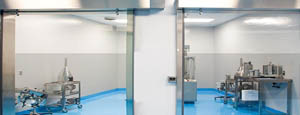
Stainless steel or composite materials help maintain clean rooms.
-
-
- Coolers
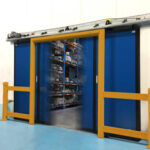
Quick opening speeds & tight seals for temperature control.
-
-
- Parking
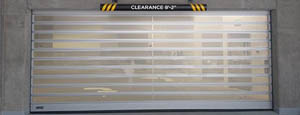
Improve security & traffic flow and enhance architectural style.
-
-
- Hurricane Zone
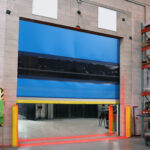
Withstand winds up to 175 mph and comply with the Florida Building Code.
-
-
-
-
- USDA / FDA / cGMP
Increase productivity & address stringent USDA, FDA & cGMP requirements.
-
-
- Freezers
High-speed & perimeter seals minimize the air exchange between areas.
-
-
- Security
High speed & durability ensure secure access.
-
-
- Ventilation
Perforated or screen door panels allow improved air circulation.
-
-
-
-
- Fire Station Emergency Response
When time is of the essence, high speed and reliability are crucial.
-
-
- Warehousing
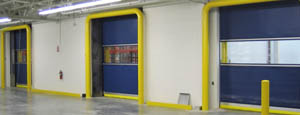
Fast cycle times and secure seals keep environments separated.
-
-
- Loading Dock
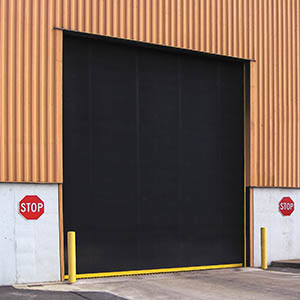
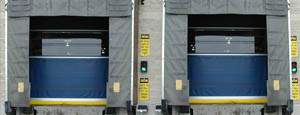
Rugged design & secure seal for oversized openings.
-
-
- Large Openings
Break-away functionality with rugged design seals oversized openings.
-
-
-
-
- Heavy Equipment
Withstands challenges of heavy equipment and fleet truck/car wash environments.
-
-
- Self-Storage
Fast opening speeds and reliable, durable construction keep facilities secure and protected.
-
-
- Industries
-
-
-
- Automotive Dealerships
Reduce energy costs, increase productivity and comfort and enhance customer perception.
-
-
- Cold Storage & Processing
Increase productivity and operational efficiency while reducing energy and maintenance costs.
-
-
- Parking
We offer solutions for Apartment / Condo & Loft, Standalone Parking Facilities and Office Buildings
-
-
-
-
- Food & Beverage
Doors specifically engineered for USDA/FDA and cGMP environments, and assured compliance for uncompromising performance.
-
-
- Mfg/Dist/Warehousing
A complete product line allows facilities to increase efficiency and safety and reduce maintenance and energy costs.
-
-
- Government
Ensure effective security and environmental controls are maintained for critical government operations.
-
-
-
-
- Transit
Keep operations running smoothly and efficient while reducing energy and maintenance costs.
-
-
- Pharma, Nutraceutical & Biotech
Doors that offer quick, secure access, environmental control and reliability for life science facilities.
-
-
- Support Resources
- Parts
- Contact Us
- Blog/News
- Why Rytec
- Sales Rep Locator
- Careers
- Dealers
- Architectural Resources
















China Best Real Time Monitoring Sensor Suppliers
China’s real-time monitoring sensor market spans compact temperature probes, vibration transmitters, pressure sensors, and wireless data-logging systems. For buyers, the challenge is not simply finding a low price. A sensor must deliver stable readings, fit the installation environment, and communicate reliably with existing control or cloud platforms. Small details matter: cable shielding near a motor, enclosure ratings in a washdown area, and calibration records for each measurement range.
Real-time computing researcher James A. Stankovic described the core principle clearly: “The correctness of a real-time system depends not only on the logical result but also on the time at which that result is produced.” That distinction applies directly to sensor selection. A delayed alarm can be as unhelpful as an inaccurate reading. Look closely at sampling intervals, response time, stated accuracy, operating temperature, and communication protocols. Ask suppliers how they test products and whether they can provide traceable documentation. Claims deserve verification.
This guide examines China-based suppliers through practical criteria: product range, customization, quality controls, technical support, and export experience. It also considers whether a supplier can explain its specifications plainly, rather than relying on impressive catalog language. No supplier is perfect. A strong datasheet cannot replace a careful pilot installation, and even a well-reviewed device may perform differently on a noisy factory floor. The most useful shortlist is built around the application, not a ranking alone. Compare evidence, request samples where practical, and confirm after-sales arrangements before placing a large order.
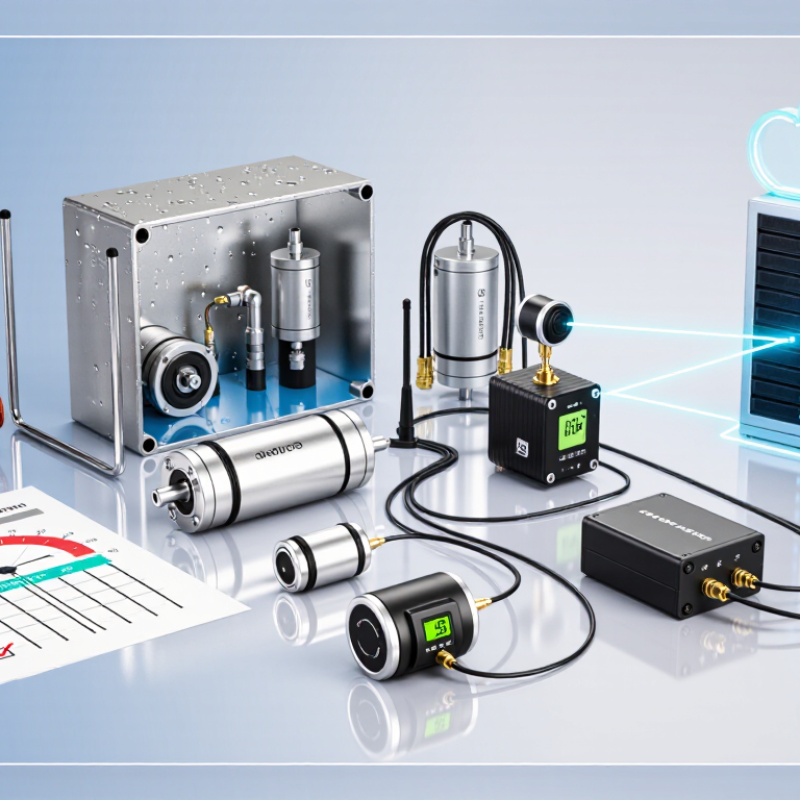
Table of Contents [Hide]
Overview of Real-Time Monitoring Sensors in China
Real-time monitoring sensors in China are used across factories, buildings, transport networks, and environmental systems. They measure conditions such as temperature, vibration, pressure, humidity, and gas concentration. Readings can travel through wired networks or wireless gateways to control rooms, where operators watch trends and respond to alarms. Small details matter. A temperature probe beside a motor may reveal a developing fault before production stops.
China’s Ministry of Industry and Information Technology reported 3.377 million 5G base stations nationwide by the end of 2023. This expanding network can support connected monitoring, especially where many devices send frequent readings. But 5G is not essential for every sensor: factories often use established industrial networks when reliability and predictable latency matter more than mobility. The IoT Analytics report State of IoT 2024 estimated 16.6 billion connected IoT devices worldwide at the end of 2023. That figure covers many device types, not sensors alone, so it should not be read as a sensor-market total.
Choosing a monitoring system involves more than comparing sampling rates. Buyers should check calibration records, measurement range, response time, enclosure protection, and how the device behaves during network outages. A dashboard may look precise while a poorly placed probe misses a hot bearing. Data quality is easy to overlook. Installation conditions, maintenance intervals, and clear alarm thresholds deserve equal attention.