
- High-Performance Doors
-
- Applications
-
-
-
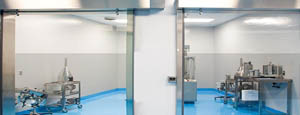
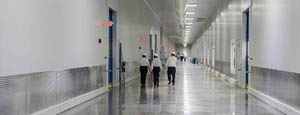
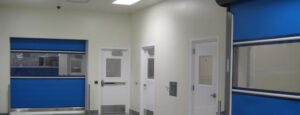
- Clean Room
Stainless steel or composite materials help maintain clean rooms.
-
-
- Coolers
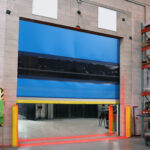
Quick opening speeds & tight seals for temperature control.
-
-
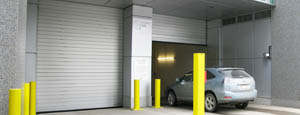
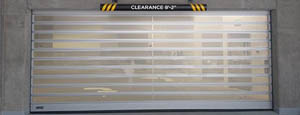
- Parking
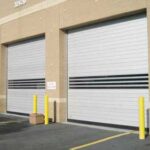
Improve security & traffic flow and enhance architectural style.
-
-
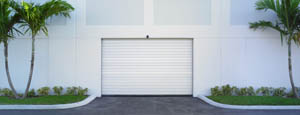
- Hurricane Zone
Withstand winds up to 175 mph and comply with the Florida Building Code.
-
-
-
-
- USDA / FDA / cGMP
Increase productivity & address stringent USDA, FDA & cGMP requirements.
-
-
- Freezers
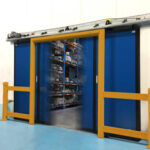
High-speed & perimeter seals minimize the air exchange between areas.
-
-
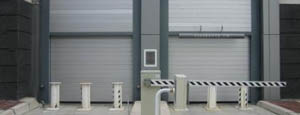
- Security
High speed & durability ensure secure access.
-
-
- Ventilation
Perforated or screen door panels allow improved air circulation.
-
-
-
-
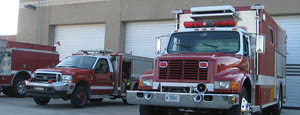
- Fire Station Emergency Response
When time is of the essence, high speed and reliability are crucial.
-
-
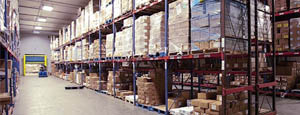
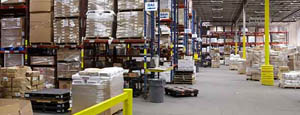
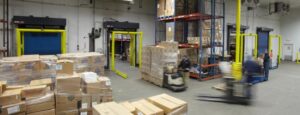
- Warehousing
Fast cycle times and secure seals keep environments separated.
-
-
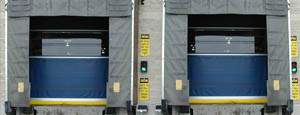
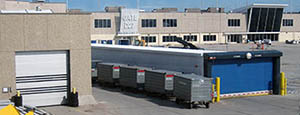
- Loading Dock
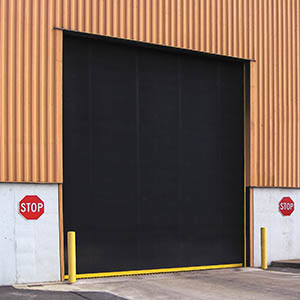
Rugged design & secure seal for oversized openings.
-
-
- Large Openings
Break-away functionality with rugged design seals oversized openings.
-
-
-
-
- Heavy Equipment
Withstands challenges of heavy equipment and fleet truck/car wash environments.
-
-
- Self-Storage
Fast opening speeds and reliable, durable construction keep facilities secure and protected.
-
-
- Industries
-
-
-
- Automotive Dealerships
Reduce energy costs, increase productivity and comfort and enhance customer perception.
-
-
- Cold Storage & Processing
Increase productivity and operational efficiency while reducing energy and maintenance costs.
-
-
- Parking
We offer solutions for Apartment / Condo & Loft, Standalone Parking Facilities and Office Buildings
-
-
-
-
- Food & Beverage
Doors specifically engineered for USDA/FDA and cGMP environments, and assured compliance for uncompromising performance.
-
-
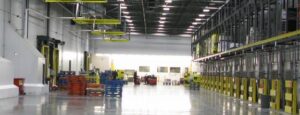
- Mfg/Dist/Warehousing
A complete product line allows facilities to increase efficiency and safety and reduce maintenance and energy costs.
-
-
- Government
Ensure effective security and environmental controls are maintained for critical government operations.
-
-
-
-
- Transit
Keep operations running smoothly and efficient while reducing energy and maintenance costs.
-
-
- Pharma, Nutraceutical & Biotech
Doors that offer quick, secure access, environmental control and reliability for life science facilities.
-
-
- Support Resources
- Parts
- Contact Us
- Blog/News
- Why Rytec
- Sales Rep Locator
- Careers
- Dealers
- Architectural Resources


5 Best Industrial Automation Lens Suppliers Worldwide?
Industrial automation is becoming more visual, measurable, and demanding. The International Federation of Robotics reported 541,302 industrial robots were installed worldwide in 2023. Each robot increasingly depends on cameras, lighting, and an Industrial Automation Lens that can preserve image accuracy under constant motion.
The market is not simply about megapixels. Lens performance affects inspection reliability, robot guidance, barcode reading, and defect detection. Edmund Optics, Basler, Cognex, Computar, and Schneider-Kreuznach are frequently considered by engineers because their portfolios cover factory inspection, high-speed imaging, and harsh production environments. However, brand reputation alone is insufficient. A lens may perform well in a laboratory yet struggle beside vibration, dust, heat, or reflective metal surfaces.
Jeff Burnstein, president of the Association for Advancing Automation, has said, “Automation is not about replacing people; it’s about helping people do their jobs better.” That principle also applies to lens selection. The right supplier should provide clear optical specifications, distortion data, mounting guidance, calibration support, and dependable availability. Small details matter. A few millimeters of working-distance error can blur an inspection area or force expensive mechanical redesign.
Reports from IFR and major machine-vision research firms show continued automation investment, but supplier comparisons remain imperfect. Product rankings can oversimplify application differences. This guide examines five worldwide Industrial Automation Lens suppliers through optical performance, durability, compatibility, documentation, and technical service. The list is practical, not absolute. Real factory trials still matter.
Table of Contents [Hide]
Industrial Automation Lenses: Definition, Functions, and Applications
Industrial automation lenses are optical components that form accurate images for cameras, sensors, and inspection systems. They control light, magnification, depth of field, distortion, and image sharpness. Unlike ordinary photographic lenses, industrial models must operate reliably beside vibration, dust, heat, and continuous production cycles.
Their function is practical. A low-distortion lens can measure a metal edge more accurately. A telecentric lens reduces size errors when products move closer or farther from the camera. In food packaging, fast lenses help detect missing seals. In electronics, high-resolution optics reveal tiny soldering defects. Lens selection also depends on sensor size, working distance, lighting wavelength, and required field of view. Small errors matter.
Industry growth makes this choice increasingly important. The International Federation of Robotics reported 541,302 industrial robots installed worldwide in 2023, showing the scale of automated production. MarketsandMarkets estimated the machine vision market could grow from about 13.2 billion dollars in 2023 to 20.2 billion dollars by 2028. These figures cover wider systems, not lenses alone. Still, they indicate stronger demand for dependable imaging components. Supplier evaluation should include optical test data, environmental ratings, calibration support, and replacement availability. A glossy specification sheet is not enough. In real factories, dust and poor lighting can defeat an otherwise excellent lens. Even experienced engineers sometimes underestimate that risk.
5 Best Industrial Automation Lens Suppliers Worldwide? – Industrial Automation Lenses: Definition, Functions, and Applications
Supplier-neutral comparison of five widely used industrial automation lens categories. Specifications shown are typical commercial ranges and may vary by optical design, sensor format, working distance, and manufacturer.
| Lens Category | Typical Optical Range | Primary Function | Common Applications | Key Advantages | Important Selection Criteria |
|---|---|---|---|---|---|
| Fixed-Focal-Length Lens | Approximately 4–50 mm focal length; commonly available for 1/2", 2/3", 1", and larger sensors | Provides a stable field of view and consistent magnification for repeatable inspections | Presence or absence checks, dimensional inspection, barcode reading, assembly verification, and robotic guidance | Simple setup, strong optical consistency, low maintenance, and generally lower cost | Sensor size, focal length, working distance, aperture, distortion, resolution, and required depth of field |
| Telecentric Lens | Typical magnification from about 0.5× to 10×; designed with telecentric or near-telecentric imaging geometry | Minimizes perspective error and keeps measured feature size more consistent across depth changes | Precision measurement of machined parts, semiconductor components, connectors, molded components, and inspection gauges | Low measurement error from perspective, controlled distortion, and improved dimensional repeatability | Object size, field of view, telecentricity tolerance, depth of field, coaxial illumination compatibility, and lens-to-object clearance |
| Macro Lens | Typically supports close-up imaging with magnification around 0.1× to 5×, depending on design | Captures small features at short working distances while maintaining high image detail | Surface defect detection, small-part inspection, label verification, electronics inspection, and medical-device manufacturing | High close-range detail, flexible magnification options, and suitability for compact inspection stations | Magnification, working distance, depth of field, illumination angle, sensor pixel size, and focus stability |
| Varifocal or Motorized Zoom Lens | Commonly covers a variable focal-length range such as 6–50 mm or wider, depending on the model | Allows the field of view and image scale to be adjusted for different products or inspection positions | Multi-product production lines, remote monitoring, packaging inspection, machine vision development, and flexible robotic cells | Adaptability, reduced lens changes during product changeovers, and convenient setup for variable scenes | Zoom repeatability, focus tracking, motor control interface, optical resolution at all zoom positions, and mechanical reliability |
| Line-Scan Lens | Designed for line-scan sensors; focal lengths commonly range from approximately 16–100 mm or more | Forms a precise image line while the object or camera moves continuously through the inspection area | Web inspection, paper and film production, textile inspection, steel and glass surfaces, printing, and high-speed conveyor systems | Supports continuous inspection over wide or long surfaces and integrates well with high-speed manufacturing lines | Sensor line length, pixel resolution, scan speed, image circle, distortion, working distance, and compatibility with telecentric or low-distortion designs |
Core evaluation factors: Match the lens to the camera sensor format, required field of view, working distance, object speed, lighting arrangement, resolution, distortion tolerance, environmental conditions, and mounting interface.