
- High-Performance Doors
-
- Applications
-
-
-
- Clean Room
Stainless steel or composite materials help maintain clean rooms.
-
-
- Coolers
Quick opening speeds & tight seals for temperature control.
-
-
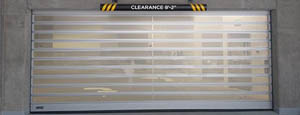
- Parking
Improve security & traffic flow and enhance architectural style.
-
-
- Hurricane Zone
Withstand winds up to 175 mph and comply with the Florida Building Code.
-
-
-
-
- USDA / FDA / cGMP
Increase productivity & address stringent USDA, FDA & cGMP requirements.
-
-
- Freezers
High-speed & perimeter seals minimize the air exchange between areas.
-
-
- Security
High speed & durability ensure secure access.
-
-
- Ventilation
Perforated or screen door panels allow improved air circulation.
-
-
-
-
- Fire Station Emergency Response
When time is of the essence, high speed and reliability are crucial.
-
-
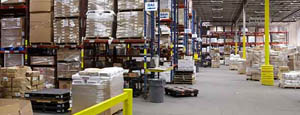
- Warehousing
Fast cycle times and secure seals keep environments separated.
-
-
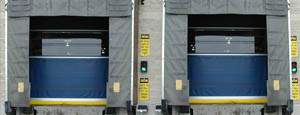
- Loading Dock
Rugged design & secure seal for oversized openings.
-
-
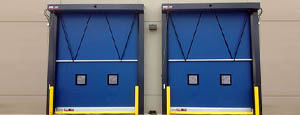
- Large Openings
Break-away functionality with rugged design seals oversized openings.
-
-
-
-
- Heavy Equipment
Withstands challenges of heavy equipment and fleet truck/car wash environments.
-
-
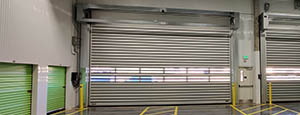
- Self-Storage
Fast opening speeds and reliable, durable construction keep facilities secure and protected.
-
-
- Industries
-
-
-
- Automotive Dealerships
Reduce energy costs, increase productivity and comfort and enhance customer perception.
-
-
- Cold Storage & Processing
Increase productivity and operational efficiency while reducing energy and maintenance costs.
-
-
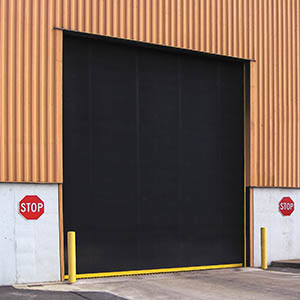
- Parking
We offer solutions for Apartment / Condo & Loft, Standalone Parking Facilities and Office Buildings
-
-
-
-
- Food & Beverage
Doors specifically engineered for USDA/FDA and cGMP environments, and assured compliance for uncompromising performance.
-
-
- Mfg/Dist/Warehousing
A complete product line allows facilities to increase efficiency and safety and reduce maintenance and energy costs.
-
-
- Government
Ensure effective security and environmental controls are maintained for critical government operations.
-
-
-
-
- Transit
Keep operations running smoothly and efficient while reducing energy and maintenance costs.
-
-
- Pharma, Nutraceutical & Biotech
Doors that offer quick, secure access, environmental control and reliability for life science facilities.
-
-
- Support Resources
- Parts
- Contact Us
- Blog/News
- Why Rytec
- Sales Rep Locator
- Careers
- Dealers
- Architectural Resources

















7 Best Horizontal Ribbon Mixers for Industrial Use
Selecting an industrial mixer is not a catalog exercise. The right Horizontal Ribbon Mixer must suit the material, batch size, and production rhythm. A fine, free-flowing powder behaves differently from a damp, cohesive blend. The difference shows up in mixing time, discharge consistency, and the residue left behind the ribbons.
This guide compares seven machines through practical details. Look for vessel capacity, ribbon geometry, drive power, sealing, and discharge design. Check whether the supplier can explain how the mixer handles your actual ingredients, not just a standard test powder. Ask about cleanout access, replacement parts, and service support. These details matter on a busy production floor, where a small maintenance delay can interrupt a whole shift. Sometimes, the simplest design wins.
A useful comparison also has limits. Published capacity alone cannot predict blend quality, and a polished specification sheet is not a process trial. Request test data or a material-specific demonstration before committing. Pay attention to the sample’s appearance, but also verify uniformity using a suitable test method. One important note: no source was provided to verify a named industry expert’s quotation, so this introduction does not invent one. That deserves checking. The seven options ahead can help buyers frame better questions, compare trade-offs, and shortlist equipment with care. The best choice is the one that performs reliably with your materials, fits your workflow, and can be maintained without guesswork.
Table of Contents [Hide]
How Horizontal Ribbon Mixers Work in Industrial Processing
A horizontal ribbon mixer uses a U-shaped trough and a central shaft fitted with inner and outer helical blades. As the shaft turns, the ribbons move material in opposing axial directions while lifting and folding it across the trough. This creates circulation through the batch, helping distribute powders and small additions. The mixer is a workhorse, not magic: sticky ingredients, wide particle-size differences, or excessive filling can slow blending or encourage segregation. Keep the fill level, speed, and mixing time matched to the material, then verify uniformity with samples from different points.
In industrial processing, operators often add minor ingredients gradually and watch for powder buildup near the shaft and trough ends. A consistent batch depends on more than mixer speed; ingredient order, moisture, particle shape, and discharge handling matter too. FAO’s 2019 report, The State of Food and Agriculture, estimated that 14% of food worldwide was lost between harvest and retail in 2016. That figure does not measure mixer performance, but it underlines the value of controlling avoidable process losses. A practical check is to compare samples from several locations and batches, rather than trusting appearance alone. Not perfect, but useful. Cleaning access and safe isolation during maintenance also deserve attention, especially when products change often.