
- High-Performance Doors
-
- Applications
-
-
-
- Clean Room
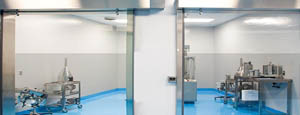
Stainless steel or composite materials help maintain clean rooms.
-
-
- Coolers
Quick opening speeds & tight seals for temperature control.
-
-
- Parking
Improve security & traffic flow and enhance architectural style.
-
-
- Hurricane Zone
Withstand winds up to 175 mph and comply with the Florida Building Code.
-
-
-
-
- USDA / FDA / cGMP
Increase productivity & address stringent USDA, FDA & cGMP requirements.
-
-
- Freezers
High-speed & perimeter seals minimize the air exchange between areas.
-
-
- Security
High speed & durability ensure secure access.
-
-
- Ventilation
Perforated or screen door panels allow improved air circulation.
-
-
-
-
- Fire Station Emergency Response
When time is of the essence, high speed and reliability are crucial.
-
-
- Warehousing
Fast cycle times and secure seals keep environments separated.
-
-
- Loading Dock
Rugged design & secure seal for oversized openings.
-
-
- Large Openings
Break-away functionality with rugged design seals oversized openings.
-
-
-
-
- Heavy Equipment
Withstands challenges of heavy equipment and fleet truck/car wash environments.
-
-
- Self-Storage
Fast opening speeds and reliable, durable construction keep facilities secure and protected.
-
-
- Industries
-
-
-
- Automotive Dealerships
Reduce energy costs, increase productivity and comfort and enhance customer perception.
-
-
- Cold Storage & Processing
Increase productivity and operational efficiency while reducing energy and maintenance costs.
-
-
- Parking
We offer solutions for Apartment / Condo & Loft, Standalone Parking Facilities and Office Buildings
-
-
-
-
- Food & Beverage
Doors specifically engineered for USDA/FDA and cGMP environments, and assured compliance for uncompromising performance.
-
-
- Mfg/Dist/Warehousing
A complete product line allows facilities to increase efficiency and safety and reduce maintenance and energy costs.
-
-
- Government
Ensure effective security and environmental controls are maintained for critical government operations.
-
-
-
-
- Transit
Keep operations running smoothly and efficient while reducing energy and maintenance costs.
-
-
- Pharma, Nutraceutical & Biotech
Doors that offer quick, secure access, environmental control and reliability for life science facilities.
-
-
- Support Resources
- Parts
- Contact Us
- Blog/News
- Why Rytec
- Sales Rep Locator
- Careers
- Dealers
- Architectural Resources



















What Is Azul Macaubas Quartzite and Where Is It Used?
Azul Macaubas Quartzite is a natural quartzite recognized for blue movement, white veining, and dramatic mineral variation. It is quarried mainly in Brazil, although color and availability can change between blocks. Each slab is different. That difference is the appeal.
The U.S. Geological Survey’s Mineral Commodity Summaries classify quartzite within the broader dimension-stone sector, but they do not isolate Azul Macaubas Quartzite as a separate product. This limitation matters. Market reports often group quartzite with marble, granite, or other natural stones, making precise production data difficult to verify. The Natural Stone Institute’s technical guidance emphasizes inspection, proper fabrication, sealing, and installation. Those steps influence long-term performance more than marketing language does.
Architect Frank Lloyd Wright offered a useful principle: “Study nature, love nature, stay close to nature.” Azul Macaubas Quartzite reflects that idea through its irregular blue patterns and geological depth. It is commonly used for kitchen islands, countertops, bathroom vanities, wall panels, fireplace surrounds, and statement furniture. Its hardness generally supports demanding interior applications, but it is not maintenance-free. Fabricators must inspect slabs for fissures, resin treatment, thickness variation, and edge sensitivity. Homeowners should also confirm the stone’s finish and care requirements before purchase.
Beauty can mislead. A vibrant sample may not represent the next slab. This article examines what Azul Macaubas Quartzite is, where it is used, and how professionals evaluate its suitability. Reliable decisions require verified quarry information, experienced fabrication, and realistic expectations about natural variation.
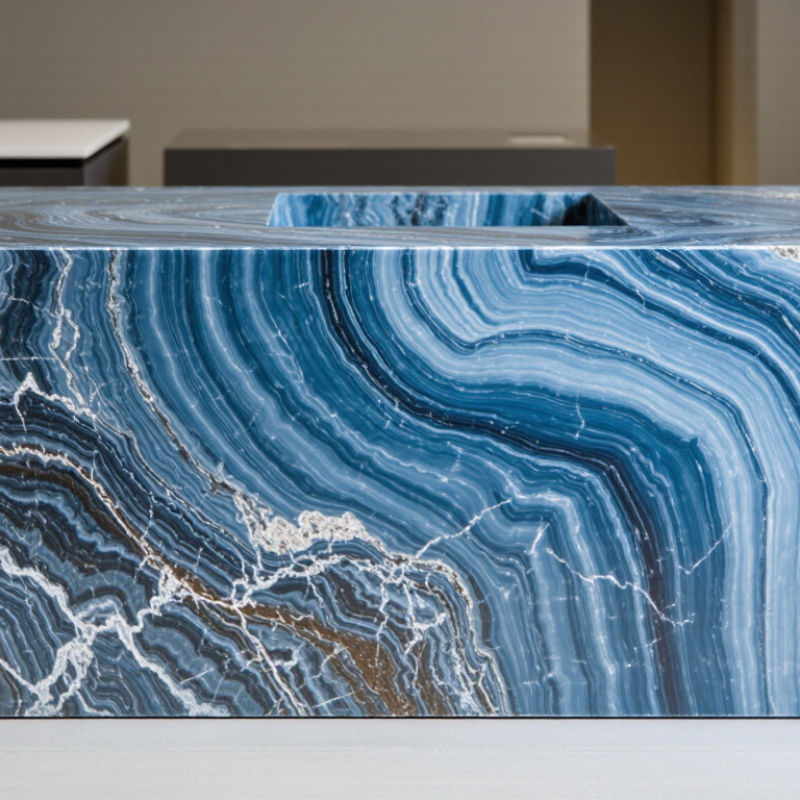
Table of Contents [Hide]
Definition and Geological Formation of Azul Macaubas Quartzite
Azul Macaubas quartzite is a natural metamorphic stone known for its blue background and flowing white, gray, or golden veins. It is not manufactured or simply painted to look blue. The stone formed from quartz-rich sandstone buried deep within the Earth. Intense pressure and heat gradually changed its original grains, creating a harder, interlocking structure.
Its blue color often relates to dumortierite and other mineral inclusions within the quartz matrix. Geological conditions were not identical across every deposit, so shades and patterns can vary noticeably.
Some slabs show calm, misty blue surfaces. Others display dramatic movement, like brushstrokes across frozen water. The name can also be used inconsistently in the stone trade, which deserves caution. A reliable supplier should provide geological information and test results, not only attractive photographs.
Tips: Request a labeled sample before choosing a slab. Examine it under warm and cool lighting. Ask for water absorption, flexural strength, and abrasion data. These details help match the stone to countertops, bathroom vanities, wall panels, flooring, and other applications. Sealing may improve stain resistance, but it does not make the surface maintenance-free. Even experienced professionals can misjudge a vein’s visual impact after installation. That possibility should be considered.