
- High-Performance Doors
-
- Applications
-
-
-
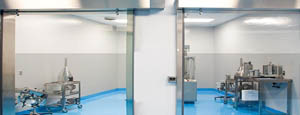
- Clean Room
Stainless steel or composite materials help maintain clean rooms.
-
-
- Coolers
Quick opening speeds & tight seals for temperature control.
-
-
- Parking
Improve security & traffic flow and enhance architectural style.
-
-
- Hurricane Zone
Withstand winds up to 175 mph and comply with the Florida Building Code.
-
-
-
-
- USDA / FDA / cGMP
Increase productivity & address stringent USDA, FDA & cGMP requirements.
-
-
- Freezers
High-speed & perimeter seals minimize the air exchange between areas.
-
-
- Security
High speed & durability ensure secure access.
-
-
- Ventilation
Perforated or screen door panels allow improved air circulation.
-
-
-
-
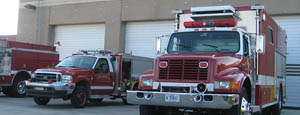
- Fire Station Emergency Response
When time is of the essence, high speed and reliability are crucial.
-
-
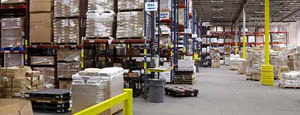
- Warehousing
Fast cycle times and secure seals keep environments separated.
-
-
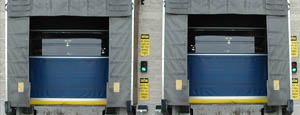
- Loading Dock
Rugged design & secure seal for oversized openings.
-
-
- Large Openings
Break-away functionality with rugged design seals oversized openings.
-
-
-
-
- Heavy Equipment
Withstands challenges of heavy equipment and fleet truck/car wash environments.
-
-
- Self-Storage
Fast opening speeds and reliable, durable construction keep facilities secure and protected.
-
-
- Industries
-
-
-
- Automotive Dealerships
Reduce energy costs, increase productivity and comfort and enhance customer perception.
-
-
- Cold Storage & Processing
Increase productivity and operational efficiency while reducing energy and maintenance costs.
-
-
- Parking
We offer solutions for Apartment / Condo & Loft, Standalone Parking Facilities and Office Buildings
-
-
-
-
- Food & Beverage
Doors specifically engineered for USDA/FDA and cGMP environments, and assured compliance for uncompromising performance.
-
-
- Mfg/Dist/Warehousing
A complete product line allows facilities to increase efficiency and safety and reduce maintenance and energy costs.
-
-
- Government
Ensure effective security and environmental controls are maintained for critical government operations.
-
-
-
-
- Transit
Keep operations running smoothly and efficient while reducing energy and maintenance costs.
-
-
- Pharma, Nutraceutical & Biotech
Doors that offer quick, secure access, environmental control and reliability for life science facilities.
-
-
- Support Resources
- Parts
- Contact Us
- Blog/News
- Why Rytec
- Sales Rep Locator
- Careers
- Dealers
- Architectural Resources
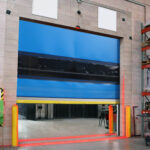




2026 Top Stacking Machine Manufacturers and Suppliers?
The 2026 market for stacking equipment is becoming more automated, measurable, and demanding. A modern Stacking Machine must handle changing case sizes, uneven loads, and faster production cycles. It should also protect product quality during palletizing, storage, and transport.
Industry data supports this shift. The International Federation of Robotics reported 541,302 industrial robot installations worldwide in 2023, a 10% annual increase in World Robotics 2024. Although the report covers many industries, its findings show stronger acceptance of robotic automation. PMMI’s packaging machinery research also highlights labor shortages, flexible production, and integrated automation as major investment drivers. These pressures directly influence stacking machine purchasing decisions.
This guide examines leading Stacking Machine manufacturers and suppliers for 2026. It considers machine speed, load stability, control systems, energy use, safety engineering, customization, and after-sales service. A reliable supplier should provide more than a machine. It should offer layout support, operator training, spare parts, and responsive troubleshooting. Real production details matter. A warehouse may need stable 1,000-kilogram pallets, rapid SKU changes, or precise corner alignment at the end of a conveyor.
No ranking is flawless. Product performance can vary by application, region, and integration partner. Therefore, this overview combines manufacturer reputation, technical capability, documented industry experience, and buyer-focused evidence. Readers should still verify current specifications, testing results, certifications, and local service coverage before choosing a supplier. That final check is often overlooked. It should not be.
Table of Contents [Hide]
What Is a Stacking Machine and How Does It Work?
A stacking machine arranges products into stable layers for storage, transport, or processing. In a typical line, packages arrive on a conveyor at a steady speed. Sensors detect their position, size, and spacing. A programmable controller then directs each item toward a planned pattern. The pattern may be square, interlocked, or customized for the load.
The machine forms one layer on a platform or pallet. Depending on the design, a robotic arm, gantry, or sliding mechanism moves the products into place. When the layer is complete, the platform lowers or the equipment places another layer above it. Safety doors, light curtains, emergency stops, and overload monitoring help protect operators. Small details matter. A dusty sensor can misread a package.
From practical equipment reviews, reliable stacking depends on more than speed. Product weight, package stiffness, pallet dimensions, floor accuracy, and cleaning routines all affect performance. A supplier should provide tested cycle data, clear maintenance access, operator training, and replacement-part support. Ask for trials using your real products, not only sample cartons. The neat factory demonstration can hide difficult corners. Uneven packages may shift, and flexible bags often need different handling than rigid boxes. Even advanced controls need sensible human supervision. Choosing the fastest machine may be a mistake if changeovers are slow or repairs require specialist visits.
2026 Top Stacking Machine Manufacturers and Suppliers? - What Is a Stacking Machine and How Does It Work?
Technical comparison of common stacking-machine configurations, operating principles, capabilities, and supplier-evaluation criteria
| Machine Category | Typical Material or Load | How It Works | Typical Capacity Range | Typical Stacking Pattern or Height | Common Applications | Key Selection Criteria |
|---|---|---|---|---|---|---|
| Palletizing Robot | Cartons, bags, cases, trays, and containers | One or more servo-controlled robotic arms pick products from an infeed conveyor and place them onto pallets according to a programmed layer pattern. | Approximately 5–40 picks per minute, depending on product weight, arm reach, pattern, and infeed layout | Usually 3–8 layers per pallet; pallet height is commonly limited by product stability and site clearance | Food and beverage, consumer goods, chemicals, logistics, and general manufacturing | Payload, reach, cycle time, gripper design, product orientation, floor space, and safety-cell requirements |
| Conventional Layer Palletizer | Uniform cartons, cases, trays, or bags | Products are grouped into a complete layer, aligned by guides or a layer-forming table, and transferred onto a pallet with a lifting or sweeping mechanism. | Commonly about 20–60 cases per minute, depending on case dimensions and layer configuration | Often 4–10 layers per pallet, with repeatable interlocking or column-stack patterns | High-volume beverage, food, paper, household-product, and packaging lines | Product uniformity, layer dimensions, line speed, changeover time, pallet format, and available ceiling height |
| Bag Stacker | Filled bags containing grain, animal feed, flour, cement, fertilizer, or powders | A belt, roller, or robotic handling system receives bags and positions them in overlapping or interlocked layers to improve pallet stability. | Typically 10–40 bags per minute, depending on bag weight and handling orientation | Commonly 5–12 layers; actual height depends on bag dimensions, weight, and compression behavior | Agricultural products, building materials, minerals, pet food, and bulk powders | Bag sealing quality, dust control, bag deformation, product weight, gripper or belt compatibility, and cleaning access |
| Case Stacker | Corrugated boxes, shipping cases, and packaged products | Cases are conveyed, squared, accumulated, and stacked using mechanical stops, pushers, clamps, gantries, or robotic tooling. | Approximately 10–50 cases per minute for many automated configurations | Usually 3–8 layers per pallet, depending on case strength and load distribution | Warehousing, e-commerce fulfillment, food processing, and contract packaging | Case dimensions, crush resistance, barcode or vision integration, accumulation capacity, and changeover flexibility |
| Container or Pail Stacker | Plastic pails, tubs, drums, cans, and rigid containers | Containers are oriented and transferred by servo axes, clamps, vacuum tooling, or layer-handling equipment onto pallets or conveyors. | Often 8–30 containers per minute, depending on container size, weight, and neck or lid geometry | Commonly 3–8 layers; slip sheets may be used between layers when required | Paint, coatings, chemicals, lubricants, food ingredients, and industrial products | Container stability, surface finish, hazardous-area requirements, lid protection, tooling compatibility, and spill prevention |
| Depalletizer and Stacker Combination | Cases, bottles, cans, trays, and mixed packaging units | The system unloads products from incoming pallets and later rebuilds finished pallets, using layer handling, conveyors, vision, or robotic picking. | Commonly 10–40 cases or containers per minute, depending on the complete line design | Supports multiple pallet formats and programmed layer patterns | Returnable packaging, beverage lines, food plants, distribution centers, and packaging cells | Product changeover, pallet exchange, accumulation zones, recipe management, conveyor integration, and footprint |
| High-Level Palletizer | Cases, cartons, bags, and shrink-wrapped packs | Products are elevated above the pallet position and arranged into layers using overhead conveyors, a sweep arm, or a layer platform. | Approximately 20–100 cases per minute in high-throughput applications, subject to product and pattern requirements | Commonly 4–12 layers per pallet; pallet height is constrained by the building and machine layout | Large-volume production and continuous packaging lines | Ceiling height, throughput, product stability, pallet changeover, guarding, access for maintenance, and energy consumption |
| Low-Level or Floor-Level Palletizer | Cases, bags, trays, and compact packaged goods | Products are arranged close to floor level and transferred onto pallets by a pusher, arm, shuttle, or layer-forming device. | Often about 5–30 cases or bags per minute | Typically 3–8 layers per pallet | Small and medium production lines, limited-height buildings, and flexible packaging cells | Floor space, operator access, manual pallet handling, changeover method, and required production rate |
| Automatic Vertical Stacking System | Empty pallets, loaded pallets, trays, or reusable containers | A lift, shuttle, or guided mechanism moves pallets vertically and places them into a controlled storage or presentation position. | Usually specified by pallet movements per hour rather than individual product picks | Often 2–5 pallet positions vertically, subject to building height and load rating | Buffer storage, pallet dispensers, automated warehouses, and production-line staging | Rated load, lift travel, pallet dimensions, cycle time, safety interlocks, and integration with conveyors or vehicles |
| Mixed-Case Robotic Stacker | Different carton sizes, shapes, and product orders | Robotic software uses order data, machine vision, and a programmed algorithm to select and place different cases into a stable pallet pattern. | Frequently around 200–1,000 cases per hour, depending on SKU mix, case weight, and required accuracy | Variable patterns with optimized cube utilization and load stability | E-commerce, grocery distribution, third-party logistics, and multi-SKU fulfillment | Software integration, vision accuracy, SKU database, gripper flexibility, case variability, and total cost of ownership |
| Typical Conveyor and Transfer Equipment | Pallets, cartons, bags, trays, and containers | Roller, belt, chain, or slat conveyors move products between accumulation, alignment, stacking, wrapping, and dispatch stations. | Speed is commonly selected from approximately 0.2–1.0 m/s, depending on product and line layout | Not applicable; equipment supports positioning and transport | All automated stacking and palletizing lines | Load rating, conveyor width, product friction, accumulation control, noise, guarding, and washdown requirements |
| Safety and Control System | Personnel and automated equipment operating in the same production area | Programmable controllers coordinate sensors, drives, robots, conveyors, interlocked guards, emergency stops, and safety scanners. | Specified by response time, I/O count, machine cycle, and required production availability | Not applicable; controls manage the stacking process and protect operators | Industrial production, warehouses, packaging cells, and integrated material-handling systems | Risk assessment, guarding, access control, emergency-stop design, diagnostics, data logging, and applicable local regulations |
| Supplier Evaluation Dimension | Machine purchase, retrofit, or complete line project | A qualified supplier should provide application engineering, layout design, load testing, installation, operator training, documentation, and after-sales service. | Evaluate against the required production rate, uptime target, and product mix rather than a generic maximum speed | Confirm the supplier can demonstrate the required pallet pattern, height, stability, and changeover performance | New lines, capacity expansion, automation upgrades, and replacement of manual stacking | Reference installations, acceptance-test method, spare-parts availability, service response, warranty terms, integration capability, and lifecycle cost |
Note: Capacity, speed, pallet height, and layer counts are representative engineering ranges rather than guaranteed ratings. Actual performance depends on product dimensions, load weight, packaging strength, pallet size, stacking pattern, line layout, safety requirements, and the final machine configuration.