
- High-Performance Doors
-
- Applications
-
-
-
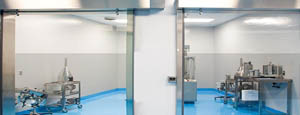
- Clean Room
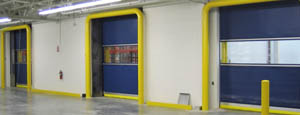
Stainless steel or composite materials help maintain clean rooms.
-
-
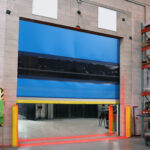
- Coolers
Quick opening speeds & tight seals for temperature control.
-
-
- Parking
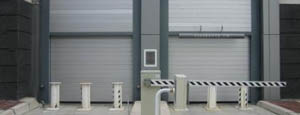
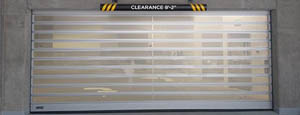
Improve security & traffic flow and enhance architectural style.
-
-
- Hurricane Zone
Withstand winds up to 175 mph and comply with the Florida Building Code.
-
-
-
-
- USDA / FDA / cGMP
Increase productivity & address stringent USDA, FDA & cGMP requirements.
-
-
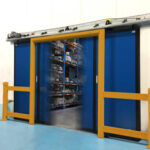
- Freezers
High-speed & perimeter seals minimize the air exchange between areas.
-
-
- Security
High speed & durability ensure secure access.
-
-
- Ventilation
Perforated or screen door panels allow improved air circulation.
-
-
-
-
- Fire Station Emergency Response
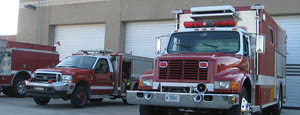
When time is of the essence, high speed and reliability are crucial.
-
-
- Warehousing
Fast cycle times and secure seals keep environments separated.
-
-
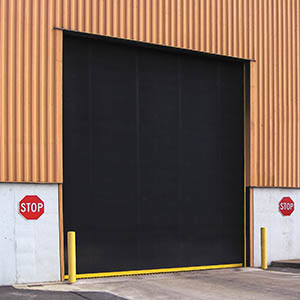
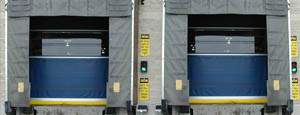
- Loading Dock
Rugged design & secure seal for oversized openings.
-
-
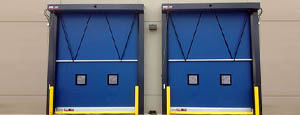
- Large Openings
Break-away functionality with rugged design seals oversized openings.
-
-
-
-
- Heavy Equipment
Withstands challenges of heavy equipment and fleet truck/car wash environments.
-
-
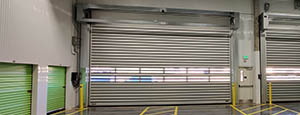
- Self-Storage
Fast opening speeds and reliable, durable construction keep facilities secure and protected.
-
-
- Industries
-
-
-
- Automotive Dealerships
Reduce energy costs, increase productivity and comfort and enhance customer perception.
-
-
- Cold Storage & Processing
Increase productivity and operational efficiency while reducing energy and maintenance costs.
-
-
- Parking
We offer solutions for Apartment / Condo & Loft, Standalone Parking Facilities and Office Buildings
-
-
-
-
- Food & Beverage
Doors specifically engineered for USDA/FDA and cGMP environments, and assured compliance for uncompromising performance.
-
-
- Mfg/Dist/Warehousing
A complete product line allows facilities to increase efficiency and safety and reduce maintenance and energy costs.
-
-
- Government
Ensure effective security and environmental controls are maintained for critical government operations.
-
-
-
-
- Transit
Keep operations running smoothly and efficient while reducing energy and maintenance costs.
-
-
- Pharma, Nutraceutical & Biotech
Doors that offer quick, secure access, environmental control and reliability for life science facilities.
-
-
- Support Resources
- Parts
- Contact Us
- Blog/News
- Why Rytec
- Sales Rep Locator
- Careers
- Dealers
- Architectural Resources














2026 Top Pan Tilt Video Platforms for Global Buyers?
Choosing the right Pan Tilt Video Platform in 2026 requires more than comparing camera resolution or monthly pricing. Global buyers must examine movement accuracy, low-light performance, network stability, storage options, and regional support. A platform may look impressive in a product demo, yet perform poorly inside a dim warehouse or across a crowded international network.
Real conditions matter.
This guide reviews leading platforms through practical buyer needs, including remote monitoring, multi-site management, installation effort, cybersecurity controls, and system compatibility. It also considers how vendors document reliability, software updates, warranty terms, and technical assistance. These details often decide whether a deployment remains useful after six months. Independent testing, supplier references, and clearly published specifications should support every purchasing decision. Marketing claims alone are not enough.
No single platform fits every market. A small retailer may value simple setup, while a logistics operator may require precise pan-and-tilt control across hundreds of cameras. Regional data requirements, language support, connectivity limits, and local service availability can also change the final choice. Some recommendations may need revision as pricing, firmware, and platform policies develop. That is an unavoidable weakness in any 2026 comparison. Buyers should verify current information directly with manufacturers before signing contracts, especially for security, privacy, retention, and cross-border data handling.

Table of Contents [Hide]
What Pan-Tilt Video Platforms Are and How They Work
Pan-tilt video platforms combine a movable camera, motor controls, video processing, and management software. The pan axis rotates horizontally, while the tilt axis moves vertically. Operators can steer the lens remotely, save viewing presets, and follow activity across a wide area. A position sensor helps the camera return accurately, although low-cost mechanisms may drift after repeated movement.
The platform usually works through a network connection. A control command travels from a browser, mobile interface, or security console to the camera. Motors then adjust the viewing angle, while the encoder compresses live footage for transmission. Wired networks often provide steadier latency, especially when several users watch at once. Wireless links are convenient, but walls, interference, and crowded channels can weaken performance. Small details matter here.
MarketsandMarkets estimates that the global video surveillance market could reach about 83.3 billion dollars by 2028, with analytics and connected systems supporting demand. Grand View Research also identifies cloud-based video management as a strong growth area in its 2024 industry analysis. These figures describe broad markets, not pan-tilt units alone. Buyers should therefore inspect response time, optical zoom, low-light performance, weather protection, storage design, and protocol compatibility. A platform may advertise intelligent tracking yet lose a moving subject behind a pole. That is not a minor flaw. It deserves testing under real lighting, network load, and operator habits.