
- High-Performance Doors
-
- Applications
-
-
-
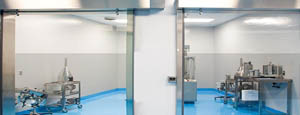
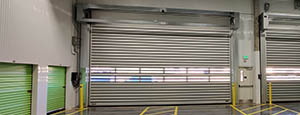
- Clean Room
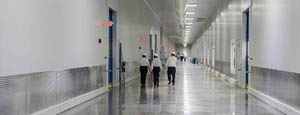
Stainless steel or composite materials help maintain clean rooms.
-
-
- Coolers
Quick opening speeds & tight seals for temperature control.
-
-
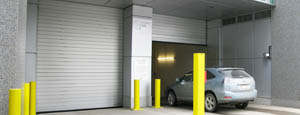
- Parking
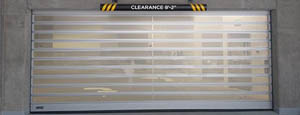
Improve security & traffic flow and enhance architectural style.
-
-
- Hurricane Zone
Withstand winds up to 175 mph and comply with the Florida Building Code.
-
-
-
-
- USDA / FDA / cGMP
Increase productivity & address stringent USDA, FDA & cGMP requirements.
-
-
- Freezers
High-speed & perimeter seals minimize the air exchange between areas.
-
-
- Security
High speed & durability ensure secure access.
-
-
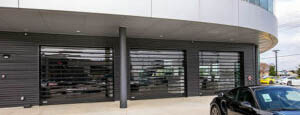
- Ventilation
Perforated or screen door panels allow improved air circulation.
-
-
-
-
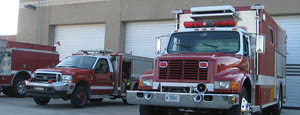
- Fire Station Emergency Response
When time is of the essence, high speed and reliability are crucial.
-
-
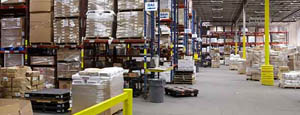
- Warehousing
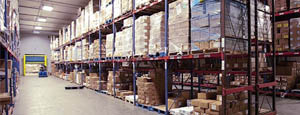
Fast cycle times and secure seals keep environments separated.
-
-
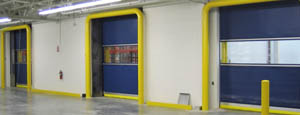
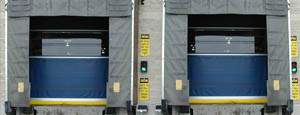
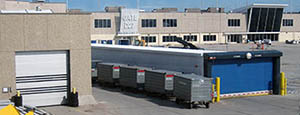
- Loading Dock
Rugged design & secure seal for oversized openings.
-
-
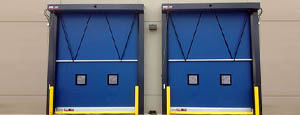
- Large Openings
Break-away functionality with rugged design seals oversized openings.
-
-
-
-
- Heavy Equipment
Withstands challenges of heavy equipment and fleet truck/car wash environments.
-
-
- Self-Storage
Fast opening speeds and reliable, durable construction keep facilities secure and protected.
-
-
- Industries
-
-
-
- Automotive Dealerships
Reduce energy costs, increase productivity and comfort and enhance customer perception.
-
-
- Cold Storage & Processing
Increase productivity and operational efficiency while reducing energy and maintenance costs.
-
-
- Parking
We offer solutions for Apartment / Condo & Loft, Standalone Parking Facilities and Office Buildings
-
-
-
-
- Food & Beverage
Doors specifically engineered for USDA/FDA and cGMP environments, and assured compliance for uncompromising performance.
-
-
- Mfg/Dist/Warehousing
A complete product line allows facilities to increase efficiency and safety and reduce maintenance and energy costs.
-
-
- Government
Ensure effective security and environmental controls are maintained for critical government operations.
-
-
-
-
- Transit
Keep operations running smoothly and efficient while reducing energy and maintenance costs.
-
-
- Pharma, Nutraceutical & Biotech
Doors that offer quick, secure access, environmental control and reliability for life science facilities.
-
-
- Support Resources
- Parts
- Contact Us
- Blog/News
- Why Rytec
- Sales Rep Locator
- Careers
- Dealers
- Architectural Resources







2026 Top Chicken Farm Equipment for Global Buyers
The 2026 Top Chicken Farm Equipment guide examines practical systems for modern poultry operations worldwide. It focuses on equipment that improves bird welfare, labor efficiency, hygiene, and production consistency. Global buyers face different climates, energy costs, building standards, and supply conditions. A ventilation system suited to a cool European house may perform poorly in a humid tropical region.
Dr. Temple Grandin, a leading animal-welfare and livestock-handling expert, has said, “The worst thing you can do is to ignore the animal’s point of view.” This principle matters when evaluating Chicken Farm Equipment. Feeders should reduce competition and waste. Drinkers must deliver clean water at the correct pressure. Fans should move air evenly without creating cold drafts. Automatic systems also need accessible controls and simple maintenance points.
This guide compares feeding lines, drinking systems, climate controls, manure equipment, egg collection units, cages, and smart monitoring tools. It considers durability, installation support, spare-parts access, energy use, and return on investment. Practical experience matters here. A low-cost machine can become expensive when sensors fail, belts slip, or replacement parts take months to arrive.
No ranking fits every farm. That is worth remembering. Buyers should verify local requirements, flock size, house design, and after-sales service before ordering. Some advanced equipment looks impressive but offers limited value without trained workers. The strongest choice is not always the newest one. It is the system that performs reliably during heat, dust, power interruptions, and busy harvesting days.
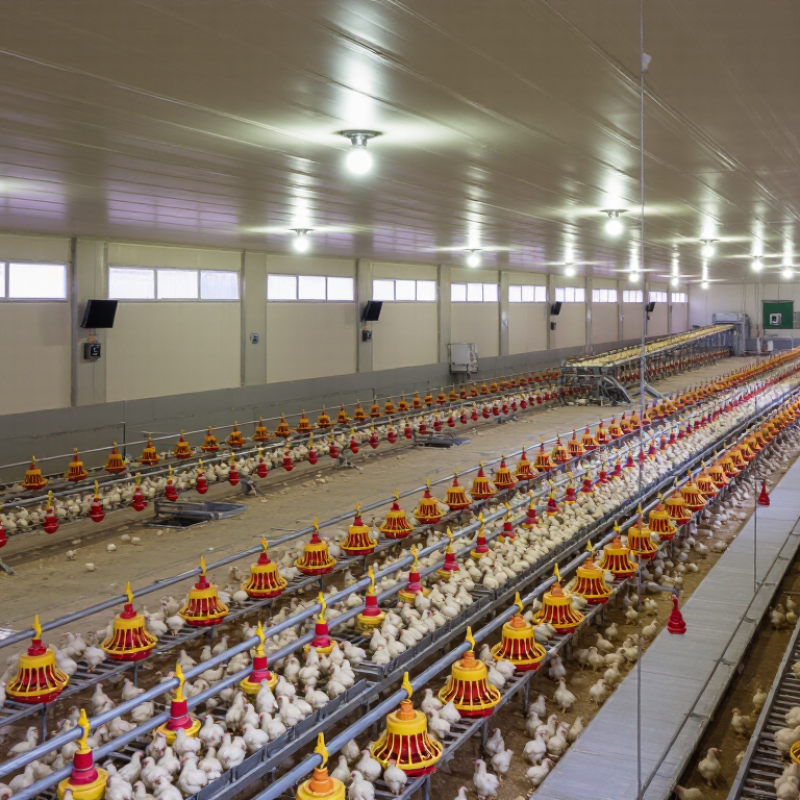
Table of Contents [Hide]
Chicken Farm Equipment Categories and Their Core Functions
2026 Top Chicken Farm Equipment for Global Buyers
Chicken Farm Equipment Categories and Their Core Functions
Global poultry production is expanding, but equipment choices should match local housing, climate, labor, and power reliability. The USDA’s 2025 Livestock and Poultry: World Markets and Trade report places global broiler production above 100 million metric tons. That scale increases demand for dependable systems, not simply larger machines.
Ventilation equipment removes heat, moisture, ammonia, and dust from poultry houses. Inlets, exhaust fans, cooling pads, and sensors work together. Poor airflow can create wet litter near drinkers. Feeding systems deliver measured rations through hoppers, augers, and pan feeders. Automatic nipple drinkers reduce contamination when pressure is correctly adjusted. Small faults matter.
Climate controllers connect temperature, humidity, lighting, and ventilation settings. Their core function is stable flock comfort, especially during heat stress or cold nights. Egg farms also require nest systems, egg belts, graders, and conveyors. These tools reduce handling damage and improve collection consistency. The FAO 2024 Statistical Yearbook confirms poultry’s continuing importance in global food supply, although regional production methods differ sharply.
Manure scrapers, belts, drying units, and storage systems support cleaner housing and nutrient management. Monitoring equipment records feed intake, water use, mortality, and temperature trends. These records help buyers verify performance rather than trust sales claims. However, automation is not automatically efficient. Unstable electricity, difficult cleaning, or unavailable spare parts can erase its expected benefit. A practical assessment should include maintenance access, training, backup power, and total operating cost.
| Equipment Category | Typical Farm Stage | Core Function | Common Configuration or Specification | Key Operational Benefit | Important Buying Considerations |
|---|---|---|---|---|---|
| Automated Feeding System | Broilers, layers, breeders | Delivers feed from a storage hopper to feeding pans or troughs at controlled intervals. | Feed hopper, auger or chain conveyor, feed pans, level sensors and control panel. | Provides more uniform feed distribution while reducing manual labor and feed contamination. | Check feed type compatibility, auger capacity, cleaning access, backup operation and local power requirements. |
| Automatic Drinking System | All poultry production stages | Supplies clean drinking water through nipple drinkers or cup drinkers. | Water tank, filtration unit, pressure regulator, water lines, nipple drinkers and flushing system. | Helps maintain consistent water availability and reduces wet litter compared with open drinkers. | Evaluate water quality, pressure control, nipple flow rate, line height adjustment and spare-part availability. |
| Ventilation and Exhaust System | Broiler houses, layer houses and breeder houses | Removes heat, moisture, dust and harmful gases while supplying fresh air. | Axial exhaust fans, air inlets, shutters, controllers and optional evaporative cooling pads. | Supports temperature control, litter quality and air quality in enclosed poultry houses. | Size the system according to house volume, bird numbers, climate, static pressure and required air-exchange rate. |
| Environmental Control System | Climate-controlled poultry houses | Monitors and regulates temperature, humidity, ventilation, lighting and alarms. | Temperature and humidity sensors, programmable controller, fan relays, alarm outputs and data monitoring. | Improves consistency of house conditions and enables faster response to environmental changes. | Confirm sensor accuracy, control logic, internet independence, alarm communication and compatibility with farm equipment. |
| Heating System | Brooding and cold-weather production | Maintains suitable air and floor temperatures for chicks and young poultry. | Gas brooders, radiant heaters, hot-air heaters or electric heating units with thermostatic control. | Reduces cold stress and supports early chick activity, feed intake and uniform growth. | Compare fuel availability, combustion safety, ventilation requirements, heating capacity and installation regulations. |
| Cooling System | Warm climates and summer production | Lowers house temperature through air movement and, where suitable, evaporative cooling. | High-volume fans, cooling pads, water pump, pad filters and environmental controller. | Helps reduce heat stress when outdoor temperatures are high and ventilation alone is insufficient. | Consider humidity levels, water quality, pad maintenance, electrical demand and emergency ventilation capacity. |
| Lighting System | Broilers, layers and breeders | Controls daily light duration and intensity to support activity, feeding and production programs. | Energy-efficient poultry lights, dimmers, timers, protected fixtures and programmable controller. | Provides a more consistent light environment and can reduce energy use compared with conventional lamps. | Check dimming performance, moisture and dust protection, light distribution, maintenance access and local voltage. |
| Brooder and Chick-Placement Equipment | Day-old chicks to early growing period | Creates a controlled warm zone and supports safe placement of chicks in the first days of life. | Brooder heaters, chick guards, starter feeders, drinker trays, thermometers and chick paper. | Helps chicks find feed and water quickly while reducing chilling and uneven distribution. | Assess heating uniformity, guard durability, cleaning requirements and suitability for the house layout. |
| Layer Cage System | Commercial egg production | Provides organized housing, feeding, drinking, manure collection and egg transfer for laying hens. | Multi-tier or conventional cages, feed lines, nipple drinkers, manure belts or scrapers and egg belts. | Uses house space efficiently and can simplify routine collection and manure handling. | Review local animal-welfare rules, stocking density, cage dimensions, automation level and service access. |
| Nest Box and Egg Collection System | Floor-housed, aviary and breeder flocks | Provides a clean laying area and transfers eggs to a collection point. | Community nest boxes, roll-away floors, egg belts, conveyors and collection tables. | Can reduce floor eggs, egg breakage and manual collection time when correctly managed. | Check nest-to-bird ratio, belt hygiene, egg transfer distance, access for cleaning and flock compatibility. |
| Manure Removal System | Layer houses and multi-tier systems | Collects and removes poultry manure from beneath cages or housing tiers. | Manure belts, scrapers, drive units, transfer conveyors and drying fans where applicable. | Reduces ammonia accumulation and supports cleaner housing and more manageable waste handling. | Evaluate manure moisture, belt loading, cleaning intervals, discharge location and corrosion resistance. |
| Litter Management Equipment | Floor-based broiler and breeder houses | Spreads, turns or removes bedding material and helps maintain dry litter. | Litter spreaders, mechanical scarifiers, compact loaders, scrapers and bedding handling tools. | Supports foot health, reduces caking and improves the working environment. | Match equipment width and weight to house dimensions, floor type, litter material and available storage space. |
| Feed Mill and Feed Mixing Equipment | Medium and large poultry operations | Stores, weighs, grinds and mixes feed ingredients according to a formulated ration. | Ingredient bins, hammer mill, mixer, weighing system, conveyors and dust-control equipment. | Enables consistent feed batches and may reduce dependence on delivered finished feed. | Consider daily feed volume, ingredient moisture, particle-size control, dust safety, automation and calibration. |
| Feed Storage and Conveying Equipment | All commercial poultry farms | Protects feed from moisture and pests and transfers it to the feeding system. | Galvanized or coated silos, level indicators, unloading augers, flexible augers and inlet filters. | Reduces feed spoilage and supports reliable supply between deliveries. | Check storage capacity, foundation requirements, moisture control, discharge design and resistance to corrosion. |
| Egg Grading and Packing Equipment | Commercial egg operations | Conveys, weighs, grades, counts and packs eggs according to market requirements. | Egg conveyor, candling area, weighing lanes, grading mechanism, packing station and reject outlet. | Improves handling consistency and reduces manual sorting and breakage. | Confirm grading standards, throughput, egg-size range, cleaning procedures and packaging compatibility. |
| Poultry Processing Equipment | Broiler processing facilities | Supports slaughter, scalding, defeathering, evisceration, chilling and product handling. | Shackles, stunning unit, scalder, plucker, evisceration equipment, chiller and stainless-steel conveyors. | Improves processing hygiene, product consistency and handling efficiency. | Verify local food-safety rules, water consumption, sanitation design, line capacity and worker-safety requirements. |
| Water Treatment and Disinfection Equipment | All poultry farms | Filters, disinfects and conditions drinking water before it reaches the flock. | Sediment filters, dosing pumps, ultraviolet or other approved treatment systems, test kits and storage tanks. | Helps control contaminants, biofilm and mineral-related problems in drinking lines. | Test source water first and check treatment compatibility, dosing accuracy, maintenance needs and regulatory requirements. |
| Backup Power and Safety Equipment | Climate-controlled and automated farms | Maintains essential ventilation, water and control functions during power interruptions or emergencies. | Standby generator, automatic transfer switch, alarm system, emergency inlets and backup water storage. | Reduces the risk of rapid heat stress, water interruption and mortality during outages. | Size for essential loads, test regularly and provide fuel storage, ventilation, maintenance access and alarm redundancy. |
| Cleaning and Biosecurity Equipment | Between flock cycles and daily hygiene | Supports washing, disinfection, vehicle control, personnel hygiene and disease-prevention procedures. | Pressure washer, foam applicator, disinfectant dosing unit, boot-dip station, sprayer and protective equipment. | Helps reduce pathogen transfer between houses, equipment, workers and incoming vehicles. | Select materials resistant to approved disinfectants and establish cleaning zones, drainage and equipment-storage procedures. |
Note: Equipment capacity and configuration should be selected according to flock size, housing design, climate, labor availability, local regulations, utility supply and the farm’s production system.